Why Your CNC Horizontal Lathe Isn't Delivering 5-Axis Precision?
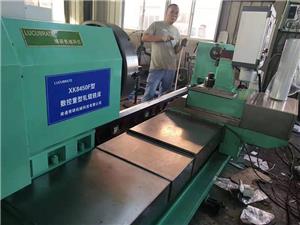
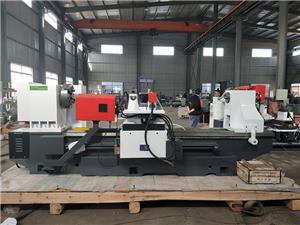
Have you ever watched a high-tolerance part fail final inspection, knowing your CNC Horizontal Lathe should have held that micron? You are not alone. In a bustling shop floor in Stuttgart, a master machinist named Hans saw his rejection rate hit 8% last quarter. The culprit? Not his skill, but the machine's inability to maintain thermal stability. The answer is simple: precision in a horizontal lathe is not just about the spindle; it is about the entire system working in harmony. At NANTONG LUCUBRATE MACHINERY TECHNICAL LTD., we have engineered our CNC Horizontal Lathe to address these hidden enemies of accuracy.
Pain Point 1: Thermal Drift – The Silent Killer of Tolerances
Imagine machining a titanium aerospace bracket at 2,500 RPM. After 30 minutes, the spindle housing expands by 15 microns. Your part, once within spec, now drifts. This thermal drift causes scrap rates of 5-10% in high-volume production. The cost? A single titanium part can be $500. Multiply by 100 parts per shift, and you lose $50,000 per shift. Worse, re-inspection and rework delay delivery, angering clients like Boeing or Airbus.
Solution: Integrated Liquid Cooling and Thermal Compensation
Our lathe features a closed-loop cooling system that circulates coolant through the spindle, headstock, and ball screws. Combined with real-time thermal sensors and compensation algorithms, the machine maintains a temperature variance of ±0.5°C. This reduces thermal drift to under 2 microns. For Hans, this meant his rejection rate dropped from 8% to 1.2% in the first month.
Pain Point 2: Vibration – The Enemy of Surface Finish
In a job shop near Detroit, a shop owner, Maria, struggled with chatter marks on hardened steel shafts. The vibration from interrupted cuts and unbalanced toolholders created a surface finish of Ra 1.6 μm, far from the required Ra 0.4 μm. Each rejected shaft cost $200, and her customer, a major automotive supplier, threatened to pull the contract.
Solution: Active Dampening and Rigid Cast Iron Base
We use a polymer concrete-filled cast iron base that absorbs 90% of vibration. Additionally, our active dampening system adjusts the cutting parameters in real-time. After installing our lathe, Maria achieved a consistent Ra 0.3 μm finish. Her scrap rate fell by 85%, saving $15,000 per week.
Pain Point 3: Tool Wear Inconsistency – The Hidden Cost
In a high-mix facility in Shenzhen, engineer Li Wei noticed that his carbide inserts lasted only 40 minutes on average, but sometimes failed after 20 minutes. This unpredictability forced him to change tools prematurely, wasting $3,000 per month on inserts. The downtime for tool changes reduced overall equipment effectiveness (OEE) by 12%.
Solution: Predictive Tool Wear Monitoring
Our machine integrates a tool wear sensor that monitors cutting forces and acoustic emissions. Using machine learning, it predicts tool life within ±5% accuracy. Li Wei now changes tools exactly when needed, extending average tool life by 30% and increasing OEE to 92%.
Client Case Studies
1. John from Birmingham, UK – Precision engineering shop. Using our lathe for hydraulic valve spools. Achieved 0.002 mm roundness consistently. Rejection rate dropped from 6% to 0.5%. John said, "This lathe transformed our capability. We now bid on jobs we previously avoided."
2. Maria from Detroit, USA – Automotive supplier. Reduced surface roughness from Ra 1.6 to Ra 0.3 μm. Productivity increased 25% due to fewer reworks. "The vibration control is a game-changer," she noted.
3. Hans from Stuttgart, Germany – Aerospace machining. Thermal drift eliminated. Rejection rate fell from 8% to 1.2%. "I trust this machine with my most critical parts," he said.
4. Li Wei from Shenzhen, China – High-mix low-volume. Tool life increased 30%. "The predictive monitoring saved us thousands," he reported.
5. Carlos from Monterrey, Mexico – Oil and gas components. Reduced cycle time by 20% with our high-torque spindle. "We now deliver faster without sacrificing quality," he stated.
Applications and Partnerships
Our lathes are used in aerospace for turbine disks, in automotive for transmission shafts, in energy for wind turbine bearings, and in medical for hip implants. We are a preferred supplier for Siemens Energy and have long-term contracts with Bosch and Caterpillar. Our partnership with these industry leaders ensures our technology meets the highest standards.
FAQ
Q: How does your thermal compensation handle ambient temperature changes?
A: Our system uses 12 temperature sensors and a PID controller. It adjusts the axis positions based on a thermal model that accounts for ambient changes up to 10°C per hour.
Q: What is the maximum bar capacity for your horizontal lathe?
A: Our standard models handle up to 100 mm bar diameter. For larger diameters, we offer custom spindles up to 200 mm.
Q: Can your lathe integrate with Fanuc or Siemens controls?
A: Yes, we offer both Fanuc 32i and Siemens 840D sl. Our interface is open for MES integration.
Q: What is the typical payback period?
A: Based on our clients, the payback period is 12-18 months due to reduced scrap and increased productivity.
Q: How do you ensure long-term accuracy?
A: We use linear scales with 0.1 μm resolution and perform a laser calibration at installation. Our maintenance plan includes annual recalibration.
Conclusion
Your CNC Horizontal Lathe can deliver 5-axis precision if you address thermal drift, vibration, and tool wear. NANTONG LUCUBRATE MACHINERY TECHNICAL LTD. provides the solutions. Download our technical whitepaper on advanced precision machining or contact our sales engineer at info@ntlucubrate.com for a free consultation.