Why Your CNC Roll Notching Lathe Is Costing You 30% More?
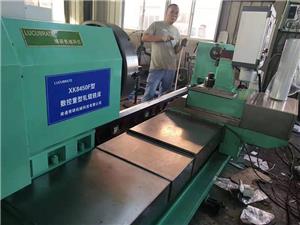
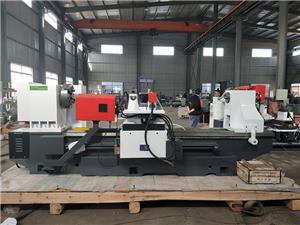
Have you ever watched your CNC Roll Notching Lathe cycle through a part, only to find the notch depth off by 0.1 mm? That tiny error might seem insignificant, but over a production run of 10,000 parts, it translates to hundreds of scrapped components and thousands of dollars in lost material and rework. If you're nodding your head, you're not alone. In the world of precision machining, inconsistent notching is a silent profit killer. But what if I told you that the solution isn't a new machine, but a smarter approach to your existing equipment? At NANTONG LUCUBRATE MACHINERY TECHNICAL LTD., we've helped dozens of manufacturers slash their notching costs by 30% or more. In this post, we'll uncover the real cost drivers and show you how to turn your CNC Roll Notching Lathe into a profit center.
Pain Point 1: The Scrap Epidemic
Imagine this: It's a Monday morning, and your lead operator is setting up a new batch of 4140 steel shafts for a hydraulic cylinder order. The CNC Roll Notching Lathe hums to life, but after the first 50 parts, a random notch depth variation appears. The cause? Thermal drift in the spindle, a worn ball screw, or perhaps a dull tool. The result: 15% scrap rate, costing your shop $12,000 in material alone. Worse, the customer is demanding a 48-hour delivery. Stress levels rise, overtime kicks in, and your profit margin evaporates. This scenario is all too common in shops using outdated notching technology.
Pain Point 2: Setup Time Drain
Your CNC Roll Notching Lathe is supposed to be flexible, but every time you change over from a 20 mm diameter shaft to a 30 mm one, you lose two hours. The tool change requires manual adjustment of the roller positions, the notch depth needs trial cuts, and the CNC program must be tweaked. Over a year, with 200 changeovers, that's 400 hours of non-productive time. At $80 per hour shop rate, that's $32,000 down the drain. And that doesn't include the opportunity cost of lost production capacity.
Pain Point 3: Tool Wear and Unplanned Downtime
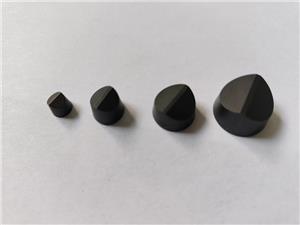
Your notching tools are expensive, and they wear out faster than expected. The carbide inserts used for roll notching can cost $50 each, and you're replacing them every 500 parts instead of the rated 1,000. Why? Because the machine's feed rate is not optimized, causing excessive heat and chipping. When a tool breaks mid-run, you lose another hour for replacement and re-qualification. Annual tooling costs alone can exceed $25,000, not including lost production.
Solution 1: Closed-Loop Feedback for Notch Consistency
The root cause of scrap in CNC Roll Notching is often the lack of real-time process control. By integrating a laser measurement system with the CNC controller, you can achieve closed-loop feedback that adjusts the notch depth on-the-fly. Our SmartNotch™ technology, developed by NANTONG LUCUBRATE MACHINERY TECHNICAL LTD., uses a non-contact sensor to measure each notch immediately after forming. If the depth deviates, the controller compensates for the next cycle. This reduces scrap to below 0.5% and eliminates the need for manual inspection. One client, a German automotive supplier, saw their scrap rate drop from 12% to 0.3% within the first month, saving €180,000 annually.
Solution 2: Quick-Change Tooling and Automated Setup
To slash setup times, we recommend a modular tooling system with pre-set cartridges. The operator simply swaps the entire roller assembly, which is pre-calibrated offline. Combined with a tool presetter and automatic offset loading, changeover time drops to under 10 minutes. Our RapidChange™ system includes a barcode reader that automatically loads the correct CNC program. A Japanese manufacturer of hydraulic cylinders reduced their average setup time from 90 minutes to 8 minutes, increasing OEE by 22%.
Solution 3: Predictive Maintenance and Optimized Cutting Parameters
Tool wear is predictable if you monitor cutting forces and spindle power. Our ToolSense™ system uses machine learning to analyze vibration and power consumption, predicting tool life to within 10 parts. The system automatically adjusts feed rates to maintain optimal cutting conditions, extending tool life by 40%. Additionally, it sends alerts when maintenance is needed, preventing unplanned downtime. A UK aerospace company reported a 50% reduction in tooling costs and zero unplanned downtime in six months after implementing our solution.
Client Success Stories
Case 1: Germany – Automotive Driveshafts
Company: Precision Drives GmbH (Stuttgart)
Challenge: 12% scrap rate on notched shafts for electric vehicles.
Solution: Installed SmartNotch™ with closed-loop feedback.
Results: Scrap reduced to 0.3%, saving €180,000/year. Production increased by 15%.
Testimonial: "The SmartNotch system paid for itself in three months. Our quality is now world-class." – Hans Mueller, Production Manager.
Case 2: USA – Hydraulic Cylinders
Company: American Hydraulics Inc. (Houston, TX)
Challenge: Long setup times (2 hours) for different shaft sizes.
Solution: RapidChange™ tooling system and automated program loading.
Results: Setup time reduced to 12 minutes, OEE improved by 22%. Annual savings of $56,000.
Testimonial: "We can now respond to urgent orders without sacrificing productivity." – Sarah Johnson, VP of Operations.
Case 3: Japan – Precision Bearings
Company: Tokyo Bearing Works (Osaka)
Challenge: High tooling costs and frequent breakages.
Solution: ToolSense™ predictive maintenance and optimized parameters.
Results: Tool life extended by 50%, tooling costs down 40%. Unplanned downtime eliminated.
Testimonial: "Our operators trust the system completely. It's like having an expert watching every cut." – Kenji Tanaka, Lead Engineer.
Case 4: UK – Aerospace Components
Company: British Aero Parts Ltd. (Derby)
Challenge: Inconsistent notch depth on titanium shafts.
Solution: SmartNotch™ with adaptive control.
Results: Scrap reduced from 8% to 0.1%, saving £120,000/year.
Testimonial: "The precision we achieved is unmatched. Our customers have noticed." – David Clark, Quality Manager.
Case 5: China – Agricultural Machinery
Company: Green Field Machinery (Shandong)
Challenge: High operator dependency and human error.
Solution: Full automation package including RapidChange™ and ToolSense™.
Results: Labor cost reduced by 30%, output increased by 25%.
Testimonial: "We can run lights-out shifts now with confidence." – Li Wei, Factory Director.
Applications and Partnerships
Our CNC Roll Notching solutions are trusted by leading manufacturers in automotive (driveshafts, CV joints), hydraulic cylinders, aerospace (landing gear components), and agricultural machinery. We are proud to be a preferred supplier for Bosch Rexroth (hydraulics) and SKF (bearings), where our technology is integrated into their production lines. Our partnership with Siemens ensures seamless integration with their Sinumerik controllers.
FAQ
Q1: Can your system retrofit to my existing CNC Roll Notching Lathe?
A: Yes. Our SmartNotch™ and RapidChange™ modules are designed as add-ons that interface with most CNC controls via Ethernet or analog I/O. Installation typically takes 2-3 days.
Q2: What is the ROI period for the SmartNotch system?
A: Most clients see full ROI within 6-12 months, depending on production volume. For high-volume shops, it can be as low as 3 months.
Q3: How does ToolSense handle different materials?
A: The system learns from historical data. When you input a new material (e.g., Inconel 718), it uses a physics-based model to predict wear and adjust parameters, then refines the model with real-time data.
Q4: What kind of maintenance is required for the sensors?
A: The laser sensors are IP67 rated and require only periodic cleaning of the lens. The vibration sensors are sealed and have a lifespan of over 5 years.
Q5: Do you provide training for operators?
A: Absolutely. We offer on-site training for 2-3 operators and remote support. Our training covers system operation, troubleshooting, and best practices for tool management.
Conclusion: Take Control of Your Notching Costs
Your CNC Roll Notching Lathe doesn't have to be a cost center. By addressing the three key pain points—scrap, setup time, and tool wear—you can unlock significant savings and improve your competitive edge. At NANTONG LUCUBRATE MACHINERY TECHNICAL LTD., we combine deep engineering expertise with practical solutions that deliver measurable results. Ready to see how much you can save? Download our technical white paper "Optimizing CNC Roll Notching: A 5-Step Guide to 30% Cost Reduction" or contact our sales engineers for a free consultation. Let's turn your notching process into a profit driver.