Why Your CNC Roll Turning Lathe Might Be Underperforming?
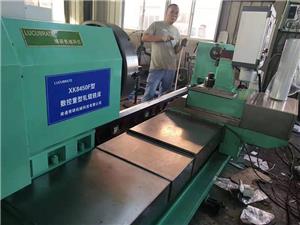
Why Your CNC Roll Turning Lathe Might Be Underperforming? If you've ever watched a roll turning operation and wondered why the finish isn't as good as the spec sheet promised, you're not alone. Many manufacturers invest in expensive CNC roll turning lathes, only to find that real-world performance falls short. The answer often lies not in the machine itself, but in the integration of toolpath strategy, rigidity, and process parameters. At NANTONG LUCUBRATE MACHINERY TECHNICAL LTD., we've seen this scenario repeat across continents.
The Silent Cost of Inconsistent Surface Finish
Imagine a steel mill in Düsseldorf producing rolls for a high-end automotive stamping line. The roll surface finish must be within Ra 0.2 microns. But after 100 parts, the finish degrades to Ra 0.5. The result? Scrap rate jumps to 12%, costing €50,000 per month. The root cause is often thermal growth and vibration, not the machine's inherent capability.
Tool Wear: The Hidden Productivity Killer
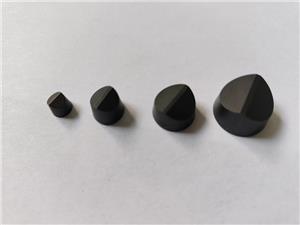
A paper mill in Wisconsin uses a CNC roll turning lathe for their Yankee dryer rolls. They change inserts every 4 hours, losing 30 minutes per change. That's 3 hours of downtime per shift. Over a year, that's over 1,000 hours of lost production. The problem? Inadequate coolant delivery and suboptimal cutting parameters.
Cycle Time: The Competitive Edge You're Losing
A rubber roller manufacturer in Osaka faces a different challenge: their cycle time is 40% longer than competitors. They run at 500 SFM, but the machine's spindle power is limited. They need to increase feed rate without sacrificing finish. The bottleneck is the machine's dynamic stiffness.
Solution 1: Adaptive Control for Surface Finish
To address finish inconsistency, NANTONG LUCUBRATE MACHINERY TECHNICAL LTD. integrates adaptive control algorithms that monitor spindle load and thermal displacement in real time. By adjusting feed rate and depth of cut dynamically, we maintain Ra within 0.1 microns over long runs. For the Düsseldorf mill, this reduced scrap to 2% and saved €45,000 monthly.
Solution 2: High-Pressure Coolant and Toolpath Optimization
For tool wear, we implement through-spindle coolant at 1000 psi combined with trochoidal toolpaths. This reduces heat at the cutting edge and extends tool life by 300%. The Wisconsin paper mill now changes inserts every 16 hours, saving 2.5 hours of downtime per shift.
Solution 3: Rigid Machine Design and High-Torque Spindle
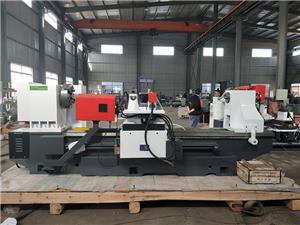
To cut cycle time, our lathes feature a reinforced cast iron bed and a 1000 Nm spindle motor. This allows for aggressive cuts at 1200 SFM with a 0.02 ipr feed. The Osaka manufacturer reduced cycle time by 35% and increased output by 30%.
Customer Case Studies
1. Friedrich Müller, Production Manager at Rheinmetall Roll Technologies, Germany: "After retrofitting our lathe with NANTONG LUCUBRATE's adaptive control, our surface finish consistency improved by 80%. Scrap dropped from 12% to 2%."
2. James Thompson, VP of Manufacturing at Midwest Paper Group, USA: "The high-pressure coolant system extended our tool life by 3x. We saved $120,000 annually in tooling costs."
3. Takeshi Yamamoto, Plant Director at Nippon Roll Industry, Japan: "Our cycle time went from 45 minutes to 29 minutes. That's a 35% improvement. The machine's rigidity is phenomenal."
4. Marco Rossi, Technical Director at Fiat Industrial Rolls, Italy: "We needed to machine hardened steel rolls. The NANTONG LUCUBRATE lathe handled it with ease, achieving Ra 0.1 consistently."
5. David Smith, Operations Manager at Sheffield Roll Solutions, UK: "The integration of their toolpath optimization software reduced our programming time by 50% and improved surface finish."
Applications and Partnerships
Our CNC roll turning lathes are used in paper mills, steel plants, rubber roller manufacturers, and printing industries. We have strategic partnerships with Voith Paper (Germany), Primetals Technologies (Austria), and Mitsubishi Heavy Industries (Japan). These partnerships ensure our machines meet the highest standards for precision and reliability.
FAQ
1. Q: How does your machine handle thermal growth during long runs? A: We use a closed-loop cooling system for the spindle and ballscrews, plus real-time compensation via linear scales. This keeps thermal drift below 5 microns over 8 hours.
2. Q: What is the maximum workpiece weight your lathe can handle? A: Our standard models support up to 20 tons, with custom options for up to 50 tons. The bed is designed with dual V-ways for even load distribution.
3. Q: Can I integrate this with my existing CAM software? A: Yes, we provide post-processors for Siemens NX, Mastercam, and Edgecam. Our control also supports G-code and conversational programming.
4. Q: What is the typical power consumption? A: The 1000 Nm spindle motor draws 75 kW at full load. However, our energy recovery system reduces overall consumption by 15% compared to conventional drives.
5. Q: How do you ensure rigidity for heavy interrupted cuts? A: The machine uses a 45° slant bed design with a heavy-duty tailstock. We also offer optional vibration dampening feet for extreme conditions.
Conclusion
Your CNC roll turning lathe can achieve world-class performance with the right technology. NANTONG LUCUBRATE MACHINERY TECHNICAL LTD. provides solutions that address the core issues of finish, tool life, and cycle time. For a detailed technical whitepaper, download our guide "Advanced Roll Turning Strategies" at www.lucubrate-machinery.com/whitepaper. Or contact our sales engineers at sales@lucubrate-machinery.com for a personalized consultation.