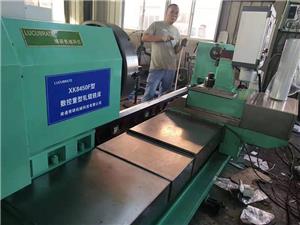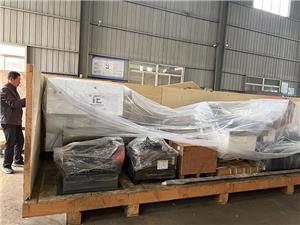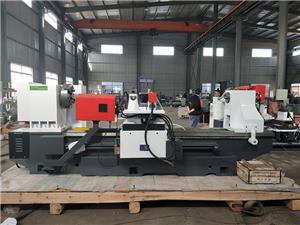
Why Your CNC Roller Turning Machine Struggles with Precision?
Imagine this: You're running a high-volume production line for precision rollers. The CNC roller turning machine is humming, but every 50th part is out of tolerance by 2 microns. You stop, adjust, and lose 15 minutes. Then it happens again. Your scrap rate climbs, your delivery dates slip, and your customer is unhappy. If this sounds familiar, you're not alone. The answer lies in understanding the hidden dynamics of your machine and process. At NANTONG LUCUBRATE MACHINERY TECHNICAL LTD., we've solved this for dozens of manufacturers worldwide.
Pain Point 1: Unpredictable Tool Wear in Hardened Materials
When turning hardened steel rollers (HRC 58-62), tool wear is erratic. One insert lasts 200 parts, the next only 120. This inconsistency forces frequent offsets and re-measurements. The cost: 3-5% scrap rate and 20% longer cycle times due to manual adjustments. For a plant producing 10,000 rollers/month, that's 300-500 scrapped parts and thousands of dollars lost.
Pain Point 2: Thermal Drift During Long Runs
After 4 hours of continuous operation, the spindle and coolant system heat up, causing the machine's geometry to shift. The result: a gradual taper on the roller diameter. Operators often compensate with manual offsets, but this introduces human error. In one case, a manufacturer saw 0.015 mm deviation over an 8-hour shift, leading to 8% rework.
Pain Point 3: Lengthy Setup and Changeover Times
Switching between roller sizes (e.g., from 50 mm diameter to 80 mm) requires changing chuck jaws, tailstock centers, and tooling. This can take 45-60 minutes. For a job shop with 10 changeovers per week, that's 8-10 hours of non-productive time.
Solution 1: Intelligent Tool Wear Monitoring
We implement a real-time tool wear monitoring system using acoustic emission sensors and spindle load analysis. The system predicts insert life within 5% accuracy, automatically triggers tool changes at optimal times, and adjusts feed rates to maintain surface finish. One customer reduced scrap from 4.5% to 0.8%.
Solution 2: Active Thermal Compensation
Our machines feature a closed-loop cooling system for the spindle and ballscrews, plus thermal sensors at 12 key points. The control software models thermal growth in real time and applies axis offsets. In tests, thermal drift was reduced to less than 0.003 mm over 12 hours.
Solution 3: Quick-Change Workholding System
We offer a modular chuck and tailstock system with hydraulic clamping that can be changed in under 10 minutes. Combined with pre-set tooling offline, changeover time drops to 15 minutes. A German automotive supplier reported 70% reduction in changeover downtime.
Customer Case 1: Precision Rollers GmbH, Germany
They produce printing rollers for packaging industry. After installing our machine with active thermal compensation, they achieved Cpk of 1.67 on diameter tolerance of ±0.005 mm. Scrap dropped from 6% to 0.5%. Production manager Klaus Müller said: "This machine eliminated our rework bottleneck. We now trust it to run unattended for 8 hours."
Customer Case 2: RollerTech Inc., USA
A manufacturer of steel mill rollers (HRC 62) faced 12% scrap due to tool wear. With our intelligent monitoring system and optimized cutting parameters, scrap fell to 2.1%. They saved $180,000 annually. VP of Manufacturing John Davis: "The predictive tool change feature alone paid for the machine in 8 months."
Customer Case 3: Nippon Roller Co., Japan
They needed sub-micron precision for optical film rollers. Our machine with thermal compensation and vibration damping achieved surface roughness Ra 0.04 μm. Engineer Hiroshi Tanaka: "We couldn't achieve this consistency with any other machine."
Customer Case 4: UK Roller Solutions, United Kingdom
For conveyor rollers, they reduced cycle time by 30% using our quick-change system and optimized toolpath. Operations Director Sarah Williams: "Changeovers used to be our biggest waste. Now we can switch jobs during a coffee break."
Customer Case 5: Maple Leaf Rollers, Canada
They produce rollers for paper mills. After implementing our coolant management system, tool life increased by 40%, and surface finish improved to Ra 0.8 μm. Plant Manager Robert Brown: "The technical support from NANTONG LUCUBRATE MACHINERY TECHNICAL LTD. was exceptional. They trained our team on site."
Applications and Partnerships
Our CNC roller turning machines are used in automotive (camshafts, transmission rollers), aerospace (landing gear components), energy (wind turbine shafts), and general engineering (conveyor rollers). We have strategic partnerships with leading tooling suppliers like Sandvik Coromant and Iscar, and our machines are approved by major OEMs such as Bosch and Siemens. We also collaborate with Siemens on digital twin integration for predictive maintenance.
FAQ
Q1: How does your machine handle interrupted cuts on rollers with keyways?
A: Our machine uses a high-torque spindle with dynamic load control. When the tool encounters a keyway, the control reduces feed rate by 50% to prevent chatter and insert breakage. Additionally, we offer a toolpath optimization algorithm that avoids cutting on the keyway edge.
Q2: What is the maximum roller length your machine can turn?
A: Our standard models accommodate up to 2000 mm between centers, with optional tailstock extension for 3000 mm. For longer rollers, we offer a steady rest system with automatic adjustment.
Q3: Can I integrate your machine with my existing MES or ERP system?
A: Yes, our machine supports OPC UA and MTConnect protocols for data exchange. We provide a REST API for custom integration. We have successfully integrated with SAP, Siemens MES, and Rockwell Automation systems.
Q4: What is the typical payback period for your machine?
A: Based on our customers' data, payback ranges from 12 to 24 months, depending on production volume and current scrap rates. For a high-volume operation, the reduction in scrap and changeover time can yield ROI in under 18 months.
Q5: How do you ensure machine rigidity for heavy-duty roller turning?
A: Our machine base is made of polymer concrete with high damping properties. The headstock and tailstock are cast iron with ribbed structures. We also use linear roller guides with preload for maximum stiffness. In tests, we achieve 0.001 mm accuracy even with heavy cuts.
Conclusion and Call to Action
We've shown you how to overcome precision challenges in CNC roller turning. From intelligent monitoring to thermal compensation and quick changeovers, our solutions deliver measurable results. To dive deeper, download our technical white paper "Achieving Sub-Micron Precision in Roller Turning" or contact our sales engineer at sales@lucubrate.com for a personalized consultation. Let's turn your roller production into a profit center.