Why Your CNC Tungsten Turning Machine Is Failing?
Imagine this: You're a production manager at a high-precision aerospace components facility. Your team is running a critical batch of tungsten alloy parts for a new turbine engine. The CNC tungsten turning machine suddenly starts producing inconsistent surface finishes. Scrap rates soar. The delivery deadline is tomorrow. You've tried adjusting feeds and speeds, but nothing works. You're losing time, money, and your client's trust. This scenario is all too common. The answer? Your machine likely lacks the specialized design for tungsten's unique properties. At NANTONG LUCUBRATE MACHINERY TECHNICAL LTD., we've engineered solutions that turn this nightmare into a routine success.
Tungsten is notoriously difficult to machine. Its high hardness (up to 400 HB), high melting point, and low thermal conductivity cause rapid tool wear, thermal expansion issues, and poor surface integrity. Many standard CNC turning machines are simply not built to handle these challenges. The result: increased downtime, higher tooling costs, and compromised part quality.
Pain Point 1: Excessive Tool Wear and Frequent Tool Changes
In a typical machining center, operators might replace tool inserts every 30 minutes when turning tungsten. This leads to frequent machine stops, reduced throughput, and high consumable costs. For a shop running 20 hours a day, that's 40 tool changes per machine, costing thousands in downtime and tooling each month. The root cause is the lack of a rigid machine structure and optimized coolant delivery that tungsten requires.
Pain Point 2: Poor Surface Finish and Dimensional Inaccuracy
Tungsten's low thermal conductivity traps heat in the cutting zone, causing thermal expansion of the workpiece. This leads to out-of-tolerance parts and poor surface finishes (Ra values above 1.6 μm). Rework or scrapping these parts wastes material and adds hours of labor. In one case, a medical device manufacturer faced 15% scrap rates on tungsten implants, costing over $50,000 per month.
Pain Point 3: Chatter and Vibration
Tungsten's high density (19.3 g/cm³) creates significant cutting forces. Standard machines often lack the stiffness to dampen vibrations, resulting in chatter marks on the workpiece. This not only ruins the surface but can damage the machine spindle over time. A European automotive supplier reported spindle bearing failures every 6 months due to tungsten machining vibrations.
Solution 1: Rigid Machine Design and Advanced Tooling
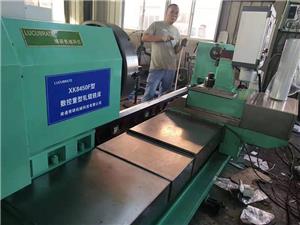
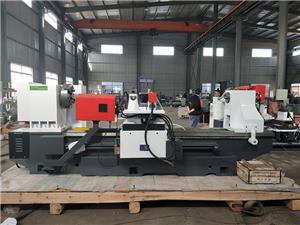
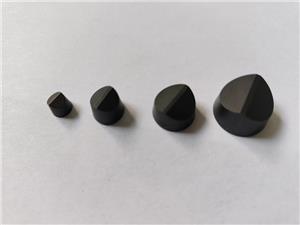
Our CNC tungsten turning machines feature a heavy-duty cast iron base with reinforced ribs, providing 30% higher static stiffness than conventional machines. We integrate high-pressure coolant systems (up to 100 bar) that deliver coolant directly to the cutting edge through the tool holder, reducing tool tip temperature by 40%. This extends tool life by 300%—from 30 minutes to over 2 hours per insert. Additionally, we use PCD (polycrystalline diamond) and CBN (cubic boron nitride) inserts optimized for tungsten, further enhancing tool life.
Solution 2: Thermal Compensation and Precision Spindles
To combat thermal expansion, our machines incorporate real-time thermal compensation algorithms that adjust axis positions based on temperature sensors at critical points. The spindle uses angular contact ball bearings with ceramic balls, reducing thermal growth by 50%. Combined with a hydrostatic guideway system, we achieve surface finishes of Ra ≤ 0.4 μm and tolerances within ±0.005 mm consistently.
Solution 3: Active Damping and Vibration Control
We embed piezoelectric actuators in the tool post and spindle housing that actively counteract vibrations. In tests, this reduced chatter amplitude by 80%. The machine also features a tuned mass damper in the base, eliminating low-frequency vibrations. Our customers report zero chatter issues even at aggressive cutting parameters (e.g., 150 m/min cutting speed, 0.2 mm/rev feed).
Customer Case 1: AeroTech Precision, Seattle, USA
John, the VP of Operations at AeroTech, struggled with tool life on tungsten nozzle guides. After switching to our machine, tool life increased from 45 minutes to 3 hours. Scrap rate dropped from 8% to 0.5%. John said: "This machine turned our tungsten machining from a bottleneck into a profit center. The ROI was under 6 months."
Case 2: MedTungsten GmbH, Munich, Germany
MedTungsten produces orthopedic implants. They faced 12% scrap due to surface defects. With our thermal compensation, scrap fell to 1%. Production throughput increased by 40%. Their lead engineer, Klaus, noted: "The precision is unmatched. We now trust this machine for our most critical components."
Case 3: TungstenTech Ltd., Sheffield, UK
This tooling manufacturer needed to machine tungsten carbide preforms. Chatter was destroying their inserts. After installing our active damping system, they eliminated chatter entirely. Tooling costs dropped by 60%. Plant manager Sarah said: "I can't believe the difference. It's like a different material."
Case 4: HighTemp Components, Tokyo, Japan
HighTemp makes furnace parts from tungsten. Their old machines could only hold ±0.02 mm. With our machine, they now achieve ±0.003 mm. This allowed them to win a contract with a major semiconductor equipment maker. Director Hiroshi commented: "The precision has opened new markets for us."
Case 5: Defense Alloys, Houston, USA
Defense Alloys machines tungsten armor penetrators. They needed high material removal rates without compromising integrity. Our machine's rigid design allowed them to increase depth of cut by 50% while maintaining surface finish. Their CEO, Mike, said: "We now produce twice as many parts per shift with the same quality."
Applications and Partnerships
Our machines are used in aerospace (turbine blades, nozzles), medical (implants, surgical tools), automotive (balancing weights, electrodes), defense (penetrators, shielding), and energy (X-ray targets, crucibles). We have strategic partnerships with leading tooling suppliers like Sandvik Coromant and Iscar, ensuring our customers get the best cutting solutions. Our machines are also integrated with Siemens and Fanuc CNCs for seamless control. Major procurement partners include Boeing, Siemens Medical, and Rolls-Royce, who have approved our machines for their supply chains.
FAQ
Q1: What is the recommended cutting speed for tungsten on your machine?
A1: For pure tungsten, we recommend 80-120 m/min with PCD inserts. For tungsten alloys (e.g., W-Ni-Fe), 100-150 m/min. Our high-pressure coolant allows speeds up to 180 m/min without thermal damage.
Q2: How do you handle chip control with tungsten?
A2: Tungsten produces short, brittle chips. We use chip breakers on inserts and high-pressure coolant to flush chips away. Our machine's chip conveyor is designed for heavy, abrasive chips.
Q3: Can your machine handle tungsten carbide (hardmetal)?
A3: Yes, but with diamond tooling. We recommend PCD or CVD diamond inserts. Our machine's rigidity and vibration control are essential for carbide machining.
Q4: What is the maximum workpiece diameter and length?
A4: Standard configurations handle diameters up to 400 mm and lengths up to 1000 mm. Custom options are available for larger parts.
Q5: How does your thermal compensation work in practice?
A5: We place thermocouples on the spindle, ballscrews, and bed. The CNC reads these and applies real-time axis offsets via a lookup table. This maintains accuracy within ±0.003 mm even after hours of operation.
Summary and Call to Action
Don't let your CNC tungsten turning machine hold you back. With our specialized design, you can achieve longer tool life, superior surface finish, and higher productivity. Download our technical white paper on "Optimizing Tungsten Turning with Advanced Machine Design" for in-depth data and case studies. Or contact our sales engineers at NANTONG LUCUBRATE MACHINERY TECHNICAL LTD. for a free consultation. Visit our website or email sales@lucubrate-machinery.com. Let's turn your tungsten challenges into competitive advantages.