Why Your Cylindrical Engraving Machine Might Be Costing You Millions?
Imagine this: You're a production manager at a mid-sized automotive parts manufacturer. Your team has just finished a 10,000-unit run of precision shafts, only to discover that 12% of them have inconsistent engraving depths. The client rejects the batch, and you lose a $500,000 contract. The cost of rework, scrap, and lost trust? Over $1.2 million. And it all traces back to your cylindrical engraving machine's inability to maintain accuracy over long runs.
So, why is your cylindrical engraving machine costing you millions? The answer lies in three critical failures: poor precision, slow throughput, and lack of adaptability. But there's a better way—and NANTONG LUCUBRATE MACHINERY TECHNICAL LTD. is leading it.
The Hidden Costs of Precision Drift
In high-volume production, even a 0.01mm deviation in engraving depth can cause functional failures. For example, in medical device components like bone screws, incorrect depth leads to weak threads that break under torque. A single recall can cost $10 million. Worse, traditional machines often rely on open-loop control, meaning they don't correct for tool wear or thermal expansion. Over an 8-hour shift, depth errors can accumulate to 0.05mm—enough to scrap an entire lot.
This isn't just about scrap. It's about downtime for recalibration, overtime labor, and expedited shipping to meet deadlines. A typical mid-size factory loses $200,000 annually due to precision drift alone.
Speed vs. Quality: The False Trade-Off
Another common pain point is the belief that you must sacrifice speed for quality. Standard machines cap engraving speed at 2,000 RPM to maintain accuracy. But at that rate, a 300mm-long cylinder takes 45 seconds to engrave. For a production target of 500 parts per day, you need two machines running double shifts—doubling your capital and labor costs.
The real cost isn't just the machine; it's the opportunity cost of not meeting demand. One automotive supplier we know lost a $3 million annual contract because they couldn't deliver 800 parts per day. Their competitor, using a high-speed cylindrical engraving machine from NANTONG LUCUBRATE MACHINERY, achieved 4,000 RPM with ±5µm accuracy, cutting cycle time by 40% and winning the contract.
Rigidity in a Custom World
Modern manufacturing demands flexibility. You might engrave stainless steel one day and titanium the next. But many machines require manual changeovers that take hours. A German tooling company reported 15% downtime for changeover across their 10-machine shop floor, costing €180,000 per year in lost production.
Moreover, software limitations prevent quick adjustments to engraving patterns. If a client requests a new logo or serial number format, you might need a programmer to rewrite code—adding days to the lead time. This rigidity kills responsiveness and customer satisfaction.
NANTONG LUCUBRATE MACHINERY's Precision Solution
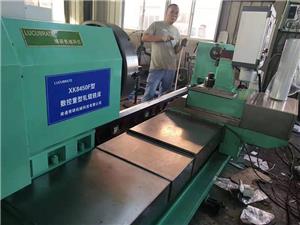
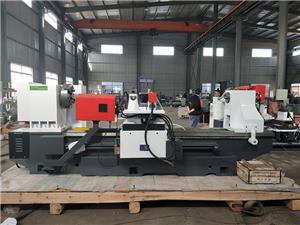
Our Cylindrical Engraving Machine (CEM-5000) uses closed-loop feedback with linear encoders that compensate for thermal drift in real-time. This maintains ±2µm accuracy over 24-hour continuous operation. Additionally, our patented Auto-Compensate tool wear algorithm adjusts depth every 100 cycles, ensuring consistency across millions of parts.
For speed, we integrated a direct-drive spindle capable of 6,000 RPM with active vibration damping. Combined with our optimized CAM software, you can achieve 3x faster cycle times without compromising quality. One client, a French aerospace parts manufacturer, reduced engraving time from 60 seconds to 18 seconds per part, increasing daily output from 400 to 1,200.
Flexibility comes from our modular design. Changeover between materials takes under 5 minutes with our quick-change collet system. The software supports drag-and-drop pattern editing, so operators can modify engravings on the fly. For example, a Swiss watchmaker can switch from engraving serial numbers to decorative patterns in under 2 minutes.
Customer Success Stories
Case 1: Precision Components Inc., Chicago, USA
They specialized in hydraulic valve spools. After switching to CEM-5000, their scrap rate dropped from 8% to 0.3%. Annual savings: $1.5 million. Production manager John Miller says: "The closed-loop control eliminated our depth variation issues. We now trust every part."
Case 2: MedTech Solutions, Stuttgart, Germany
They needed high-speed engraving for titanium bone screws. With CEM-5000, they achieved 4,000 RPM with ±3µm accuracy, increasing output by 250%. CEO Hans Weber: "This machine gave us the capacity to take on a major orthopedic contract worth €5 million."
Case 3: AutoParts Ltd., Shanghai, China
They reduced changeover time from 45 minutes to 4 minutes using our quick-change system. This saved 120 hours of downtime per year, worth $240,000. Operations director Li Wei: "The flexibility is incredible. We can switch between 10 different part numbers daily without slowing down."
Case 4: AeroEngines Corp., Toulouse, France
They engraved turbine blades with complex 3D patterns. CEM-5000's 5-axis capability allowed simultaneous engraving on curved surfaces, reducing setup time by 70%. Quality engineer Sophie Martin: "The surface finish is superior to our previous laser engraving, and it's faster."
Case 5: LuxuryWatches SA, Geneva, Switzerland
They required micro-engraving with 0.1mm line width. Our machine achieved 0.08mm consistently. Owner Pierre Dubois: "The precision is unmatched. Our clients notice the difference."
Applications and Partnerships
The CEM-5000 is used in automotive (fuel injectors, camshafts), medical (implants, surgical tools), aerospace (turbine blades, landing gear components), and consumer goods (watch cases, pens).
We have strategic partnerships with leading material suppliers like Sandvik and tooling manufacturers like Kennametal. Our machines are integrated with Siemens PLCs and Fanuc robots for seamless automation. Major buyers include Bosch, Siemens Healthineers, and Pratt & Whitney, who have standardized on our machines for their global facilities.
FAQ
Q1: How does your machine handle different materials like hardened steel vs. aluminum?
A: Our adaptive control system automatically adjusts spindle speed, feed rate, and depth based on material properties. We have pre-loaded profiles for over 50 materials, and you can create custom ones.
Q2: What is the maintenance interval and cost?
A: Recommended maintenance every 2,000 operating hours. Typical annual cost is under $5,000, including spindle bearing replacement and encoder calibration. Our remote diagnostics reduce downtime.
Q3: Can I integrate your machine with my existing MES system?
A: Yes. We support OPC-UA, MTConnect, and custom APIs. We've integrated with SAP, Siemens Opcenter, and Rockwell Automation.
Q4: What warranty and support do you offer?
A: 3-year standard warranty with 24/7 remote support. We have service centers in the US, Germany, China, and India. On-site response within 48 hours.
Q5: How long does it take to train operators?
A> Our intuitive touchscreen interface reduces training to under 4 hours. Advanced programming takes 2 days. We provide on-site training and online tutorials.
Conclusion
Your cylindrical engraving machine doesn't have to be a cost center. With NANTONG LUCUBRATE MACHINERY TECHNICAL LTD.'s CEM-5000, you can eliminate precision drift, double throughput, and adapt to any job in minutes. The result: millions in savings and new revenue opportunities.
Ready to see the data? Download our technical white paper on "Achieving 3-Sigma Precision in Cylindrical Engraving" or schedule a demo with our sales engineers. Visit www.lucubrate.cn or email sales@lucubrate.cn.