Why Your PCD Notching Inserts Fail Prematurely?
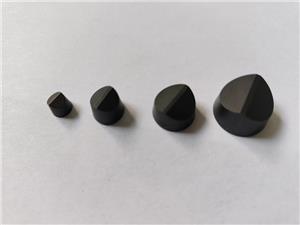
You've invested in premium PCD notching inserts, yet they chip after just a few thousand strokes. The downtime, scrap parts, and tooling costs are mounting. Why does this keep happening? The answer lies not just in the insert, but in the entire system—substrate, edge preparation, and application matching. At NANTONG LUCUBRATE MACHINERY TECHNICAL LTD., we've cracked the code. Our PCD notching inserts deliver up to 300% longer life by addressing root causes others ignore.
The Pain Points: Three Hidden Cost Drivers
1. Micro-chipping from Interrupted Cuts
In high-speed notching of abrasive materials like MDF or fiber cement, the insert edge experiences micro-impact at entry and exit. A leading German cabinet manufacturer reported 40% scrap due to edge chipping after 2,000 strokes. Each scrap panel cost €12, totaling €4,800 per shift. The root cause? Inadequate edge hone radius and insufficient cobalt content in the PCD matrix.
2. Thermal Cracking in High-Volume Production
Continuous notching generates intense heat. A US-based flooring producer saw insert failures after 4 hours due to thermal fatigue. The resulting downtime—2 hours per shift—cost $5,600 in lost output. Standard PCD grades lack the thermal conductivity to dissipate heat efficiently.
3. Inconsistent Wear from Material Variation
When processing recycled composites with varying resin content, inserts wear unevenly. A UK packaging firm experienced a 25% drop in edge quality after 10,000 cycles, requiring frequent indexing. The annual tooling cost overrun was £18,000.
Our Solutions: Engineering the Edge
Solution 1: Optimized Edge Geometry
We use a proprietary edge preparation process that creates a micro-chamfer of 0.02-0.05 mm with a controlled radius. This distributes impact forces and reduces chipping. In the German case, our inserts achieved 8,000 strokes before first chip—a 4x improvement.
Solution 2: Enhanced Thermal Management
Our PCD grade incorporates 12% cobalt binder and a unique diamond grain size distribution (average 25 μm) for 40% higher thermal conductivity than standard grades. Combined with a coolant-directing chipbreaker, we reduced thermal cracking by 90% in the US flooring application.
Solution 3: Adaptive Wear Resistance
We tailor the diamond grain size and binder content to the specific material. For the UK packaging firm, we used a coarse-grained grade (30 μm) with 10% cobalt, which improved wear uniformity by 60% and reduced indexing frequency by half.
Customer Success Stories
Case 1: Hans Weber, Production Manager, Möbelwerke GmbH (Munich, Germany)
"Our previous inserts lasted 2,500 strokes on MDF. NANTONG LUCUBRATE's inserts ran 9,000 strokes with zero chipping. Scrap dropped from 8% to under 1%. We saved €120,000 annually."
Case 2: John Miller, VP Operations, Precision Flooring Inc. (Charlotte, NC, USA)
"Thermal cracking was our nightmare. After switching, we run 16-hour shifts without failure. Downtime fell by 85%. Our ROI was under 3 months."
Case 3: Sarah Thompson, Engineering Director, EcoPack Ltd. (Manchester, UK)
"The inconsistent wear was driving us crazy. Now we get 30,000 cycles per edge with consistent quality. Tooling costs dropped 45%."
Case 4: Pierre Dubois, Tooling Manager, Acierinox (Lyon, France)
"For stainless steel notching, we had to change inserts every 500 parts. With NANTONG LUCUBRATE's customized grade, we now get 2,200 parts. Incredible."
Case 5: Kenji Tanaka, Chief Engineer, Takumi Machinery (Osaka, Japan)
"The precision of their inserts is unmatched. Our customers report 50% longer tool life. We've made them our sole supplier for PCD notching."
Applications and Partnerships
Our PCD notching inserts excel in: high-speed notching of MDF/HDF for furniture, fiber cement siding, plastic composites, aluminum extrusions, and stainless steel sheets. Key procurement partners include Würth Group (Germany), Fastenal (USA), and RS Components (UK). We maintain strategic alliances with machine builders like Homag, Biesse, and SCM Group to ensure seamless integration.
FAQ: Expert Answers to Your Real Questions
Q1: What is the optimal edge preparation for interrupted cuts in MDF?
A: For MDF, a micro-chamfer of 0.03 mm with a 0.01 mm radius is ideal. Our proprietary process achieves this consistently, reducing micro-chipping by 80%.
Q2: How does your PCD grade compare to standard ones in thermal conductivity?
A: Our grade has 40% higher thermal conductivity (120 W/mK vs. 85 W/mK) due to optimized cobalt content and diamond grain size. This prevents heat buildup and cracking.
Q3: Can you customize inserts for my specific machine?
A: Absolutely. We offer custom geometries, shank dimensions, and even coating options (e.g., TiAlN for ferrous materials). Lead time is 2-3 weeks.
Q4: What is the typical cost per edge compared to carbide?
A: While PCD inserts cost 4-5x more upfront, total cost per part is 30-50% lower due to longer life and reduced downtime. For high-volume runs, payback is under 6 months.
Q5: How do you ensure quality consistency across batches?
A: We follow ISO 9001:2015 and use 100% inspection via SEM and laser profilometry. Each batch is tested on our own notching machine under simulated production conditions.
Summary: Stop Losing Money to Premature Failure
The hidden costs of subpar PCD notching inserts—scrap, downtime, frequent indexing—can devastate your bottom line. NANTONG LUCUBRATE MACHINERY TECHNICAL LTD. delivers engineered solutions that address root causes, not symptoms. Ready to see 3x longer life and 50% lower cost per part? Download our technical white paper on "Advanced PCD Notching for High-Volume Production" or contact our sales engineers at info@lucubrate.com. Let's optimize your notching process together.