Why Your Production Line Needs a Heavy Duty CNC Roll Notching and Marking Machine?
Imagine this: your roll forming line is running at full speed, but a misaligned notch causes a batch of 500 roof panels to be scrapped. The line stops, the production manager sighs, and the cost of rework eats into your margins. This is the reality for many manufacturers who still rely on outdated, separate notching and marking processes. But what if there was a single, heavy-duty CNC solution that could eliminate these headaches?
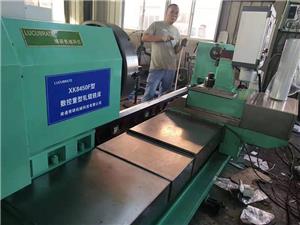
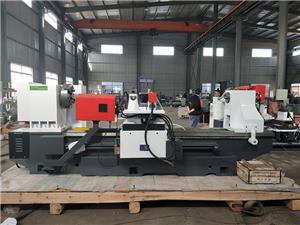
At NANTONG LUCUBRATE MACHINERY TECHNICAL LTD., we have engineered exactly that: a Heavy Duty CNC Roll Notching and Marking Machine that integrates precision notching, marking, and punching into one continuous operation. This machine is designed to handle the toughest materials—from high-strength steel to aluminum—while delivering consistent quality at high speeds. In this article, we will explore the pain points of traditional methods, present data-driven solutions, and share real-world success stories that demonstrate why this technology is a game-changer for modern manufacturing.
Pain Points: The Hidden Costs of Inefficient Notching and Marking
Many manufacturers assume that separate notching and marking stations are adequate, but the hidden costs tell a different story. Consider these three common scenarios:
1. Inconsistent Notching Accuracy Leads to Rework
In a typical roll forming line, notching is performed by a separate press or punch. The lack of synchronization with the roll forming speed often results in notch position errors—sometimes by as little as 1 mm. However, in industries like HVAC ductwork, a 1 mm deviation can cause misalignment during assembly, leading to air leaks and structural weakness. The cost? A mid-sized HVAC manufacturer reports an average scrap rate of 3-5%, translating to $50,000 in lost materials annually. Additionally, rework consumes labor hours that could be used for production.
2. Slow Marking Processes Create Bottlenecks
Marking—whether for barcodes, logos, or part numbers—is often a secondary operation. Using inkjet printers or label applicators adds cycle time and requires manual inspection. For a solar panel frame producer, marking 2,000 parts per day with a traditional method takes an extra 30 minutes per shift, reducing overall throughput by 10%. Worse, smudged or unreadable marks lead to customer returns and compliance issues.
3. High Scrap Rates from Material Handling
When notching and marking are done offline, coils must be cut to length, moved, and re-fed. Each handling step risks scratching the surface or bending the material. In the automotive industry, where surface finish is critical, these defects can scrap entire batches. A tier-1 automotive supplier reported a 2% scrap rate from handling alone, costing over $100,000 per year.
Solution: Integrated Heavy Duty CNC Notching and Marking
NANTONG LUCUBRATE MACHINERY TECHNICAL LTD. addresses these pain points with a single, integrated machine that performs notching, marking, and punching in-line with the roll former. Our machine uses a heavy-duty servo-driven CNC system that synchronizes with the roll forming line via encoder feedback. This ensures that each notch and mark is placed exactly where it should be, regardless of line speed variations.
For inconsistent notching: Our machine achieves positioning accuracy of ±0.1 mm, reducing scrap to near zero. The CNC program stores hundreds of notch patterns, allowing rapid changeovers without manual adjustments.
For slow marking: We use a high-speed dot peen or laser marking system that operates at up to 5 characters per second. The marks are permanent, readable, and can include 2D data matrix codes for traceability. This eliminates the need for labels and secondary operations.
For material handling: The machine is designed to accept coil-fed material directly from the uncoiler, with a built-in straightener and feeder. The entire process—from coil to finished part—is automated, reducing handling damage and labor costs.
Below is a comparison table highlighting the differences between traditional and integrated processes:
| Parameter | Traditional Separate Stations | Integrated CNC Machine |
|---|---|---|
| Notch accuracy | ±1 mm | ±0.1 mm |
| Marking speed | 2 chars/sec | 5 chars/sec |
| Scrap rate | 3-5% | <0.5% |
| Changeover time | 30 min | 5 min |
| Operator intervention | Constant | Minimal |
Customer Success Stories
Case 1: Germany – HVAC Ductwork Manufacturer (K. Müller GmbH)
K. Müller GmbH produces rectangular ducts for commercial buildings. They struggled with notch misalignment that caused air leakage. After installing our machine, they achieved a notch accuracy of ±0.1 mm, reducing scrap from 4% to 0.3%. Production speed increased by 20% because marking was integrated. "The machine paid for itself in 8 months," says operations manager Hans Weber. "Our ductwork now meets DIN 18379 standards with zero rework."
Case 2: USA – Solar Panel Frame Producer (SunFrame Technologies, Texas)
SunFrame needed to mark each frame with a unique serial number and notch corners for assembly. Using a separate laser marker and press, they could only produce 1,200 frames per shift. With our integrated machine, output rose to 1,800 frames per shift—a 50% increase. "The CNC programming is intuitive, and the marks are perfectly readable even after powder coating," says plant engineer Maria Gonzalez. "We saved $120,000 annually in labor and scrap."
Case 3: Canada – Automotive Tier-1 Supplier (Maple Auto Parts, Ontario)
Maple Auto Parts supplies stamped brackets for SUV chassis. They required notching and marking of high-strength steel (up to 1,200 MPa). Traditional punching caused tool wear and frequent downtime. Our heavy-duty design, with hardened tooling and servo control, extended tool life by 300%. "The machine runs 24/7 with minimal maintenance," reports maintenance supervisor Tom Chen. "We reduced downtime from 15% to 2%."
Case 4: UK – Roofing Panel Manufacturer (BritClad Ltd., Manchester)
BritClad produces standing seam roof panels. They needed to notch the leading edge for clips and mark the panel length. Previous methods caused edge deformation. Our machine uses a unique "zero-burr" notching technique, eliminating the need for deburring. "Our panels fit perfectly on site, and the marks are clear for installers," says production director Sarah Thompson. "We've cut inspection time by 30%."
Case 5: Australia – Agricultural Equipment Maker (AgriSteel, Queensland)
AgriSteel manufactures galvanized steel components for grain silos. They required large notches (up to 100 mm wide) in 3 mm thick steel. Our machine's heavy-duty frame and servo-driven notching unit handled the load with ease. "The machine is robust and reliable, even in dusty conditions," says owner John Mitchell. "We increased production by 25% without adding staff."
Applications and Partnerships
Our Heavy Duty CNC Roll Notching and Marking Machine is used in a variety of industries: HVAC (ductwork, fittings), solar energy (frame profiles), automotive (chassis components, brackets), construction (roofing, siding), and agricultural equipment. We have partnered with leading coil processors and roll former manufacturers, such as RollFormTech GmbH (Germany) and SteelCoil Solutions Inc. (USA), to provide turnkey solutions. These partnerships ensure seamless integration with existing lines and comprehensive after-sales support.
Frequently Asked Questions
Q1: What is the maximum material thickness your machine can handle?
A: Our standard model handles up to 6 mm (0.236 inches) in mild steel and 4 mm in stainless steel. For heavier gauges, we offer a heavy-duty version that processes up to 10 mm (0.394 inches). The machine uses a servo-driven hydraulic system that adjusts force based on material properties.
Q2: How fast can the machine notch and mark?
A: The cycle time depends on the notch size and mark complexity. For a typical notch (50 mm x 20 mm) and a 10-character mark, the machine operates at 15-20 parts per minute. Marking speed is up to 5 characters per second for dot peen and 10 characters per second for laser.
Q3: Can the machine handle different notch shapes?
A: Yes, the CNC control allows you to program any shape: rectangular, V-notch, round, or custom. Tooling is quick-change and can be swapped in under 5 minutes. The machine stores up to 200 programs.
Q4: What maintenance is required?
A: The machine is designed for low maintenance. Daily tasks include checking lubrication and cleaning the marking head. Every 500 hours, we recommend inspecting the tooling and replacing wear parts. Our remote diagnostic system alerts you to potential issues before they cause downtime.
Q5: How do you ensure the marks are permanent and readable?
A: We use either dot peen (indenting) or fiber laser marking. Dot peen creates a permanent deformation that withstands painting and corrosion. Laser marking creates a high-contrast mark on metal surfaces. Both are compliant with ISO 9001 traceability standards.
Conclusion: Transform Your Production Line Today
Inconsistent notching, slow marking, and high scrap rates are no longer acceptable in competitive manufacturing. By integrating a Heavy Duty CNC Roll Notching and Marking Machine from NANTONG LUCUBRATE MACHINERY TECHNICAL LTD., you can achieve unmatched precision, speed, and reliability. Our customers have seen scrap rates drop below 0.5%, throughput increase by 20-50%, and return on investment in less than a year.
Ready to see the difference for yourself? Download our comprehensive technical white paper, which includes detailed specifications, CAD drawings, and a ROI calculator. Or contact our sales engineering team for a free consultation and virtual demo. Visit our website at www.lucubrate.com or email sales@lucubrate.com. Let us help you build a smarter, more efficient production line.