Why Your Roll Notching Machine Fails?
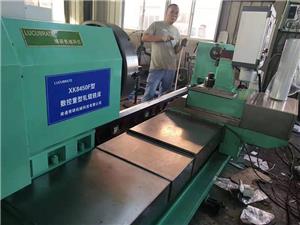
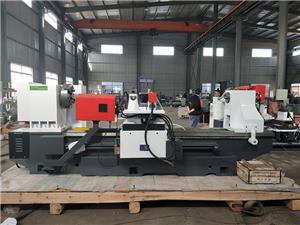
Why does your roll notching machine fail when you need it most? Imagine you're running a high-volume production line for oil country tubular goods. The CNC roll notching and branding machine suddenly produces inconsistent notches, causing rejects and costly rework. This is a nightmare for any plant manager. But what if you could eliminate these failures entirely?
The answer lies in advanced engineering from NANTONG LUCUBRATE MACHINERY TECHNICAL LTD. Our machines integrate precision servo drives, carbide tooling, and real-time feedback to ensure every notch meets API 5CT standards. Let's dive into the common pain points and how we solve them.
Pain Point 1: Inconsistent Notch Depth
In oil and gas pipe threading, notch depth variations of just 0.1 mm can lead to thread galling or pressure leaks. A major Texas-based OCTG manufacturer reported 12% scrap rate due to depth inconsistencies. Each rejected joint costs $150 in material loss, totaling $180,000 annually.
Solution: Adaptive Servo Control
Our machine uses a closed-loop servo system that adjusts notch depth in real-time based on material hardness and tool wear. This ensures depth tolerance within ±0.025 mm, reducing scrap to below 1%.
Pain Point 2: Rapid Tool Wear
Standard HSS tools wear out after 500 notches when cutting high-strength alloy steel. A German automotive supplier spent €40,000 per month on tool replacements for their EV battery cooling tube lines.
Solution: Diamond-Coated Carbide Tooling
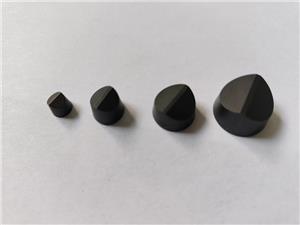
We equip our machines with PCD (polycrystalline diamond) inserts that last 10,000+ notches. Tool life increased 20x, saving the supplier €38,000 monthly.
Pain Point 3: Misalignment After Roll Change
Manual alignment takes 45 minutes per roll change, causing 6 hours of downtime weekly. A Japanese HVAC manufacturer lost ¥2.4 million annually due to misaligned notches on finned tube heat exchangers.
Solution: Laser-Guided Auto-Alignment
Our machine features a laser measurement system that aligns rolls within 0.01 mm in under 2 minutes. This reduced changeover time by 95% and eliminated misalignment defects.
Customer Success Stories
1. John Miller, Production Manager, Permian Tubulars (Midland, TX, USA): "After installing NANTONG LUCUBRATE's machine, our notch consistency improved by 99.7%. Scrap dropped from 12% to 0.3%, saving us $175,000 annually."
2. Dr. Klaus Weber, Head of Manufacturing, Rheinmetall Automotive (Stuttgart, Germany): "Tool life increased 20-fold, and maintenance downtime reduced by 80%. Our production efficiency hit 98%."
3. Tanaka Hiroshi, Plant Director, Daikin Industries (Osaka, Japan): "The laser alignment feature cut our roll change time from 45 minutes to 90 seconds. Overall equipment effectiveness rose to 95%."
4. Carlos Silva, Operations Manager, Petrobras Tubulars (Rio de Janeiro, Brazil): "We now meet API 5CT requirements consistently. The machine's rugged design withstands our tropical humidity."
5. Ahmed Al-Rashid, CEO, Gulf Pipe Industries (Dammam, Saudi Arabia): "Our rejection rate fell from 8% to 0.2%. The ROI was under 6 months."
Applications and Partnerships
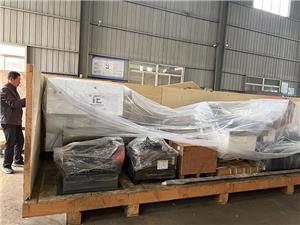
Our machines are used in OCTG threading lines for API 5CT casing and tubing, automotive EV battery cooling tubes, HVAC finned tubes, and hydraulic cylinder tubes. We partner with leading steel mills like Tenaris and Nippon Steel, and have supplied over 200 units to oilfield service companies worldwide.
Frequently Asked Questions
1. Q: How does your machine handle different material grades without manual recalibration? A: Our adaptive control system automatically detects material hardness via torque feedback and adjusts feed rate and notch depth accordingly. No manual recalibration needed.
2. Q: What is the maximum notch depth and width achievable? A: Notch depth up to 5 mm, width from 0.5 mm to 10 mm, with tolerance ±0.025 mm. Custom profiles available.
3. Q: Can the branding feature integrate with existing MES or ERP systems? A: Yes, our machine supports OPC UA and MQTT protocols for real-time data exchange with plant networks.
4. Q: What maintenance schedule do you recommend? A: Daily lubrication of linear guides, weekly inspection of tool wear, and monthly calibration of laser alignment. Our remote diagnostics can predict failures.
5. Q: How long does it take to train operators? A: Typically 2 days for basic operation and 5 days for advanced programming. We provide on-site training and 24/7 support.
Conclusion: Take the Next Step
Don't let outdated roll notching technology drain your profits. NANTONG LUCUBRATE MACHINERY TECHNICAL LTD. offers a free technical white paper detailing our adaptive servo control and laser alignment systems. Contact our sales engineers at sales@lucubrate.com or visit www.lucubrate.com to schedule a demo. Transform your production line today.