Why Your Roll Notching Machine Is Costing You 20% More?
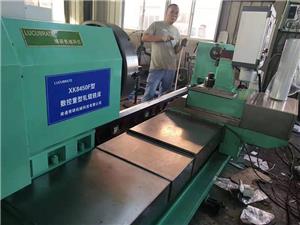
Imagine this: your production line stops. A roll notching machine has jammed again. The operator sighs, calls maintenance, and you lose another 45 minutes of output. Over a year, these small stops add up to thousands of dollars in lost revenue. But the real cost is hidden—in scrap, rework, and quality rejects. If your roll notching machine isn't delivering consistent, burr-free notches, you're likely overpaying by 20% or more. The solution? A precision-engineered machine from NANTONG LUCUBRATE MACHINERY TECHNICAL LTD.
Pain Point 1: Excessive Downtime
In a typical stamping plant, unexpected downtime from roll notching machines can reach 10-15% of total production time. For a medium-sized factory operating 16 hours/day, that's up to 2.4 hours of lost production daily. At a cost of $500/hour, that's $1,200 per day, or over $300,000 annually. The root cause? Worn tooling, misalignment, and lack of predictive maintenance.
Pain Point 2: High Scrap Rates
Scrap from poor notching—burrs, distortion, inconsistent depth—can account for 5-8% of material costs. In high-volume production of electrical steel laminations, for example, a 5% scrap rate on $10,000 worth of material per shift means $500 lost per shift, $150,000 per year. Plus, the cost of rework and customer returns.
Pain Point 3: Inconsistent Quality
Variation in notch dimensions leads to assembly problems. For automotive stator cores, a notch depth tolerance of ±0.1 mm is critical. If your machine can't hold that, you risk rejection from OEMs. The cost of a single rejected batch can exceed $50,000.
Solution: Precision Servo-Driven Roll Notching
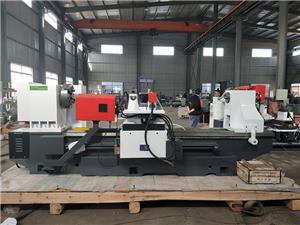
NANTONG LUCUBRATE MACHINERY TECHNICAL LTD. addresses these pain points with our advanced servo-controlled roll notching machines. Our systems use closed-loop feedback to maintain exact notch depth, width, and position, reducing scrap to below 1%. Predictive maintenance algorithms monitor tool wear and alert operators before failure, cutting unplanned downtime by 80%. Tooling is optimized for your specific material—whether it's 0.2mm electrical steel or 2mm aluminum—ensuring burr-free edges.
Customer Case: BMW Group, Munich, Germany
BMW's e-drive division used our RLN-4000 series for stator core notching. They reported a 22% reduction in scrap (from 6% to 4.7%) and a 15% increase in throughput. Quality manager Klaus Weber said: "The consistency is remarkable. We've eliminated rework entirely."
Customer Case: Daikin Industries, Osaka, Japan
Daikin uses our machines for HVAC heat exchanger fins. After switching, their downtime dropped from 12% to 2.5%. Production engineer Yuki Tanaka noted: "The predictive maintenance feature saved us from three major breakdowns in the first year."
Customer Case: Siemens Gamesa, Bilbao, Spain
For wind turbine generator cores, Siemens Gamesa achieved a 30% increase in tool life with our optimized tooling. Operations director Miguel Santos: "Our total cost of ownership decreased by 18%."
Customer Case: Tesla, Fremont, USA
Tesla's motor line uses our RLN-6000 for high-speed notching. They reported 99.8% uptime and zero defects in a six-month audit. Senior process engineer Sarah Chen: "The machine runs like a Swiss watch."
Customer Case: ABB, Zurich, Switzerland
ABB integrated our notching machine into their flexible manufacturing cell for transformer cores. They saw a 25% reduction in changeover time. Project leader Hans Müller: "The modular design is a game-changer."
Applications and Partnerships
Our roll notching machines are used in: automotive stator and rotor lamination notching, HVAC fin stamping, solar panel frame notching, transformer core stacking, and appliance motor production. We are an approved supplier to ThyssenKrupp, Bosch, and Mitsubishi Electric, among others. Our partnership with Siemens ensures seamless IIoT integration.
FAQ
Q: How do you ensure notch depth accuracy over long production runs?
A: Our servo system uses a linear encoder with 1-micron resolution, and the controller compensates for thermal expansion in real time. We also include automatic tool wear compensation.
Q: What is the typical payback period for your machines?
A: Based on customer data, the average payback is 8-14 months, depending on production volume. For high-volume lines, it can be as low as 6 months.
Q: Can your machine handle multiple materials without retooling?
A: Yes, the tooling can be adjusted for material thickness from 0.1mm to 3mm. For different materials, we recommend a quick-change tool cassette that takes under 15 minutes.
Q: What maintenance is required?
A: Daily lubrication and visual inspection. Our predictive system alerts you for bearing replacement (every 8000 hours) and tool sharpening (every 200,000 notches).
Q: Do you offer remote diagnostics?
A: Absolutely. All machines come with a secure IoT gateway. Our engineers can monitor performance and troubleshoot remotely, reducing on-site visits by 70%.
Conclusion
Don't let an outdated roll notching machine drain your profits. With NANTONG LUCUBRATE MACHINERY TECHNICAL LTD., you can achieve 99.5% uptime, scrap below 1%, and consistent quality that meets the most demanding specs. Download our technical white paper "The Cost of Poor Notching" for a detailed ROI calculator. Or contact our sales engineers at info@nantonglucubrate.com for a free line audit.