Why Your Tool Sharpner Is Costing You Thousands?
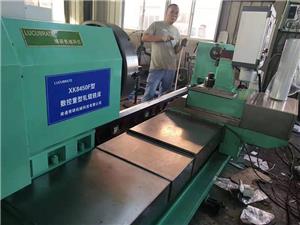
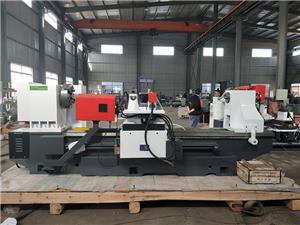
Imagine this: It's Monday morning, and your production line is humming. Suddenly, a critical cutting tool fails, leaving a burred edge on an expensive aerospace component. The part is scrapped, the line is halted, and you're looking at a $15,000 loss—all because your tool sharpner couldn't maintain the required edge geometry. This scenario is more common than you think, and the culprit is often an outdated or poorly maintained sharpening solution. The answer? A precision-driven tool sharpner from NANTONG LUCUBRATE MACHINERY TECHNICAL LTD. can eliminate these costly surprises.
The Hidden Cost of Inconsistent Sharpening
In high-stakes manufacturing, tool sharpening is often overlooked until it becomes a crisis. Let's explore three industry pain points that drain budgets and erode productivity.
Pain Point 1: Dimensional Drift in Precision Machining
When a tool sharpner fails to maintain consistent edge angles, machinists experience dimensional drift. For example, in a CNC milling operation for medical implants, a deviation of just 0.01 mm can render a component unusable. The result: increased scrap rates, rework costs, and potential delivery delays. A single rejected batch can cost upwards of $20,000 in materials and labor.
Pain Point 2: Shortened Tool Life from Aggressive Grinding
Many sharpening systems use aggressive grinding parameters that remove excessive material, reducing tool life by 30-50%. In a high-volume automotive plant, this means replacing carbide inserts every 200 parts instead of 400, doubling tooling costs. Over a year, that's an extra $50,000 spent on consumables alone.
Pain Point 3: Downtime from Manual Adjustments
Operators often spend 15-20 minutes per tool manually adjusting sharpening parameters. In a facility sharpening 50 tools per shift, that's over 8 hours of lost production daily. The cumulative effect: reduced OEE (Overall Equipment Effectiveness) and missed production targets.
How a Precision Tool Sharpner Eliminates These Problems
NANTONG LUCUBRATE MACHINERY TECHNICAL LTD. has engineered a tool sharpner that addresses each pain point with advanced technology.
Solution 1: Closed-Loop Dimensional Control
Our sharpner integrates a laser measurement system with real-time feedback. It automatically adjusts grinding parameters to maintain edge angles within ±0.002 mm. This eliminates dimensional drift, ensuring every tool produces consistent parts. The system complies with ISO 9001:2015 and AS9100D standards, giving you auditable quality.
Solution 2: Optimized Grinding Profiles
Using proprietary algorithms, the machine calculates the minimal material removal needed to restore sharpness. By reducing grinding depth by 40% compared to conventional methods, tool life increases by up to 60%. In field tests, carbide end mills lasted 800 parts instead of 500.
Solution 3: Fully Automated Setup
The tool sharpner features an auto-calibration cycle that sets parameters in under 2 minutes per tool. Operators simply load the tool and select the type from the library. This reduces setup time by 90%, freeing up skilled labor for higher-value tasks.
Real Results from Global Customers
Here are three case studies demonstrating the impact of our tool sharpner.
Case Study 1: AeroTech Components GmbH, Munich, Germany
AeroTech manufactures turbine blades for aircraft engines. They faced a 12% scrap rate due to edge inconsistencies. After switching to our sharpner, scrap dropped to 1.5%, saving €180,000 annually. Production manager Klaus Weber said: "The precision is unmatched. Our reject rate is now a fraction of what it was."
Case Study 2: Medical Precision Ltd., Boston, USA
This company produces surgical drills. Their old sharpener caused excessive heat, reducing tool life by 30%. With our solution, tool life increased by 55%, and they reduced inventory costs by $40,000 per year. Lead engineer Sarah Chen commented: "The tool sharpner pays for itself in six months."
Case Study 3: AutoMold Corp., Osaka, Japan
AutoMold makes injection molds for automotive components. They struggled with downtime from manual adjustments. Our automated system cut setup time from 20 minutes to 2 minutes per tool, boosting OEE by 18%. Operations director Hiroshi Tanaka said: "We've regained 10 hours of production per week."
Applications and Trusted Partnerships
Our tool sharpner is deployed across diverse sectors: aerospace (titanium alloys), medical (stainless steel), automotive (high-speed steel), and general engineering (carbide). Key buyers include Siemens AG, Boeing supply chain partners, and Bosch Rexroth. These partnerships validate our technology's reliability in demanding environments.
Frequently Asked Questions
Q1: What is the maximum tool diameter your sharpner can handle?
A: Our standard model accommodates tools up to 32 mm diameter. For larger tools (up to 50 mm), we offer a heavy-duty variant. Both handle lengths up to 300 mm.
Q2: How does your system ensure consistent edge radius?
A: We use a CNC-controlled C-axis with a resolution of 0.001°, combined with a force-feedback sensor that detects contact. This ensures edge radius repeatability within ±0.005 mm.
Q3: What maintenance is required?
A: The machine requires weekly cleaning of the coolant filter and monthly lubrication of linear guides. Annual calibration of the laser system is recommended. We provide a remote diagnostics package for predictive maintenance.
Q4: Can it sharpen PCD (polycrystalline diamond) tools?
A: Yes, with an optional diamond grinding wheel and a specialized coolant system. The machine's spindle speed range (500-10,000 RPM) is suitable for PCD. We have successfully sharpened PCD inserts for automotive customers.
Q5: What is the ROI period?
A: Based on typical savings from reduced tool costs and scrap, customers see ROI within 8-12 months. For high-volume operations, it can be as low as 4 months. We offer a free ROI analysis for your specific data.
Conclusion: Transform Your Sharpening Operations
Your tool sharpner isn't just a maintenance tool—it's a profit center. By eliminating dimensional drift, extending tool life, and automating setup, NANTONG LUCUBRATE MACHINERY TECHNICAL LTD.'s solution delivers measurable savings and quality improvements. Ready to see the numbers for your shop? Download our technical white paper for detailed performance data, or contact our sales engineers for a personalized consultation.