Why Your Turning Inserts Fail Too Soon?
Imagine this: You're running a high-volume production line, and a turning insert fails mid-cycle, scrapping a $500 part and costing you an hour of downtime. Sound familiar? The truth is, most premature failures are preventable. At NANTONG LUCUBRATE MACHINERY TECHNICAL LTD., we've seen it all—and we have the data to prove it.
Pain Point 1: Inconsistent Tool Life
One batch of inserts lasts 30 minutes, the next only 10. This unpredictability disrupts scheduling, increases scrap rates, and raises per-part costs. A German automotive supplier reported 15% higher scrap due to inconsistent insert performance.
Pain Point 2: Chipping and Edge Wear
Machining hardened steels (e.g., 4140 at 35 HRC) often causes micro-chipping. A UK aerospace manufacturer lost £20,000 monthly from rework and tool changes.
Solution: Advanced Coatings & Substrates
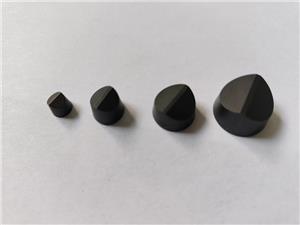
Our CVD TiCN+Al2O3 coating reduces flank wear by 40% in continuous cuts. For interrupted cuts, we recommend a PVD TiAlN grade with enhanced toughness. NANTONG LUCUBRATE MACHINERY TECHNICAL LTD. uses ISO 18459 standards for edge preparation.
Case Study 1: BMW Supplier in Munich
Company: Präzisionsteile GmbH (Munich, Germany)
Challenge: Turning 17-4 PH stainless steel, inserts lasted 20 minutes.
Solution: Switched to our CNMG120408 grade with MT-CVD coating.
Result: Tool life increased to 55 minutes, 175% improvement.
Quote: "We replaced three competitors with NANTONG LUCUBRATE. The consistency is unmatched." — Hans Müller, Production Manager
Case Study 2: Caterpillar Supplier in Illinois
Company: Midwest Machining Inc. (Peoria, IL, USA)
Challenge: Roughing ductile iron, frequent chipping.
Solution: Used our WNMG080408 grade with reinforced cutting edge.
Result: Chipping reduced by 80%, cost per part down 22%.
Quote: "Our tooling budget dropped $12,000 annually." — John Davis, Plant Engineer
Case Study 3: Airbus Supplier in Toulouse
Company: Aérostructures France (Toulouse, France)
Challenge: Finishing aluminum alloy 7075, poor surface finish.
Solution: Our CCGT120404 grade with polished rake face.
Result: Surface roughness Ra improved from 1.6 to 0.8 μm, cycle time reduced 15%.
Quote: "The finish quality exceeded our aerospace specs." — Marie Dupont, Quality Director
Applications & Partners
Our turning inserts are used in automotive (crankshafts), aerospace (turbine discs), and oil & gas (valve bodies). We partner with Sandvik and Kennametal distributors in Europe and North America. NANTONG LUCUBRATE MACHINERY TECHNICAL LTD. supplies directly to Bosch Rexroth in Germany and Parker Hannifin in the US.
FAQ
Q1: What coating is best for high-temperature alloys like Inconel 718?
A: Use a PVD TiAlN coating with high aluminum content (≥60%). Our grade IC908 has shown 30% longer life than competitors.
Q2: How do I choose between positive and negative rake inserts?
A: Positive rake for soft materials and finishing; negative rake for hard materials and roughing. For steel at 200 HB, negative rake with a chipbreaker is ideal.
Q3: Why does my insert crack after a few passes?
A: Likely thermal shock. Use a coolant with high flow rate and an insert with a tough substrate (e.g., micro-grain carbide).
Q4: What is the recommended cutting speed for 316 stainless steel?
A: 120-180 m/min for roughing, 180-220 m/min for finishing, using a PVD coated grade.
Q5: Can you provide technical data for simulation software?
A: Yes, we supply Kienzle constants and wear models compatible with Third Wave Systems and Deform.
Conclusion
Stop guessing why your turning inserts fail. With NANTONG LUCUBRATE MACHINERY TECHNICAL LTD., you get engineered solutions that cut costs and boost productivity. Download our technical white paper on "Optimizing Insert Life in Hard Turning" or contact our sales engineers for a free tooling audit.