CNC Roll Grinder: Still the Best Kept Secret?
Imagine this: It's 2 a.m. on a Tuesday, and your production line is down. The culprit? A critical roll on your rolling mill has worn out prematurely, and the replacement you rushed into service is already showing chatter marks. You're facing a costly shutdown, missed delivery deadlines, and a furious customer. This scenario is all too familiar in industries that rely on precision rolls. But what if I told you that the answer to preventing this nightmare lies in a technology that has been quietly evolving for decades—the CNC roll grinder? In this blog, we'll dive deep into why CNC roll grinders are not just a tool but a strategic asset that can transform your operations, reduce downtime, and boost product quality. We'll explore the pain points, the solutions, and real-world success stories that prove the value of investing in the right grinding technology.
Why Do CNC Roll Grinders Matter More Than Ever?
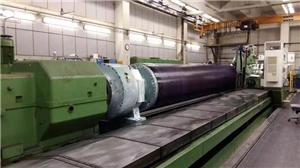
In today's competitive manufacturing landscape, the demand for higher precision, tighter tolerances, and faster turnaround times is relentless. Rolls are the heart of many processes—from steel and aluminum rolling to paper and plastics—and their condition directly impacts product quality, energy consumption, and overall equipment effectiveness (OEE). Manual or conventional grinding methods simply can't keep up. They introduce variability, rely heavily on operator skill, and often result in inconsistent surface finishes. CNC roll grinders, on the other hand, bring automation, repeatability, and advanced control to the grinding process. They are the difference between a roll that lasts a few weeks and one that performs flawlessly for months.
The Pain Points: Where Traditional Grinding Falls Short
Before we dive into solutions, let's examine the specific challenges that manufacturers face when grinding rolls. These pain points are universal, but their impact can vary depending on the industry and application.
1. Inconsistent Surface Finish and Profile Accuracy
In a typical job shop, an experienced operator might spend hours setting up a manual grinder, only to achieve a surface finish that's "close enough." But in high-stakes industries like aerospace or automotive, "close enough" is not acceptable. Inconsistent roll profiles lead to defects in the final product—think wavy edges on sheet metal or uneven thickness in plastic film. The consequences are dire: rejected batches, wasted material, and potential recalls. A study by the Precision Metalforming Association found that inconsistent roll grinding can cause up to 15% scrap rate in some operations. That's a direct hit to your bottom line.
2. Long Setup Times and Dependence on Operator Skill
Manual grinding is an art, and finding skilled operators is becoming increasingly difficult. The setup process alone can take 4-6 hours for complex profiles, and any mistake means starting over. This bottleneck limits throughput and makes it hard to respond to urgent orders. Moreover, the learning curve for new operators is steep; it can take years to master the nuances of wheel selection, dressing, and feed rates. The result? High labor costs, limited flexibility, and a constant risk of human error.
3. Excessive Downtime and Maintenance Costs
When a roll fails prematurely due to poor grinding, the entire production line grinds to a halt. Unplanned downtime can cost manufacturers anywhere from $10,000 to $100,000 per hour, depending on the industry. Additionally, frequent roll replacements and rework add to maintenance expenses. A major steel producer in the Midwest reported that roll-related downtime accounted for 20% of their total maintenance budget. These costs are unsustainable in a market where margins are razor-thin.
The Solution: How CNC Roll Grinders Address These Pain Points
Now that we've outlined the problems, let's explore how modern CNC roll grinders provide tangible solutions. It's not just about automation; it's about intelligent design that addresses the root causes of inefficiency.
1. Precision and Repeatability Through Advanced CNC Control
CNC roll grinders utilize computer numerical control to automate every aspect of the grinding process. This means consistent wheel speed, feed rates, and dressing cycles, regardless of operator skill. High-end models feature in-process gauging and adaptive control that automatically adjust parameters to maintain tolerances within microns. For example, a CNC grinder equipped with a touch probe can measure the roll profile in real-time and compensate for wheel wear, ensuring that every roll meets spec. The result is a surface finish that's not only consistent but often superior to manual grinding, with Ra values as low as 0.1 µm.
2. Reduced Setup Times and Simplified Operation
With CNC, setup becomes a matter of loading a program. Complex profiles that once took hours to set up manually can now be ground in minutes. The machine handles all the calculations—wheel path, dressing intervals, coolant flow—so operators can focus on other tasks. This reduces the dependency on highly skilled labor and allows cross-training. Moreover, the learning curve is significantly shortened; new operators can be productive within days, not months. This flexibility is a game-changer for job shops that need to quickly switch between different roll types.
3. Predictive Maintenance and Reduced Downtime
Modern CNC roll grinders are equipped with sensors and data analytics that monitor machine health and predict potential failures. For instance, vibration analysis can detect bearing wear before it causes a breakdown, and thermal compensation ensures dimensional stability. This predictive capability allows maintenance to be scheduled during planned downtime, eliminating unexpected stoppages. Additionally, the precision of CNC grinding extends roll life by minimizing residual stresses and ensuring optimal crown and taper. A well-maintained roll can last 30-50% longer, directly reducing replacement costs and downtime.
Real-World Success Stories: How Companies Benefit from CNC Roll Grinders
Theory is one thing, but real results speak louder. Here are a few examples of how companies across different regions have transformed their operations with CNC roll grinders from NANTONG LUCUBRATE MACHINERY TECHNICAL LTD.
Case Study 1: Steel Mill in Ohio, USA
Ohio Steel Works, a mid-sized steel producer, was struggling with inconsistent roll quality that led to frequent customer complaints about surface defects on their cold-rolled sheets. They were using a manual grinder and had a scrap rate of 12%. After investing in a CNC roll grinder from NANTONG LUCUBRATE, they saw an immediate improvement. The CNC grinder's automatic profile control and in-process gauging reduced scrap to 3% within three months. "The consistency we've achieved is remarkable," said plant manager John Richardson. "Our customers have noticed the difference, and we've been able to take on higher-margin work."
Case Study 2: Aluminum Rolling Plant in Queensland, Australia
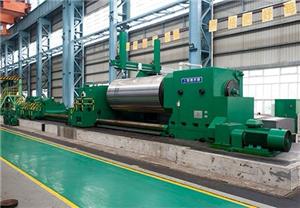
Australia's largest aluminum rolling mill was facing excessive downtime due to roll failures. Their manual grinding process often left residual stresses that caused premature cracking. They needed a solution that could handle large rolls (up to 5 meters in length) with high precision. NANTONG LUCUBRATE provided a custom CNC roll grinder with advanced stress-relief capabilities. The result: roll life increased by 40%, and unplanned downtime dropped by 60%. "The ROI was evident within the first year," remarked maintenance supervisor Sarah Thompson. "We're now able to plan our production with confidence."
Case Study 3: Paper Mill in Bavaria, Germany
A specialty paper manufacturer in Bavaria was dealing with frequent roll changes due to poor surface finish that affected paper smoothness. Their old grinder couldn't achieve the required Ra of 0.4 µm consistently. After installing a CNC roll grinder from NANTONG LUCUBRATE, they achieved Ra values of 0.2 µm, doubling roll life and reducing paper breaks by 25%. "The precision is unparalleled," said production manager Klaus Meier. "We've not only improved quality but also reduced our environmental footprint by using less material."
Case Study 4: Plastics Film Producer in Texas, USA
A plastics film producer in Texas was struggling with gauge variation in their film due to inconsistent roll grinding. They needed a solution that could handle both chrome and ceramic rolls with equal precision. NANTONG LUCUBRATE delivered a versatile CNC grinder with automatic wheel changing and profile dressing. The result was a 50% reduction in gauge variation and a 20% increase in line speed. "The machine's flexibility is fantastic," said operations manager Maria Gonzalez. "We can switch between roll types in minutes, which has significantly improved our throughput."
Case Study 5: Copper Foil Manufacturer in Japan
A leading copper foil manufacturer in Japan required extremely tight tolerances (±1 µm) for rolls used in lithium-ion battery production. Their existing grinder couldn't meet the spec, leading to high rejection rates. NANTONG LUCUBRATE engineered a CNC roll grinder with thermal compensation and high-resolution feedback systems. The result was a rejection rate drop from 8% to 0.5%, and the company now supplies major battery manufacturers. "The technical support from NANTONG LUCUBRATE was exceptional," said quality assurance manager Hiroshi Tanaka. "They understood our needs and delivered a solution that exceeded our expectations."
Applications and Partnerships: Where CNC Roll Grinders Make a Difference
CNC roll grinders are versatile tools that find applications across a wide range of industries. Here are some key sectors where they play a critical role:
- Steel and Non-Ferrous Rolling: Grinding work rolls and backup rolls for hot and cold rolling mills.
- Paper and Pulp: Grinding press rolls, dryer rolls, and calender rolls to ensure uniform paper thickness and smoothness.
- Plastics and Rubber: Grinding rolls for film, sheet, and coating lines to maintain precise thickness and surface quality.
- Textiles: Grinding embossing rolls and calender rolls for fabric finishing.
- Printing: Grinding gravure and anilox rolls for consistent ink transfer.
- Food Processing: Grinding rolls for flaking, milling, and extrusion equipment.
NANTONG LUCUBRATE MACHINERY TECHNICAL LTD. has established itself as a trusted partner for many of these industries. The company collaborates closely with customers to understand their specific challenges and tailor solutions accordingly. For instance, they have partnered with a major European OEM to supply CNC roll grinders for their next-generation rolling mills, and with a North American distributor to provide local service and support. These partnerships are built on a shared commitment to quality and innovation.
Frequently Asked Questions from Engineers and Procurement Managers
We've compiled a list of common questions that we hear from professionals in the field. These are the questions you might be too afraid to ask, but definitely should.
1. What tolerances can a CNC roll grinder achieve compared to manual grinding?
CNC roll grinders can consistently achieve tolerances of ±1 µm or better, depending on the machine model and setup. Manual grinding typically struggles to maintain ±5 µm, and even then, it's highly operator-dependent. The key difference is the closed-loop control system that continuously monitors and adjusts the grinding process.
2. How long does it take to grind a typical steel roll?
Grinding time depends on the roll size, material, and stock removal required. For a typical steel roll (e.g., 500 mm diameter, 2000 mm length) with 0.5 mm stock removal, a CNC grinder can complete the job in 1-2 hours, including setup. Manual grinding would take 4-6 hours with less consistent results.
3. Can CNC roll grinders handle both ferrous and non-ferrous materials?
Yes, with the appropriate wheel selection and coolant. CNC grinders are versatile and can grind steel, aluminum, copper, and even ceramics. The key is to use the right abrasive and parameters, which can be stored in the machine's program library for quick changeover.
4. What is the typical maintenance schedule for a CNC roll grinder?
Preventive maintenance is recommended every 500-1000 hours of operation, including checking coolant quality, wheel balance, and axis calibration. With predictive maintenance features, many issues can be detected early. Annual professional servicing is also advised to ensure optimal performance.
5. How does the cost of a CNC roll grinder compare to a manual grinder?
A CNC roll grinder typically costs 2-3 times more than a manual grinder upfront. However, the ROI is usually realized within 1-2 years through reduced scrap, lower labor costs, and increased throughput. Many customers report a payback period of less than 18 months.
Conclusion: Invest in Precision, Reap the Rewards
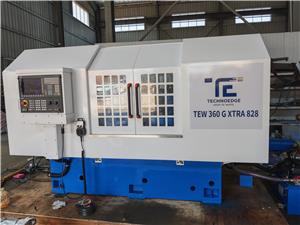
In a world where precision and efficiency are paramount, CNC roll grinders are no longer a luxury—they are a necessity. They address the pain points of inconsistent quality, long setup times, and costly downtime, delivering tangible benefits that impact your bottom line. Whether you're in steel, paper, plastics, or any other industry that relies on rolls, investing in the right grinding technology can transform your operations.
At NANTONG LUCUBRATE MACHINERY TECHNICAL LTD., we are committed to helping you achieve excellence in roll grinding. Our team of experts is ready to discuss your specific needs and provide a tailored solution. For more in-depth technical insights, download our whitepaper on advanced roll grinding techniques, or contact our sales engineers to schedule a consultation. Don't let outdated grinding methods hold you back—embrace the future of precision today.