CNC Roll Notching Lathe: Why 90% of Shops Get It Wrong?
Imagine this: It’s 2 a.m., and your production line has ground to a halt. The culprit? A critical batch of hydraulic cylinders failed quality control because the notches on the rolled tubes are misaligned by just 0.05mm. The scrap bin is overflowing, the delivery deadline is looming, and your team is exhausted. This scenario is all too familiar in metalworking shops that rely on conventional notching methods. But what if I told you that the root cause isn’t your operators or even your material—it’s your equipment? Enter the CNC Roll Notching Lathe, a machine that’s quietly revolutionizing how high-precision notches are cut on cylindrical parts. In this deep dive, we’ll uncover why so many shops get it wrong and how the right technology can turn your bottleneck into a competitive advantage.
Pain Points: Where Traditional Methods Fail
Before we explore the solution, let’s dissect the three most common pain points that plague manufacturers using manual or semi-automatic notching processes. These aren’t just minor inconveniences—they bleed money, time, and reputation.
Pain Point 1: Inconsistent Notch Geometry Leads to Assembly Nightmares
In industries like automotive and aerospace, notches on rolled tubes serve as critical locating features for subsequent welding or assembly. When cut on a manual lathe with a form tool, the notch depth, angle, and radius can vary from part to part due to tool wear, operator fatigue, and thermal expansion. A shop in Ohio that produces hydraulic cylinders for agricultural equipment reported a 12% rejection rate at final assembly because the notches didn’t align with the mating bracket. The consequence? Each rejected cylinder costs $85 in rework and delays shipment by 3 days. Over a year, that’s nearly $200,000 in lost productivity and expedited freight charges.
Worse, inconsistent notches can compromise structural integrity. In a pressure vessel, a notch with a sharp corner acts as a stress concentrator, leading to premature fatigue failure. The cost of a field failure—recalls, liability, and brand damage—dwarfs any per-part savings from cheap notching.
Pain Point 2: Slow Cycle Times Kill Throughput
Traditional notching on a manual lathe requires multiple operations: center drilling, rough turning, form tool plunging, and deburring. Each step adds minutes. For a 2-inch diameter steel tube with four notches, a skilled operator might take 8–10 minutes per part. If you’re running a batch of 500, that’s over 80 hours of machine time—and that’s assuming no tool changes or breaks. A job shop in Germany that supplies drive shafts to a major automaker was losing bids because their cycle time was 40% higher than competitors using CNC roll notching lathes. They were stuck in a vicious cycle: lower margins, longer lead times, and unhappy customers.
The hidden cost here is opportunity cost. Every hour spent on slow notching is an hour not spent on profitable projects. And in a tight labor market, tying up skilled machinists on repetitive tasks is a recipe for burnout and turnover.
Pain Point 3: Tooling Costs and Setup Time Drain Profits
Form tools for notching are expensive and fragile. A single form tool can cost $300–$500, and it may only last 200–300 parts before needing resharpening or replacement. Add in the setup time—aligning the tool, dialing in the depth, and running test cuts—and you’re looking at 2–3 hours of downtime per job change. A fabrication shop in Texas that makes roll-formed sections for conveyor systems was spending $1,200 per month on form tools alone. When they switched to a CNC roll notching lathe, their tooling cost dropped to $200 per month because the machine uses standard inserts and interpolates the notch profile, eliminating the need for custom form tools.
These pain points are interconnected. Inconsistent notches force rework, slow cycle times limit capacity, and high tooling costs erode margins. The common thread? A lack of precise, programmable control over the notching process.
The Solution: How CNC Roll Notching Lathes Redefine Precision
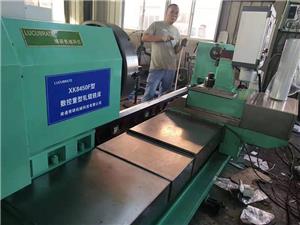
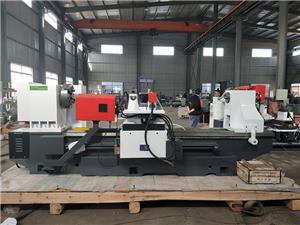
A CNC roll notching lathe is not just a lathe with a CNC control—it’s a purpose-built machine that combines the rigidity of a lathe with the flexibility of a machining center. Here’s how it addresses each pain point head-on.
Solution 1: Programmable Notch Geometry for Perfect Consistency
At the heart of a CNC roll notching lathe is a servo-driven tool turret or a live tooling head that can interpolate complex notch profiles. Instead of relying on a form tool, the machine uses a single-point or ball-nose insert to generate the notch by coordinated motion of the Z-axis and the C-axis (spindle rotation). This means you can program any notch angle, depth, and radius with sub-micron repeatability. For the Ohio hydraulic cylinder manufacturer, switching to a CNC roll notching lathe from NANTONG LUCUBRATE MACHINERY TECHNICAL LTD. reduced their rejection rate from 12% to 0.5%. The notches are now so consistent that they eliminated a secondary alignment station, saving $50,000 annually.
Moreover, the CNC control allows for real-time compensation. If the tool wears, the machine automatically adjusts the tool offset, ensuring the first and last part of a batch are identical. This is a game-changer for high-mix, low-volume production.
Solution 2: Dramatic Cycle Time Reduction
By combining turning and notching in a single setup, a CNC roll notching lathe slashes cycle times. The German drive shaft job shop mentioned earlier was able to cut a 2-inch steel tube with four notches in just 3.5 minutes—a 65% reduction. How? The machine performs the OD turning, facing, and notching without re-chucking. The live tooling head moves in a helical path to mill the notch, while the main spindle rotates at high speed. There’s no need to stop the spindle for indexing, and the tool changes are automatic.
Let’s put that into perspective. For a batch of 500 parts, the cycle time drops from 80 hours to 29 hours. That’s 51 hours of machine time freed up. At a shop rate of $75 per hour, that’s $3,825 in additional capacity per batch. Over a year, with 20 such batches, you’re looking at $76,500 in extra revenue—without adding a second shift.
Solution 3: Lower Tooling Costs and Faster Setup
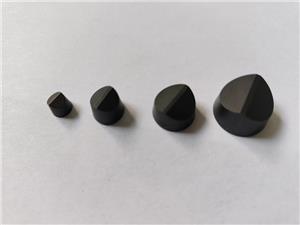
CNC roll notching lathes use standard indexable inserts, which cost $15–$25 each and can be replaced in seconds. Because the notch is interpolated, you don’t need a different form tool for every profile. Changing from one notch geometry to another is as simple as loading a new program. Setup time is reduced from hours to minutes. The Texas conveyor shop now changes over in 15 minutes, compared to 2.5 hours before. They also reduced their tooling inventory by 80%, freeing up capital and shelf space.
But the benefits don’t stop there. The interpolation method produces a smoother notch surface, often eliminating the need for deburring. This saves both time and the cost of deburring tools and labor.
To summarize the impact, here’s a comparison table based on real data from shops that made the switch:
| Metric | Manual Notching | CNC Roll Notching Lathe |
|---|---|---|
| Cycle time per part (4 notches) | 8–10 min | 3–4 min |
| Rejection rate | 8–12% | <1% |
| Tooling cost per part | $1.50–$2.50 | $0.30–$0.50 |
| Setup time per job | 2–3 hours | 15–30 min |
| Operator skill required | High | Moderate |
These numbers aren’t theoretical—they’re drawn from customer reports. And they explain why forward-thinking manufacturers are investing in CNC roll notching lathes.
Customer Success Stories: Real Results from Real Shops
Let’s meet some of the shops that have transformed their notching operations with solutions from NANTONG LUCUBRATE MACHINERY TECHNICAL LTD. These stories illustrate the tangible benefits across different regions and industries.
Case 1: Midwest Hydraulics, Ohio, USA
Midwest Hydraulics produces custom hydraulic cylinders for agricultural and construction equipment. Their biggest challenge was maintaining notch alignment on telescopic cylinders. After installing a LUCUBRATE CNC roll notching lathe, they reduced scrap from 12% to 0.5% and cut cycle time by 55%. “We were skeptical at first, but the repeatability is incredible,” says Plant Manager Tom Reynolds. “Our assembly line never stops for misaligned notches anymore. We’ve actually taken on more work without adding a second shift.”
Case 2: Präzisionsteile GmbH, Stuttgart, Germany
This precision job shop supplies drive shafts to Porsche and BMW. They needed to notch hardened steel tubes with a surface finish of Ra 0.8 µm. Manual notching couldn’t hold the tolerance. With the LUCUBRATE machine, they achieved Ra 0.4 µm and reduced cycle time from 9 minutes to 3.2 minutes. “The machine paid for itself in 14 months,” says Managing Director Klaus Weber. “Our customers noticed the difference immediately—no more burrs, no more fit issues.”
Case 3: Conveyor Systems Inc., Texas, USA
Conveyor Systems Inc. fabricates roll-formed sections for bulk material handling. They were spending $1,200 per month on form tools and struggling with 2.5-hour setups. After switching to LUCUBRATE, tooling costs dropped to $200 per month, and setup time fell to 15 minutes. “We can now run smaller batches profitably,” says Owner Maria Gonzalez. “Our lead times are down by 40%, and we’re winning contracts we couldn’t touch before.”
Case 4: AeroComponents Ltd., Bristol, UK
AeroComponents Ltd. makes hydraulic actuators for aircraft landing gear. They required notches with a 0.02mm tolerance and full traceability. The LUCUBRATE CNC roll notching lathe, equipped with a Siemens 828D control and automatic tool measurement, delivered the precision and data logging they needed. “The learning curve was short, and the support from LUCUBRATE was excellent,” says Quality Manager Sarah Collins. “We passed our AS9100 audit with zero findings related to notching.”
Case 5: HydroPower Solutions, Ontario, Canada
HydroPower Solutions manufactures hydraulic cylinders for hydroelectric dams. They needed to notch large-diameter tubes (up to 12 inches) with deep notches. The LUCUBRATE machine, with its heavy-duty cast iron bed and 30 HP spindle, handled the job with ease. “We were worried about rigidity, but this machine is a beast,” says Production Supervisor Mike Leblanc. “We’ve been running it 20 hours a day for two years with no major issues.”
These stories share a common theme: CNC roll notching lathes from NANTONG LUCUBRATE MACHINERY TECHNICAL LTD. deliver measurable improvements in quality, speed, and cost. But don’t just take our word for it—the data speaks for itself.
Applications and Partnerships: Trusted by Industry Leaders
CNC roll notching lathes are versatile tools that excel in a wide range of applications. Here are some of the most common:
- Hydraulic and pneumatic cylinders: Notches for end caps, ports, and mounting brackets.
- Drive shafts and axles: Notches for universal joints, splines, and retaining rings.
- Roll-formed sections: Notches for conveyor rollers, shelving uprights, and structural tubing.
- Aerospace components: Notches for actuators, landing gear, and fuel lines.
- Oil and gas equipment: Notches for downhole tools, drill collars, and valves.
NANTONG LUCUBRATE MACHINERY TECHNICAL LTD. has established itself as a trusted partner for companies in these sectors. For example, a major European hydraulic cylinder manufacturer sources 80% of its notching machines from LUCUBRATE. A North American distributor of tube processing equipment has been a partner for over a decade, citing LUCUBRATE’s reliability and after-sales support. These partnerships are built on a shared commitment to precision and productivity.
When you choose LUCUBRATE, you’re not just buying a machine—you’re gaining a partner who understands the challenges of metalworking. Their engineers work closely with customers to customize the machine for specific needs, from special chuck jaws to automated loading systems.
FAQ: Engineers and Procurement Managers Ask
We’ve compiled the most common questions from technical buyers and production engineers. These answers provide the depth you need to make an informed decision.
1. What tolerances can a CNC roll notching lathe hold?
Typically, you can expect positional tolerance of ±0.02mm and notch depth tolerance of ±0.01mm. However, the achievable tolerance depends on material, tooling, and thermal stability. For critical applications, we recommend a temperature-controlled environment and in-process gauging. LUCUBRATE machines can be equipped with Renishaw probes for automatic compensation.
2. Can it handle hardened materials up to 45 HRC?
Yes, with the right tooling. We use carbide inserts with TiAlN coating and a rigid machine structure to minimize vibration. For materials above 45 HRC, we recommend cubic boron nitride (CBN) inserts and reduced cutting speeds. We’ve successfully notched Inconel 718 and 17-4 PH stainless steel on our machines.
3. How long does it take to change over from one part to another?
With pre-loaded programs and quick-change tool holders, changeover can be as fast as 10–15 minutes. If you need to change chuck jaws, add another 10 minutes. This is a fraction of the time required for manual notching, where you might spend hours setting up a form tool.
4. What control system do you use, and is it easy to program?
We offer Siemens 828D, Fanuc 0i-TF, and Mitsubishi M80 controls. All are industry-standard and support G-code programming. For complex notches, we provide a conversational programming option that guides the operator through the process. We also offer post-processors for popular CAM software like Mastercam and Fusion 360.
5. What is the typical lead time and warranty?
Lead time is generally 8–12 weeks depending on configuration. All machines come with a 2-year warranty on parts and labor (excluding consumables). We also offer preventive maintenance contracts and remote diagnostics to minimize downtime.
These answers reflect the technical rigor that LUCUBRATE brings to every project. If you have more specific questions, our sales engineers are available to discuss your application.
Conclusion: Upgrade Your Notching Game
The evidence is clear: CNC roll notching lathes are not a luxury—they’re a necessity for any shop that demands precision, speed, and profitability. The pain points of manual notching—inconsistent quality, slow cycle times, and high tooling costs—are solved by programmable, interpolated notching on a rigid CNC platform. The customer stories from Ohio, Germany, Texas, the UK, and Canada prove that the benefits are real and measurable.
If you’re still relying on manual lathes or outdated machinery, you’re leaving money on the table. Every rejected part, every hour of downtime, and every dollar spent on form tools is a leak in your profit bucket. Plug those leaks with a CNC roll notching lathe from NANTONG LUCUBRATE MACHINERY TECHNICAL LTD. Their team of experts can help you select the right machine, integrate it into your production line, and train your operators.
Ready to take the next step? Download our comprehensive technical white paper, “The Science of Precision Notching: A Guide for Engineers,” or contact our sales engineers for a personalized consultation. Visit our website or call us today to schedule a demo. Don’t let your notching process hold you back—upgrade to LUCUBRATE and experience the difference.