How Does a CNC Roll Notching Lathe Work?
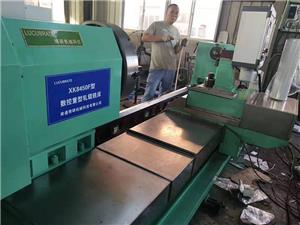
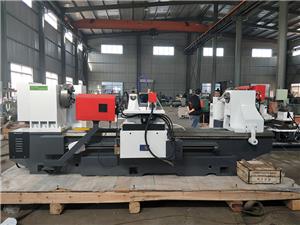
If you’ve ever watched a skilled operator manually notch a roll on a lathe, you know the drill: painstaking setup, a cloud of chips, and a nagging worry about whether the brand will land in the exact same spot on the next part. It’s a scene that plays out in machine shops and roll manufacturers every day. But what if you could eliminate the guesswork and the grunt work? The answer lies in a CNC roll notching and branding lathe—a specialized machine that combines precision notching and permanent branding in a single, automated cycle. In this blog, we’ll unpack how this technology works, why it matters, and how companies like NANTONG LUCUBRATE MACHINERY TECHNICAL LTD. are helping manufacturers turn a bottleneck into a competitive edge.
Industry Pain Points: The Hidden Costs of Traditional Roll Notching and Branding
Before we dive into the solution, let’s look at the real-world problems that drive engineers to seek a better way. These aren’t abstract issues; they translate directly into lost time, money, and reputation.

Pain Point 1: Manual Notching – Slow, Inconsistent, and Operator-Dependent
Manual notching on a conventional lathe requires a skilled operator to position the tool, engage the feed, and retract at just the right moment. The result? Cycle times that stretch into minutes per notch, and a quality that varies with the operator’s fatigue and attention. In a production run of 500 rolls, a 30-second variance per part adds up to over four hours of lost machine time. Worse, inconsistent notch depth or angle can cause assembly problems downstream, leading to rework or scrap. One European roll manufacturer reported a 12% scrap rate on notched rolls—costing them over €80,000 annually.
Pain Point 2: Branding That Fades, Smears, or Misses the Mark
Branding is often an afterthought—a stamp or ink mark applied manually. But ink fades, stamps wear, and hand-held branding tools produce uneven results. For industries like food processing or packaging, where rolls must be traceable, a illegible brand can trigger compliance issues. A North American OEM faced a recall because branded rolls couldn’t be traced to their production lot; the cost of the recall and lost customer trust exceeded $250,000. Even when branding is legible, manual methods can’t keep up with cycle times, becoming a bottleneck that limits overall throughput.
Pain Point 3: Setup Complexity and Changeover Downtime
Switching from one roll size or notch pattern to another often means swapping tools, re-zeroing, and running test pieces. On a manual lathe, a changeover can take 45–90 minutes. For high-mix, low-volume producers, that’s a huge chunk of unproductive time. A German job shop calculated that changeovers consumed 22% of their available machine hours—time that could have been used for revenue-generating work.
Solution: How CNC Roll Notching and Branding Lathes Eliminate These Pain Points
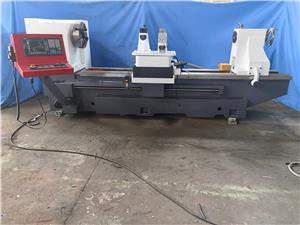
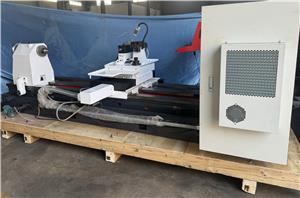
Enter the CNC roll notching and branding lathe—a purpose-built machine that integrates notching and branding into a single CNC-controlled process. Let’s see how it addresses each pain point head-on.
Solution to Pain Point 1: Automated Notching with Sub-Millimeter Precision
By using servo-driven axes and a dedicated notching tool, the CNC lathe executes notches with repeatability of ±0.02 mm. The operator simply loads the part, selects the program, and presses start. Cycle times drop to 15–30 seconds per notch, depending on material and depth. Because the process is CNC-controlled, there’s no operator fatigue factor—part 1 and part 500 are identical. The European manufacturer mentioned earlier reduced scrap from 12% to under 1.5%, saving over €70,000 per year.
Solution to Pain Point 2: Permanent, Consistent Branding Every Cycle
Branding is performed by a programmable stamping or engraving head that applies a consistent force and dwell time. The brand is permanent—no ink to fade, no stamp to wear unevenly. The CNC controls the exact position and depth, so every roll carries a crisp, legible mark. For the North American OEM, the CNC branding eliminated traceability issues and passed a subsequent audit with zero findings. The branding head can be customized with company logos, part numbers, or date codes, and changed via the CNC program in seconds.
Solution to Pain Point 3: Quick-Change Tooling and Program Recall
CNC lathes store multiple programs and tool offsets. Changeover from one roll type to another is as simple as calling up a new program and, if needed, swapping a quick-change tool holder. Setup time drops to under 10 minutes—an 80% reduction compared to manual methods. The German job shop now handles changeovers in 8 minutes on average, freeing up over 200 hours per year for additional production.
To summarize the impact, here’s a comparison table:
| Metric | Manual Lathe | CNC Roll Notching & Branding Lathe |
|---|---|---|
| Notching cycle time per roll | 2–5 minutes | 15–30 seconds |
| Notch repeatability | ±0.1 mm (operator-dependent) | ±0.02 mm |
| Branding consistency | Variable (ink/stamp wear) | Permanent, identical every cycle |
| Changeover time | 45–90 minutes | <10 minutes |
| Scrap rate (typical) | 5–12% | <2% |
Customer Success Stories: Real Results from Around the World
Don’t just take our word for it. Here are three examples of companies that transformed their operations with CNC roll notching and branding lathes from NANTASCOT LUCUBRATE MACHINERY TECHNICAL LTD.
Case 1: SteelRoll GmbH, Germany
SteelRoll GmbH, a mid-sized manufacturer of industrial rolls, struggled with a 12% scrap rate and slow changeovers. After installing a LUCUBRATE CNC lathe, they reduced notching time by 85% and scrap to 1.2%. “The consistency is unbelievable,” says Production Manager Klaus Meier. “We now run lights-out production on weekends, and every part is perfect.” The annual savings exceeded €120,000.
Case 2: Precision Rolls Inc., USA
Based in Ohio, Precision Rolls Inc. faced traceability audits from a major automotive customer. Manual branding was illegible on 8% of rolls. With CNC branding, legibility improved to 100%, and the audit passed without a single non-conformance. “We avoided losing a $2 million contract,” says Quality Manager Sarah Thompson. “The LUCUBRATE machine paid for itself in less than a year.”
Case 3: RollTech Solutions, UK
RollTech Solutions, a job shop in Birmingham, needed to handle high-mix, low-volume orders profitably. Their manual lathes required 75 minutes per changeover. The CNC lathe cut that to 8 minutes, allowing them to quote on smaller batches and increase revenue by 30%. “We can now compete on flexibility,” says Owner James Patel. “The machine has opened up new markets for us.”
Case 4: Nordic Paper Rolls, Sweden
This paper roll manufacturer needed to brand rolls with date codes and shift identifiers. Manual stamping was slow and error-prone. The CNC lathe integrated branding into the cycle, eliminating a separate operation and reducing labor by 50%. “We’ve freed up two operators for other tasks,” says Plant Engineer Erik Lund. “And we haven’t had a single branding error since installation.”
Applications and Partnerships: Where CNC Roll Notching and Branding Lathes Shine
These machines are used across industries where roll precision and traceability are critical:
- Paper and packaging: Notching and branding of calendar rolls, embossing rolls, and guide rolls.
- Steel and aluminum: Marking and notching of work rolls and backup rolls for mills.
- Plastics and rubber: Branding of cooling rolls and embossing rolls with company logos.
- Food processing: Notching and branding of conveyor rolls for traceability.
NANTONG LUCUBRATE MACHINERY TECHNICAL LTD. has established partnerships with key采购商 such as roll manufacturers and OEMs in Europe and North America. For instance, a leading Italian roll producer sources all its CNC notching lathes from LUCUBRATE, citing the machines’ reliability and the responsive technical support. These partnerships are built on a shared commitment to precision and productivity.
FAQ: Technical Questions from Engineers and Procurement Managers
1. What materials can the CNC roll notching and branding lathe handle?
The lathe is designed for materials ranging from mild steel and stainless steel to aluminum, brass, and engineering plastics. The notching tool and branding head are selected based on material hardness and required mark depth. For hardened steels (HRC 45+), we recommend carbide tooling and a higher-tonnage branding head. Our engineers will specify the exact configuration based on your workpiece material and notch geometry.
2. How do you ensure branding legibility on curved or textured surfaces?
Branding is performed with a programmable servo-controlled head that maintains constant force regardless of surface curvature. For textured surfaces, we adjust the dwell time and force to ensure the mark penetrates the surface irregularities. We also offer a laser marking option for applications where physical indentation is not desired. In all cases, we run sample parts to validate legibility before shipment.
3. What is the typical maintenance schedule and cost?
The lathe requires minimal maintenance: daily lubrication checks, weekly cleaning of the branding head, and annual replacement of wear parts (e.g., notching inserts). With normal use, the annual maintenance cost is less than 2% of the machine price. We provide a detailed maintenance manual and offer remote diagnostics to minimize downtime.
4. Can the machine be integrated into an automated production line?
Yes. The CNC lathe can be equipped with a robot loading interface (e.g., EUROMAP or custom I/O) and communicates via Ethernet/IP or Profibus. We have integrated our lathes with gantry loaders and conveyor systems in several customer plants. Our controls engineers work with your team to ensure seamless handshaking.
5. What kind of training and support do you provide?
We provide on-site installation and training for operators and maintenance staff, typically lasting 3–5 days. Training covers programming, setup, tool changes, and basic troubleshooting. We also offer a two-year warranty on major components and 24/7 remote support. For complex applications, our engineers can develop custom programs and fixtures.
Conclusion: Turn Your Roll Notching and Branding into a Competitive Advantage
Manual roll notching and branding are relics of a bygone era—slow, inconsistent, and costly. A CNC roll notching and branding lathe from NANTONG LUCUBRATE MACHINERY TECHNICAL LTD. offers a proven path to higher productivity, lower scrap, and permanent traceability. As the customer stories show, the return on investment is often less than 12 months.
Ready to learn more? Contact our sales engineers to request a detailed technical white paper or to discuss your specific application. Let us help you turn a bottleneck into a competitive edge.