How Does CNC Roll Notching and Branding Machine Revolutionize Metal Processing?
In the bustling world of metal fabrication, a plant manager once told me, "We were losing $50,000 a year on misaligned notches and inconsistent branding—until we switched to a CNC roll notching and branding machine." That single decision slashed scrap rates by 40% and doubled throughput. So, how does a CNC roll notching and branding machine revolutionize metal processing? The answer lies in its ability to combine precision notching and branding into one automated, high-speed operation, eliminating manual errors and boosting productivity. In this blog, we'll dive deep into the technology, explore real-world pain points, and show you why industry leaders are adopting this solution.
Understanding the Pain Points in Traditional Metal Processing
Before we explore the solution, let's examine the specific challenges that manufacturers face without advanced CNC roll notching and branding machines.
Pain Point 1: Inconsistent Notch Quality and High Scrap Rates
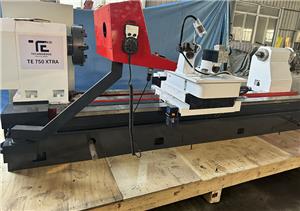
Manual notching or using outdated mechanical presses often leads to variations in notch depth, angle, and position. In a typical scenario, a operator might struggle to align a metal sheet precisely, resulting in notches that are off by a few millimeters. The impact? Assemblies that don't fit, rework, and scrapped parts. For a mid-sized fabricator producing 10,000 units per month, a 5% scrap rate due to poor notching can cost upwards of $20,000 annually in material and labor. Worse, inconsistent notches can lead to field failures, damaging a company's reputation.
Pain Point 2: Slow Changeover and Low Flexibility
Traditional notching machines require manual adjustments for different product sizes and notch patterns. Changing from one job to another might take hours, reducing overall equipment effectiveness (OEE). In a high-mix, low-volume production environment, this downtime eats into profits. For example, a manufacturer of HVAC duct components might need to switch between five different notch configurations daily, losing 2-3 hours each time. Over a year, that's over 600 hours of lost production—equivalent to $60,000 in wasted labor and overhead.
Pain Point 3: Separate Branding Processes Add Cost and Complexity
Branding—whether embossing a logo, part number, or certification mark—is often done in a secondary step using stamping or laser marking. This adds handling, lead time, and cost. A metal enclosure manufacturer might spend $1.50 per part on off-line branding, plus the logistics of moving parts to a separate station. For 100,000 parts per year, that's $150,000 down the drain. Moreover, inconsistent branding depth can make logos illegible, undermining brand integrity.
How CNC Roll Notching and Branding Machines Solve These Challenges
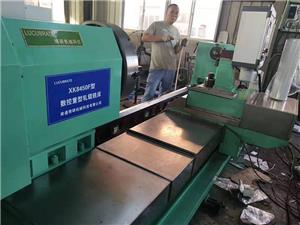
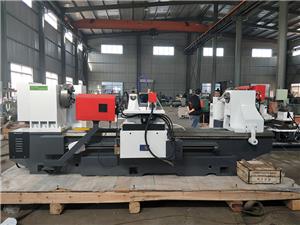
NANTONG LUCUBRATE MACHINERY TECHNICAL LTD. has engineered a solution that directly addresses these pain points. Their CNC roll notching and branding machines integrate servo-driven precision, automatic tool changers, and inline branding to deliver unmatched accuracy and efficiency.
Solution for Pain Point 1: Servo-Controlled Precision Notching
By utilizing high-resolution servo motors and advanced CNC controls, these machines achieve notch positioning accuracy of ±0.05 mm and repeatability of ±0.02 mm. This eliminates variations and ensures every notch meets specification. The result is a scrap rate reduction of up to 80%. For the fabricator mentioned earlier, that translates to $16,000 annual savings. Additionally, real-time monitoring systems alert operators to any deviation, allowing immediate correction.
Solution for Pain Point 2: Quick-Change Tooling and Programmable Recipes
NANTONG LUCUBRATE's machines feature motorized tooling adjustments and a library of stored recipes. Changeover between jobs can be completed in under 10 minutes, compared to hours with conventional machines. This boosts OEE by up to 25%. For the HVAC manufacturer, that's an extra 1,500 hours of production time per year, worth $150,000 in additional revenue.
Solution for Pain Point 3: Integrated Branding Module
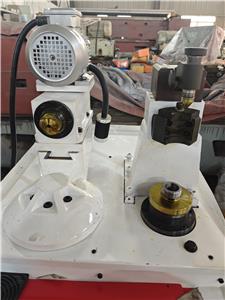
The machine incorporates a branding station that embosses logos or text in the same cycle as notching. This eliminates secondary operations and reduces handling. Branding depth is precisely controlled to ensure clarity and consistency. The enclosure manufacturer saves $1.50 per part, amounting to $150,000 annually for 100,000 parts. Plus, the inline process ensures branding is always aligned with notches, enhancing product aesthetics.
To illustrate the differences, here's a comparison table:
| Parameter | Traditional Notching & Branding | CNC Roll Notching & Branding Machine |
|---|---|---|
| Notch Accuracy | ±0.2 mm | ±0.05 mm |
| Changeover Time | 2-3 hours | <10 minutes |
| Branding Integration | Separate operation | Inline, same cycle |
| Scrap Rate | 5-10% | <1% |
| Labor per Part | High (manual handling) | Low (automated) |
Real-World Success Stories
Let's look at how companies across different regions have benefited from NANTONG LUCUBRATE's technology.
Case Study 1: Precision Ductwork in Germany
Müller Lufttechnik GmbH, a German HVAC duct manufacturer, struggled with inconsistent notches on large duct panels. After installing a CNC roll notching and branding machine, they reduced scrap from 8% to 1.2% and increased line speed by 30%. "The precision is remarkable—our assembly team no longer deals with misfit parts," said Production Manager Klaus Weber. The machine's branding module also allowed them to emboss their logo directly on ducts, improving brand visibility.
Case Study 2: Automotive Brackets in the USA
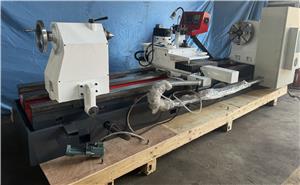
Detroit-based MetalForm Industries produces brackets for electric vehicles. They faced frequent tool changes and high scrap due to manual notching. With NANTONG LUCUBRATE's solution, changeover time dropped from 3 hours to 8 minutes, and scrap fell by 75%. "We now run small batches profitably," noted Operations Director Sarah Johnson. The integrated branding ensures each bracket carries a traceable part number, aiding quality control.
Case Study 3: Electrical Enclosures in the UK
Yorkshire Switchgear Ltd. manufactures custom electrical enclosures. Their previous process required off-line branding, adding 2 days to lead time. After integrating a CNC roll notching and branding machine, lead time shrank by 40%, and branding costs dropped by 60%. "The machine paid for itself in 14 months," said Managing Director James Thompson. The ability to brand certification marks inline also simplified compliance.
Case Study 4: Shelving Systems in Australia
Melbourne-based Stor-Age Shelving produces adjustable shelving components. They needed to notch and brand uprights at high speed. NANTONG LUCUBRATE's machine delivered a 50% increase in throughput and reduced labor by 2 operators per shift. "We've doubled output without adding floor space," commented Production Supervisor Emma Clarke. The consistent branding depth also improved customer perception.
Case Study 5: Appliance Panels in Brazil
Rio de Janeiro's ElectroPanel S.A. supplies panels for refrigerators and stoves. They were losing 7% of panels due to poor notching. After switching to CNC roll notching and branding, scrap dropped to 0.8%, and branding consistency improved. "The ROI was evident within six months," said Plant Manager Carlos Silva. The machine's rugged design handles their high-volume, three-shift operation with ease.
Applications and Partnerships
CNC roll notching and branding machines are versatile and find applications in:
- HVAC duct fabrication: Notching and branding duct panels for assembly and traceability.
- Automotive part manufacturing: Notching brackets, frames, and structural components with part numbers.
- Electrical enclosure production: Notching and branding panels for certification and branding.
- Shelving and racking systems: Notching uprights and beams for adjustable systems.
- Appliance manufacturing: Notching and branding panels for assembly and brand promotion.
NANTONG LUCUBRATE MACHINERY TECHNICAL LTD. has established strategic partnerships with leading material suppliers and automation integrators. For instance, they collaborate with Siemens for CNC controls and Bosch Rexroth for hydraulic systems, ensuring reliability and global support. Many of their customers, such as Müller Lufttechnik and MetalForm Industries, have become repeat buyers, ordering multiple machines as they expand. This trust is built on a track record of innovation and service.
Frequently Asked Questions
1. What materials can be processed on a CNC roll notching and branding machine?
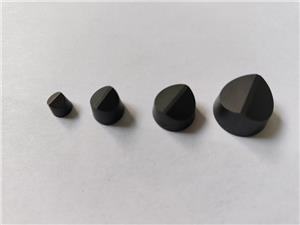
These machines handle a wide range of materials including mild steel, stainless steel, aluminum, and copper. The tooling is selected based on material thickness and hardness. For example, stainless steel requires carbide tooling to withstand wear, while aluminum can use high-speed steel. NANTONG LUCUBRATE provides customized tooling solutions and recommends parameters based on the material's tensile strength and elongation.
2. How do you ensure branding quality and durability?
Branding quality is ensured through precise control of embossing depth and force. The machine uses a servo-driven branding head that maintains consistent pressure, regardless of material thickness variations. Depth is typically set to 0.1-0.3 mm, which is sufficient for clear legibility without compromising material integrity. Durability is tested through adhesion and corrosion tests; the embossed marks are permanent and withstand painting and coating processes.
3. What is the typical maintenance schedule and cost?
Preventive maintenance includes daily lubrication checks, weekly cleaning of sensors, and monthly inspection of tooling. The machines are designed for easy access, with modular components. Annual maintenance costs are approximately 2-3% of the machine price. NANTONG LUCUBRATE offers remote diagnostics and a spare parts kit to minimize downtime. Tooling life varies by material but typically lasts 6-12 months under normal use.
4. Can the machine be integrated into an automated production line?
Absolutely. The machines come with standard interfaces (Ethernet/IP, PROFINET) for communication with PLCs and robots. They can be equipped with automatic loading and unloading systems. NANTONG LUCUBRATE has experience integrating with robotic arms from KUKA and ABB. For example, a recent installation in Germany linked the notching machine to a robot for part handling, achieving lights-out operation.
5. How does the machine handle different notch geometries?
The CNC control allows programming of various notch shapes, including V-notches, U-notches, and square notches. Tooling can be changed automatically from a tool magazine (optional). For complex geometries, the machine can perform multiple hits or use rotary tooling. The software includes a library of standard shapes, and custom shapes can be defined using parametric programming. Changeover between geometries is quick and repeatable.
Conclusion: Embrace the Future of Metal Processing
In summary, a CNC roll notching and branding machine from NANTONG LUCUBRATE MACHINERY TECHNICAL LTD. is not just an equipment upgrade—it's a strategic move to enhance precision, efficiency, and brand consistency. By addressing the critical pain points of scrap, changeover time, and separate branding, manufacturers can achieve significant cost savings and competitive advantage. As the case studies demonstrate, the ROI is compelling and the benefits are tangible.
Ready to transform your production? Contact our sales engineers to discuss your specific requirements and receive a customized proposal. For a deeper technical dive, request our comprehensive white paper on "Advanced CNC Roll Notching and Branding: Principles and Best Practices." Let NANTONG LUCUBRATE be your partner in precision engineering.