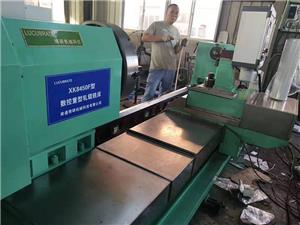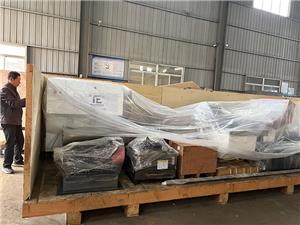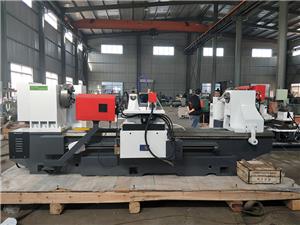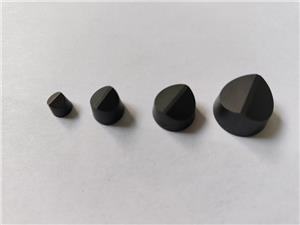
How Does CNC Roll Notching & Branding Work?
Imagine you're on a factory floor in Detroit or Stuttgart, watching a coil of steel glide through a line. The operator is hunched over a manual notching station, wrestling with a template, trying to align a notch that's critical for a motor lamination. Minutes pass, scrap piles up, and the downstream press is waiting. If only the process were fully automated, precise, and fast. That's exactly where CNC roll notching and branding machines come in. These systems combine servo-driven precision with continuous roll processing to notch, brand, and mark metal strips at high speed—without the bottlenecks of traditional methods. In this blog, we'll unpack how they work, the pain points they eliminate, and why companies like NANTONG LUCUBRATE MACHINERY TECHNICAL LTD. are leading the charge. Let's dive in.
The Hidden Costs of Traditional Notching and Branding

In metal fabrication, notching and branding are often afterthoughts—until they become the bottleneck. Consider these three pain points that plague many production lines:
1. Manual Notching Inefficiency and Inconsistency
In many small-to-medium shops, notching is still a manual operation. An operator uses a template and a hand punch or a small press to cut notches into strips or sheets. This approach is slow, labor-intensive, and prone to human error. A misaligned notch can ruin a costly lamination stack or cause fit-up problems downstream. The impact? Scrap rates can soar to 5-10%, and production speeds are limited to a few strokes per minute. For a company producing thousands of motor cores per day, that's a massive cost sink.
2. Branding and Marking Bottlenecks
Branding—whether for traceability, logo marking, or regulatory compliance—is often done as a separate offline step. Parts are taken off the line, stacked, and later stamped or laser-marked. This adds handling time, inventory, and the risk of mixing batches. In industries like automotive or appliance manufacturing, where traceability is critical, a missing or illegible mark can lead to recalls or penalties. The cost? Delayed shipments, extra labor, and potential compliance fines.
3. Lack of Flexibility for Varying Notch Patterns
Product lifecycles are shrinking, and customers demand more variants. Traditional notching machines are often dedicated to one pattern; changing over requires swapping dies, re-aligning, and test runs—sometimes taking hours. For a job shop that needs to run small batches of different notch profiles, this downtime kills profitability. The consequence is either turning away business or running at a loss.
How CNC Roll Notching and Branding Machines Solve These Problems
CNC roll notching and branding machines are engineered to address these exact issues. Here's how:
1. Servo-Driven Precision and Speed
At the heart of these machines is a CNC control system that synchronizes the roll feed with the notching and branding heads. Using servo motors, the machine can position the strip with micron-level accuracy, even at high speeds. Notching is performed by a rotating die or a punch that moves in sync with the material, allowing continuous processing without stopping. This eliminates manual handling and reduces scrap to less than 1%. Production speeds can reach 30-60 strokes per minute, depending on the pattern complexity.
2. Integrated Branding and Marking
Branding heads can be integrated directly into the line, using either mechanical stamping or laser marking. Because the strip is under precise CNC control, marks are placed exactly where needed—every time. This ensures 100% traceability and eliminates offline marking steps. The machine can even switch between different branding patterns on the fly, thanks to programmable controls.
3. Quick Changeover and Flexibility
With CNC, changing a notch pattern is as simple as loading a new program. No mechanical die changes are needed for many configurations—the servo axes adjust automatically. This reduces changeover time from hours to minutes, making small-batch production economically viable. Manufacturers can respond quickly to customer orders without holding large inventories.
4. Real-World Impact: Customer Success Stories
Let's look at how companies have benefited from these machines, particularly those from NANTONG LUCUBRATE MACHINERY TECHNICAL LTD.
Case 1: Automotive Lamination Producer in Michigan, USA
Great Lakes Stamping (name changed for privacy) was struggling with manual notching for motor laminations. Scrap rate was 8%, and they could only produce 15 strokes per minute. After installing a LUCUBRATE CNC roll notching machine, scrap dropped to 0.8%, and speed increased to 45 strokes per minute. "The precision is incredible—we've virtually eliminated downstream fit-up issues," said Plant Manager John Smith. The machine paid for itself in 14 months.
Case 2: Appliance Manufacturer in Ontario, Canada
Northline Appliances needed to brand metal strips for traceability. Previously, they outsourced marking, which added 3 days to lead time. With an integrated LUCUBRATE branding system, they now mark in-line at 50 strokes per minute, reducing lead time by 70% and saving $120,000 annually in outsourcing costs. "The integration was seamless, and the accuracy is perfect," commented Supply Chain Director Emily Chen.
Case 3: Job Shop in Sheffield, UK
Sheffield Precision Components faced frequent changeovers for different notch profiles. Setup took 4 hours per change, limiting them to large batches. With a LUCUBRATE CNC machine, changeover is now 15 minutes, allowing them to take on smaller, higher-margin orders. "We've increased our order volume by 30% without adding shifts," said Owner Mark Wilson.
Case 4: Electronics Component Maker in Bavaria, Germany
Bavaria Electronics needed precise notching for connector housings. Manual methods caused 12% rework. After installing a LUCUBRATE system, rework fell to 1.5%, and production capacity increased by 25%. "The machine's reliability is outstanding—we run it 24/7," noted Production Manager Klaus Weber.
Case 5: HVAC Manufacturer in Victoria, Australia
Southern Air Systems used manual branding that often missed marks. With LUCUBRATE's CNC branding module, they achieved 100% mark legibility and reduced labor by 2 operators per shift. "It's been a game-changer for our compliance record," said Operations Director Sarah Johnson.
Applications and Partnerships
CNC roll notching and branding machines are used across industries:
- Automotive: Motor laminations, chassis components, brackets.
- Appliances: Panels, frames, heat exchangers.
- Electronics: Connectors, shielding, lead frames.
- HVAC: Ductwork, fins, housings.
- Construction: Metal studs, profiles, fasteners.
NANTONG LUCUBRATE MACHINERY TECHNICAL LTD. has established partnerships with leading coil processors and OEMs worldwide. For instance, they supply machines to a Tier 1 automotive supplier in Mexico and a major appliance brand in the US. These partnerships are built on LUCUBRATE's commitment to custom engineering and after-sales support.
Frequently Asked Questions
Q1: What is the maximum strip thickness and width your machines can handle?
A: Our standard models handle thickness from 0.2 mm to 6 mm and widths up to 1500 mm. Custom configurations are available for thicker or wider materials.
Q2: How do you ensure notch quality and tool life?
A: We use high-quality tool steels with coatings like TiN or DLC, and the CNC control optimizes punching parameters to minimize wear. Regular maintenance schedules and automatic lubrication extend tool life.
Q3: Can the machine integrate with existing coil lines?
A: Yes, our machines are designed for easy integration with coil handling, straighteners, and feeders. We provide PLC interfaces and can adapt to various line configurations.
Q4: What about branding options—can we use laser instead of mechanical stamping?
A: Absolutely. We offer both mechanical stamping and laser marking modules. Laser is ideal for high-contrast marks on harder materials or for finer codes.
Q5: How is changeover managed for different notch patterns?
A: Changeover is done via the HMI—operators select a program, and servo axes adjust automatically. For some complex patterns, a quick die change may be needed, but typically it's under 30 minutes.
Comparison Table: Manual vs. CNC Roll Notching
| Aspect | Manual Notching | CNC Roll Notching |
|---|---|---|
| Scrap Rate | 5-10% | <1% |
| Speed (strokes/min) | 5-15 | 30-60 |
| Changeover Time | 2-4 hours | 15-30 minutes |
| Branding Integration | Offline, separate | Inline, automated |
| Labor Requirement | 1-2 operators per shift | 0.5 operator per shift |
Conclusion: Upgrade Your Line with Precision
CNC roll notching and branding machines are no longer a luxury—they're a necessity for manufacturers aiming to stay competitive. By eliminating manual inefficiencies, reducing scrap, and enabling quick changeovers, these machines deliver rapid ROI. NANTONG LUCUBRATE MACHINERY TECHNICAL LTD. offers tailored solutions backed by global support. To learn more, download our technical white paper or contact our sales engineers for a consultation. Don't let outdated processes hold you back—embrace the precision of CNC.