How to Choose a CNC Internal Grinding Machine?
Selecting the right CNC internal grinding machine can feel like navigating a maze of specifications, promises, and price tags. You’re not just buying a machine; you’re investing in the future of your precision manufacturing. The answer to the question “How to choose?” lies in focusing on three critical pillars: precision, productivity, and partnership. Get these right, and you’ll have a machine that delivers flawless bores for years. Get them wrong, and you’ll face a constant battle with scrap rates, downtime, and missed deadlines. This guide cuts through the noise, drawing on decades of hands-on experience from the team at NANTONG LUCUBRATE MACHINERY TECHNICAL LTD., to give you a clear, technical roadmap for making a confident decision.
The High-Stakes Gamble of Machine Selection
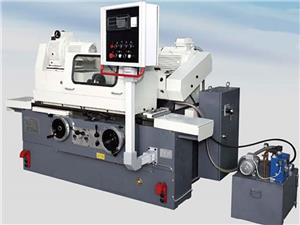
Imagine this: your shop has just won a contract to produce fuel injector bodies with bore tolerances of ±2 microns and a surface finish of Ra 0.1 µm. You need a CNC internal grinding machine that can hold these specs all day, every day. You choose a machine based on a low price and impressive brochure specs. Six months later, you’re scrapping 15% of your parts, the machine’s thermal growth is causing size drift, and your operators are constantly dressing the wheel to compensate. The cost of poor quality and lost productivity has already exceeded the machine’s purchase price. This scenario is all too common. The right machine, however, becomes a profit center—a reliable partner that consistently delivers precision at speed. So, let’s break down how to avoid the pitfalls and choose a CNC internal grinding machine that truly fits your needs.
Pain Point 1: The Precision Paradox – Holding Micron Tolerances at Production Speeds
You’re grinding the inner raceway of a bearing. The tolerance is 5 microns, and the surface finish must be Ra 0.2 µm. At low speeds, your machine can hold the tolerance, but cycle times are long. When you push the speed to meet production targets, thermal expansion, wheel wear, and vibration cause the bore size to drift. You’re caught in a precision paradox: speed versus accuracy. The impact is severe. Scrap rates climb, requiring rework or rejection of expensive components. Post-process gauging reveals a spread of sizes, forcing you to sort parts manually. The hidden costs—extra labor, delayed shipments, and damaged reputation—far outweigh any initial machine cost savings.
Solution: Thermal Stability and In-Process Compensation
The solution lies in a machine designed for thermal stability and real-time compensation. Look for a CNC internal grinding machine with a thermally symmetric cast iron bed and a coolant system that maintains a precise temperature (±1°C). More importantly, the CNC must have in-process gauging and wheel wear compensation. For instance, NANTONG LUCUBRATE MACHINERY TECHNICAL LTD. integrates a Marposs or similar in-process gauge that continuously measures the bore and feeds data back to the CNC. The machine automatically adjusts the wheel infeed and dressing frequency, ensuring the first part and the thousandth part are identical. This closed-loop control eliminates the precision paradox, allowing you to run at optimal speeds without sacrificing accuracy.
Pain Point 2: The Cycle Time Trap – Inefficient Grinding and Non-Productive Time
Your current grinder takes 3 minutes per part, but your target is 90 seconds. Where does the time go? Excessive wheel dressing, slow rapid traverses, and manual loading/unloading. You’re also losing time to machine warm-up and post-grinding inspection. The impact is a bottleneck in your production line, limiting throughput and increasing cost per part. You’re forced to run overtime or invest in a second machine, inflating capital expenditure. The cost of inefficiency is a direct hit to your bottom line and competitiveness.
Solution: High-Speed Grinding and Automation Integration
To break the cycle time trap, you need a machine built for speed. A high-frequency spindle (up to 120,000 RPM) with a cubic boron nitride (CBN) wheel can dramatically reduce grinding time. CBN wheels last longer and require less dressing. Additionally, a machine with linear motors and fast CNC processing can reduce non-grinding time. For example, NANTONG LUCUBRATE MACHINERY TECHNICAL LTD. offers machines with direct-drive linear motors on the X and Z axes, achieving rapid traverse rates of 60 m/min and acceleration of 1.5 G. This slashes air-cutting time. Furthermore, the machine can be equipped with an automated loading system (robot or gantry) to eliminate manual handling. The CNC can also manage wheel dressing cycles intelligently, dressing only when needed based on actual wear, not a fixed interval. With these features, cycle times can be cut by 40% or more, turning your bottleneck into a competitive advantage.
Pain Point 3: The Flexibility Conundrum – One Machine for Varied Parts
Your shop is a job shop, and you grind everything from small hydraulic valve bodies to large gearbox housings. Each part has different bore sizes, lengths, and materials. Your current CNC internal grinding machine is rigid and takes hours to change over, requiring new fixtures, wheel changes, and program modifications. The impact is that you can’t respond quickly to customer orders, and small batch sizes become uneconomical. You lose bids because you can’t quote competitive prices for low-volume, high-mix work. The cost is lost business and underutilized capacity.
Solution: Modular Design and Quick-Change Tooling
Flexibility must be designed in. Look for a machine with a modular spindle system that allows quick wheel changes (e.g., HSK or similar interfaces) and a workholding system that can be swapped in minutes. The CNC should support parametric programming, where the operator enters a few key dimensions (bore diameter, depth, material) and the machine generates the grinding cycle automatically. NANTONG LUCUBRATE MACHINERY TECHNICAL LTD. addresses this with their “Flexi-Grind” series, which features a quick-change wheelhead and a standard collet chuck system. The control includes a library of grinding strategies for common materials (steel, cast iron, aluminum, ceramics). Changeover from one part to another can be completed in under 30 minutes, making small batches profitable. This flexibility turns your machine into a versatile asset, not a single-purpose tool.
Customer Success Stories: Real Results from the Field
Let’s look at how these solutions have transformed operations for companies like yours.
Case 1: Precision Hydraulics Inc., USA
This Ohio-based manufacturer of hydraulic manifolds struggled with bore size variation on their valve bodies. They required a 4-micron tolerance but were seeing a 10-micron spread, leading to a 12% scrap rate. After installing a LUCUBRATE CNC internal grinder with in-process gauging, they achieved a consistent 3-micron tolerance. Scrap dropped to 1.5%, and cycle time decreased by 20%. “The closed-loop control is a game-changer. We no longer worry about size drift,” says Plant Manager Mark Stevens. “Our customers have noticed the difference in quality.”
Case 2: Aero Precision GmbH, Germany
This aerospace supplier needed to grind fuel nozzle bores with a surface finish of Ra 0.1 µm and a cycle time under 2 minutes. Their existing machine took 4 minutes and often required manual polishing. LUCUBRATE provided a machine with a high-frequency spindle and CBN wheel, plus a robotic loader. Cycle time dropped to 1.5 minutes, and the surface finish consistently met Ra 0.08 µm, eliminating manual polishing. “We’ve increased throughput by 60% and reduced labor costs,” reports Production Manager Klaus Müller. “The machine’s reliability is outstanding.”
Case 3: Automotive Components Ltd., UK
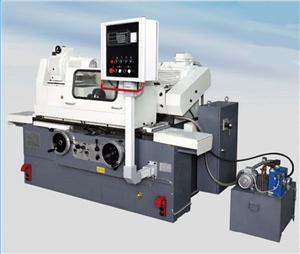
This Tier 1 automotive supplier produces transmission gears with internal splines. They needed to grind the bore and face in one setup to improve concentricity. LUCUBRATE supplied a machine with a dual-spindle configuration (one for bore, one for face) and a quick-change fixture. Changeover time for different gear sizes reduced from 4 hours to 45 minutes. Concentricity improved from 15 microns to 5 microns. “We can now take on smaller batch orders profitably,” says Operations Director Sarah Jenkins. “The flexibility has opened new markets for us.”
Case 4: Medical Devices S.A., Switzerland
This manufacturer of surgical instruments needed to grind stainless steel cannulas with a 2-micron tolerance and a mirror finish. The challenge was heat generation causing micro-cracks. LUCUBRATE’s solution included a high-pressure coolant system (70 bar) and a specialized grinding cycle with slow infeed and spark-out. The result: zero micro-cracks, tolerance held within 1.5 microns, and a surface finish of Ra 0.05 µm. “The technical support from LUCUBRATE was exceptional. They understood our material challenges,” notes R&D Manager Dr. Anna Weber.
Case 5: Heavy Equipment Repair, Australia
This company refurbishes large mining truck components, including bores up to 500 mm diameter. They needed a machine with a large swing and the ability to handle heavy parts. LUCUBRATE customized a machine with a 600 mm swing and a 2-ton capacity workhead. The machine also featured a portable in-process gauge for large bores. Repair cycle time reduced by 30%, and the company now offers a 48-hour turnaround service. “The machine is a workhorse. It’s built for our tough environment,” says Owner Dave Thompson.
Applications and Partnerships: Where Precision Matters
CNC internal grinding machines are indispensable in industries where bore precision is critical. Key applications include:
- Automotive: Fuel injector bodies, transmission gears, valve seats, turbocharger housings.
- Aerospace: Hydraulic actuators, fuel nozzles, landing gear components, turbine parts.
- Medical: Surgical instruments, implants, catheter fittings.
- Hydraulics: Valve bodies, pump housings, cylinders.
- Tooling: Collets, drill chucks, milling cutters.
NANTONG LUCUBRATE MACHINERY TECHNICAL LTD. has established strategic partnerships with leading component manufacturers and distributors worldwide. For instance, they supply machines to a major European automotive Tier 1 supplier through a framework agreement, and their machines are specified by a US-based aerospace contractor for critical fuel system components. These partnerships are built on a shared commitment to precision and reliability, and they validate the performance of LUCUBRATE machines in the most demanding environments.
FAQ: Technical Answers for Engineers and Procurement
Q1: What is the typical lead time for a custom CNC internal grinding machine?
A1: Lead time varies based on customization. A standard machine typically ships in 4-6 months. For custom configurations with special workholding or automation, expect 6-9 months. NANTONG LUCUBRATE MACHINERY TECHNICAL LTD. provides a detailed project schedule upon order confirmation, including design, manufacturing, and testing phases. We also offer expedited options for urgent needs.
Q2: How do you ensure the machine meets our specific tolerance and surface finish requirements?
A2: We follow a rigorous validation process. Before shipment, we request sample workpieces from you and perform a full grinding test on the machine. We measure all critical parameters (size, roundness, cylindricity, surface finish) and provide a detailed inspection report. The machine is not shipped until it meets or exceeds your specifications. Additionally, we offer on-site installation and commissioning, including process optimization with your operators.
Q3: What type of CNC control do you use, and can it integrate with our existing systems?
A3: We primarily use Siemens SINUMERIK or FANUC controls, which are industry standards and widely supported. These controls support various communication protocols (Profinet, EtherNet/IP, OPC UA) for integration with your MES or ERP systems. We can also provide custom data interfaces if needed. Our engineers work with your IT team to ensure seamless connectivity.
Q4: What is the expected maintenance schedule and spare parts availability?
A4: Preventive maintenance is key to longevity. We recommend a quarterly inspection of the spindle, coolant system, and filtration. Annual replacement of wear items like seals and belts is typical. We maintain a global spare parts inventory with critical components available for 24-hour shipment. We also offer remote diagnostics and annual service contracts to keep your machine running at peak performance.
Q5: How does the cost of a LUCUBRATE machine compare to European or Japanese brands?
A5: Our machines are competitively priced, often 20-30% lower than comparable European or Japanese models. However, we do not compromise on quality. We use premium components (e.g., SKF bearings, Bosch Rexroth hydraulics, Siemens controls) and rigorous assembly standards. The total cost of ownership is favorable due to low maintenance and high reliability. We encourage you to compare specifications and visit our facility or a reference site to see the quality firsthand.
Conclusion: Your Partner in Precision
Choosing a CNC internal grinding machine is a decision that impacts your quality, productivity, and profitability for years. By focusing on thermal stability, speed, and flexibility, you can avoid the common pitfalls and select a machine that becomes a cornerstone of your operation. NANTONG LUCUBRATE MACHINERY TECHNICAL LTD. brings decades of expertise to every machine, with a proven track record of solving real-world grinding challenges. Don’t leave this critical decision to chance.
Ready to take the next step? Download our comprehensive technical whitepaper, “The Engineer’s Guide to CNC Internal Grinding: Precision, Productivity, and Profit,” which dives deeper into grinding parameters, wheel selection, and machine design principles. Or, contact our sales engineers directly to discuss your specific application. We’ll provide a tailored solution that meets your exact needs. Visit our website or call us today to schedule a consultation. Your precision future starts with the right partner.