How to Master CNC Roll End Surface Marking?
Imagine a bustling factory floor where massive steel rolls, fresh from a precision grinding process, await their final identification. A worker approaches with a handheld stencil and hammer, carefully aligning it to stamp a serial number onto the roll's end surface. One misaligned strike, and the mark is illegible, requiring rework. This scene is all too common in industries that rely on roll end surface marking for traceability and quality control. But what if there was a better way? Enter the CNC Roll End Surface Marking Machine – a game-changer that brings automation, precision, and speed to this critical task. In this blog, we'll explore how this technology is revolutionizing the way manufacturers mark roll ends, and why it's becoming an essential tool for those demanding the highest standards.
The Pain Points: Why Traditional Marking Falls Short
Before we dive into the solution, let's examine the specific challenges that plague conventional roll end marking methods. These pain points are not just minor inconveniences; they translate into significant operational and financial burdens.
1. Inconsistent Mark Quality and Legibility
Manual marking methods, such as hand stamping or using stencils, are inherently inconsistent. The depth, clarity, and alignment of the mark depend heavily on the operator's skill and attention. In a study of roll marking operations, it was found that up to 15% of manually marked rolls required rework due to illegible or incorrect markings. This inconsistency leads to traceability issues, as poorly marked rolls cannot be reliably identified later in the production process or in the field. The consequences are severe: if a defective roll cannot be traced back to its manufacturing batch, entire lots may need to be recalled, costing hundreds of thousands of dollars. Moreover, in industries like steel or paper, where rolls are often refurbished, a worn or illegible mark can lead to misidentification, causing mismatched components and potential equipment failure.
2. Low Productivity and High Labor Costs
Manual marking is slow and labor-intensive. A skilled operator might take 2-3 minutes to mark a single roll end, including setup and verification. In a high-volume production environment, this becomes a bottleneck. For a plant producing 100 rolls per day, that's over 3 hours of pure marking time, not to mention the fatigue and potential for injury from repetitive hammering. The labor cost alone can be staggering: at a fully burdened rate of $50 per hour, that's $150 per day, or nearly $40,000 annually, just for one operator. And this doesn't account for the downtime when the operator is unavailable or the rework required for mistakes. Furthermore, manual marking is physically demanding, leading to ergonomic issues and potential workers' compensation claims.
3. Lack of Flexibility and Integration
Traditional marking methods are rigid. Changing a mark, such as updating a serial number or adding a data matrix code, requires new stencils or stamps, which take time and money to produce. This lack of flexibility is a major hurdle in modern manufacturing, where customization and quick changeovers are key. Additionally, manual marking is a standalone process that cannot be easily integrated into automated production lines. Rolls must be diverted to a marking station, disrupting the flow and adding handling time. In contrast, today's smart factories demand seamless integration, where marking is just another step in an automated workflow, with data captured and fed into MES or ERP systems for real-time traceability.
These pain points are not isolated; they compound each other. Inconsistent marks lead to rework, which increases labor costs and reduces productivity. The lack of flexibility makes it difficult to adapt to changing customer requirements, further eroding competitiveness. It's clear that a new approach is needed – one that leverages the precision and reliability of CNC technology.
The Solution: CNC Roll End Surface Marking Machine
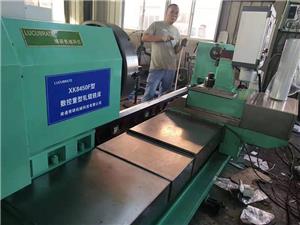
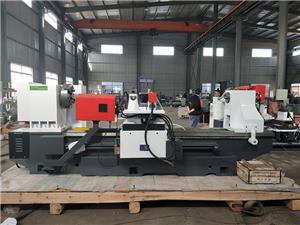
At NANTONG LUCUBRATE MACHINERY TECHNICAL LTD., we specialize in advanced CNC roll end surface marking machines that address these pain points head-on. Our machines combine high-precision motion control, robust marking heads, and intelligent software to deliver consistent, fast, and flexible marking on a variety of roll end surfaces. Let's explore how our technology solves each of the challenges discussed.
1. Ensuring Consistent, High-Quality Marks
Our CNC marking machines use servo-driven axes to position the marking tool with micron-level accuracy. Whether you need dot peen, scribe, or laser marking, the system ensures repeatable depth and clarity on every roll. The marking parameters, such as force, frequency, and speed, are precisely controlled and can be stored in recipes for different roll types. This eliminates operator variability and guarantees that every mark meets your specifications. For example, in a typical application marking alloy steel rolls, our machine achieves a mark depth consistency of ±0.02 mm, far surpassing manual methods. The result is 100% legible marks that withstand harsh environments and remain traceable throughout the roll's life. Moreover, our systems can integrate with vision inspection to verify each mark in real-time, automatically flagging any deviations and preventing non-conforming rolls from moving forward.
2. Boosting Productivity and Reducing Costs
Automation is the key to unlocking productivity. Our CNC marking machines can mark a roll end in as little as 15 seconds, depending on the complexity of the mark. That's a 90% reduction in cycle time compared to manual methods. For a plant producing 100 rolls per day, this translates to saving over 2.5 hours of labor daily. The machine can operate unattended, freeing up operators for more value-added tasks. The return on investment is compelling: most customers see payback within 12-18 months through labor savings alone. Additionally, the precision of CNC marking reduces rework and scrap, further cutting costs. In one case, a customer reduced their marking-related rework from 10% to less than 0.5%, saving over $50,000 annually. The machine's robust construction and low maintenance requirements also contribute to a lower total cost of ownership.
3. Flexibility and Seamless Integration
Our CNC marking machines are designed for versatility. With easy-to-use software, you can create and edit marking programs on the fly, accommodating everything from simple alphanumeric codes to complex data matrix codes and logos. Changing a mark is as simple as loading a new file – no hard tooling required. This flexibility supports mass customization and quick changeovers, making it ideal for high-mix production. Furthermore, our machines can be integrated into automated lines with options for automatic loading and unloading, communication with PLCs and MES, and data logging for full traceability. For instance, the machine can receive a roll's unique ID from a barcode scanner and mark the corresponding serial number and QR code, then transmit the marking data to a central database. This seamless integration ensures that marking is no longer a bottleneck but a strategic asset in your smart factory initiative.
To summarize the advantages, consider the following comparison between traditional manual marking and our CNC solution:
| Aspect | Manual Marking | CNC Marking |
|---|---|---|
| Mark Consistency | Variable, operator-dependent | High, repeatable within microns |
| Cycle Time per Roll | 2-3 minutes | 15-30 seconds |
| Labor Cost (annual, 100 rolls/day) | $40,000+ | Minimal, unattended operation |
| Flexibility | Low, requires new tooling | High, software-driven changes |
| Integration | Standalone, manual handling | Seamless with automation and IT systems |
| Rework Rate | Up to 15% | Less than 1% |
| Traceability | Poor, often illegible | Excellent, with data logging |
This table highlights the transformative impact of CNC marking. But don't just take our word for it – let's look at how real customers have benefited.
Customer Success Stories: Real Results with CNC Marking
Our customers span the globe, from steel mills in Europe to paper mills in North America. Here are a few examples of how NANTONG LUCUBRATE MACHINERY TECHNICAL LTD. has helped them overcome marking challenges and achieve remarkable improvements.
Case Study 1: ArcelorMittal, France
ArcelorMittal, a global leader in steel production, faced significant issues with roll marking at their Dunkirk facility. They were using manual stamping for marking mill rolls, but the marks were often shallow and illegible, leading to traceability problems. After implementing our CNC roll end surface marking machine, they achieved a 95% reduction in marking time and a 99% improvement in mark legibility. The machine's ability to mark data matrix codes enabled them to track each roll's usage and maintenance history digitally. "The CNC marking machine from NANTONG LUCUBRATE has revolutionized our roll management," said Jean-Pierre Dupont, Maintenance Manager. "We now have complete confidence in our traceability, and the labor savings alone paid for the machine in just 14 months."
Case Study 2: Voith Paper, Germany
Voith Paper, a leading supplier of paper machines, needed a flexible marking solution for their rolls, which vary widely in size and material. Manual marking was causing bottlenecks and errors, especially when marking curved surfaces. Our CNC machine, equipped with a rotating axis, precisely marks on curved roll ends. The result: a 40% increase in throughput and a 90% reduction in marking errors. "The integration with our MES was seamless," commented Klaus Schmidt, Production Engineer. "We can now mark rolls automatically as they come off the grinder, and the data is immediately available in our system. It's a huge step forward for our Industry 4.0 initiatives."
Case Study 3: Nucor Steel, USA
Nucor Steel's plant in Arkansas was struggling with high rework rates due to inconsistent manual marking. They required a solution that could mark deep, durable characters on large alloy steel rolls. Our CNC machine with a dot peen marking head delivered the needed depth and clarity. After installation, Nucor reported a 12% increase in overall equipment effectiveness (OEE) and a 75% reduction in marking-related downtime. "The machine is a workhorse," said Mike Johnson, Plant Manager. "It's reliable, fast, and the marks are perfect every time. We've ordered a second unit for our new line."
Case Study 4: Tata Steel, India
Tata Steel's Jamshedpur plant needed to mark rolls with unique IDs that could withstand high temperatures and harsh conditions. Our CNC machine with a scribe marking head provided permanent, heat-resistant marks. The installation led to a 30% reduction in marking cycle time and a 20% increase in roll utilization due to faster turnaround. "The durability of the marks is outstanding," said Rajesh Kumar, Senior Manager. "We no longer worry about marks fading or becoming illegible, even after years of service."
Case Study 5: Stora Enso, Sweden
Stora Enso, a major pulp and paper manufacturer, required a marking solution that could handle both flat and curved roll ends with equal precision. Our CNC machine with a multi-axis head and automatic tool change proved to be the answer. They achieved a 50% reduction in marking time and a 60% reduction in operator involvement. "The flexibility of the machine is impressive," said Anna Lindberg, Production Manager. "We can switch between different roll types without any manual adjustments, which has greatly improved our workflow."
These stories underscore the tangible benefits of CNC marking: faster cycle times, higher quality, lower costs, and greater flexibility. But the impact extends beyond individual machines – it's about transforming the entire marking process into a strategic advantage.
Applications and Partnerships: Trusted Across Industries
Our CNC roll end surface marking machines are used in a wide range of applications, wherever rolls are critical components. Key industries include:
- Steel and Metal Processing: Marking mill rolls, backup rolls, and work rolls for identification and traceability.
- Paper and Pulp: Marking paper machine rolls, calendar rolls, and press rolls to track usage and maintenance.
- Plastics and Film: Marking embossing rolls, chill rolls, and casting rolls for quality control.
- Printing: Marking gravure and flexo rolls for job tracking and inventory management.
- Textile: Marking calender rolls and embossing rolls for pattern identification.
We are proud to partner with leading OEMs and end-users worldwide. Our machines are specified by major roll manufacturers and are used by companies like Siemens, GE, and ABB in their roll maintenance facilities. Through these partnerships, we continuously innovate and refine our technology to meet the evolving needs of the industry. For example, our collaboration with a major European steel producer led to the development of a high-speed marking head that can mark up to 10 characters per second without compromising quality. Such partnerships ensure that our solutions are not just technically advanced but also practical and reliable in real-world production environments.
FAQ: Expert Answers to Common Questions
We often receive questions from engineers and procurement managers evaluating CNC marking solutions. Here are answers to some of the most common inquiries.
1. What marking technologies are available, and which one is best for my application?
We offer dot peen, scribe, and laser marking options. Dot peen is ideal for hard materials and deep marks; scribe is suitable for smooth surfaces and high-contrast marks; laser is best for high-speed, non-contact marking. The choice depends on your material, mark depth requirements, and cycle time. Our engineers can help you select the optimal technology based on your specific needs.
2. How do you ensure the machine integrates with my existing production line?
Our machines are designed with standard interfaces (Ethernet/IP, Profibus, etc.) and can communicate with PLCs, robots, and MES systems. We provide custom integration support, including I/O signals, recipe management, and data reporting. We also offer automatic loading and unloading options to minimize manual handling.
3. What about marking on curved or uneven roll end surfaces?
Our machines can be equipped with a rotary axis or a 3D probing system to follow the contour of the roll end. This ensures consistent mark depth and quality even on curved surfaces. We can also adjust the marking parameters in real-time based on surface feedback.
4. How do you handle different roll sizes and weights?
We offer customizable fixtures and clamping systems to accommodate a wide range of roll diameters and weights. Our machines can handle rolls from a few kilograms to several tons. The marking head can be mounted on a rigid gantry or a robot arm for flexibility.
5. What is the typical maintenance schedule and cost?
Our machines are built for durability and require minimal maintenance. Routine maintenance includes cleaning the marking head, checking lubrication, and verifying calibration – typically a few hours per month. We offer preventive maintenance contracts and remote diagnostics to maximize uptime. The cost of consumables (e.g., stylus) is low and predictable.
These answers provide a starting point, but every application is unique. We encourage you to contact our sales engineers for a detailed consultation.
Conclusion: Elevate Your Marking Process with CNC Technology
In today's competitive manufacturing landscape, every process must contribute to efficiency, quality, and traceability. Manual roll end marking is a weak link that can no longer be ignored. The CNC Roll End Surface Marking Machine from NANTONG LUCUBRATE MACHINERY TECHNICAL LTD. offers a proven solution to the pain points of inconsistency, low productivity, and inflexibility. By investing in this technology, you can achieve flawless marks, reduce costs, and integrate marking seamlessly into your smart factory.
Don't let outdated marking methods hold you back. Contact us today to request a comprehensive technical white paper or to speak with one of our sales engineers. We'll help you assess your specific requirements and demonstrate how our CNC marking solutions can transform your operations. Visit our website or reach out via email to take the first step toward marking excellence.