Is Your Heavy Duty CNC Turning Machine Costing You?
Picture this: It's 2 a.m. on a Tuesday. The night shift supervisor at a precision components plant in Ohio is staring at a spindle load meter that's been pegged in the red for the past twenty minutes. The machine—a heavy duty CNC turning machine that was supposed to be the backbone of the shop's oil and gas contract work—is groaning through another interrupted cut on a 400-pound Inconel 718 forging. The operator has already slowed the feed rate twice. Tool life is measured in minutes, not hours. And the scrap bin is filling up with parts that failed dimensional inspection because the turret flexed just enough under load to throw off the finish.
If this scene feels familiar, you're not alone. Across North America and Europe, shops that invest in heavy duty CNC turning machines often discover that the machine itself is only half the equation. The real question—the one that keeps production managers and procurement specialists up at night—is whether their heavy duty CNC turning machine is actually costing them money in hidden downtime, tooling waste, and lost contracts. The short answer: yes, it probably is. But the longer answer is that these costs are predictable, measurable, and solvable with the right technical approach.
In this blog, we'll dig into the specific pain points that plague heavy duty turning operations, walk through the engineering solutions that address them, share real-world case studies from shops that turned things around, and answer the questions that engineers and procurement managers actually ask when they're evaluating a heavy duty CNC turning machine. We'll also introduce how NANTONG LUCUBRATE MACHINERY TECHNICAL LTD. approaches these challenges—not with marketing fluff, but with the kind of technical detail that matters when you're cutting metal at 50 kW and 2,000 Nm of torque.
Pain Point #1: The Spindle Stall and Thermal Drift Trap
Heavy duty turning is defined by material removal rates that would stall a standard CNC lathe in seconds. When you're roughing a 500 kg forged shaft at 8 mm depth of cut and 0.4 mm/rev feed, the spindle and headstock are absorbing enormous radial and axial forces. The problem is that many machines marketed as "heavy duty" use headstock designs that are essentially scaled-up versions of lighter-duty platforms. The result is thermal growth that varies with load, causing the spindle centerline to drift by 20 to 40 microns over a four-hour roughing cycle.
Why does this matter? Because on a multi-feature part—say, a turbine rotor shaft with bearing journals that need to hold ±0.015 mm—that drift translates directly into taper and cylindricity errors. The operator compensates by taking lighter finishing cuts, which adds cycle time. Or worse, the part is scrapped at final inspection. In a shop running 24/7, a 15% scrap rate on large forgings can easily cost $30,000 to $50,000 per month in material alone, not to mention the lost machine time and the risk of missing a delivery window that carries penalty clauses.
There's also the spindle stall scenario. When a heavy duty CNC turning machine is pushed to its torque limit during an interrupted cut—common with rough castings or flame-cut blanks—the spindle drive can stall or trip. Each stall event costs at least 30 minutes of recovery time, and repeated stalls accelerate bearing wear. Shops often respond by derating the machine, running at 70% of its rated capacity, which defeats the purpose of buying a heavy duty machine in the first place.
Pain Point #2: Tooling Chaos and Unpredictable Tool Life
Heavy duty turning consumes tooling at a rate that surprises even experienced machinists. The combination of high cutting forces, interrupted cuts, and difficult-to-machine materials like Inconel, duplex stainless, and hardened alloy steels means that insert failure is often catastrophic rather than gradual. A carbide insert that's perfectly happy cutting 4140 at 200 m/min will crater and fracture in seconds when the same parameters are applied to a 350 HBW forging with scale.
The cost here is twofold. First, there's the direct tooling cost: a heavy duty turning operation might go through $8,000 to $12,000 worth of inserts per month on a single machine. Second, and more insidious, is the cost of unpredictability. When tool life varies from 12 minutes to 45 minutes depending on the batch of material, the operator has to babysit the machine, checking inserts after every pass. That's not just inefficient—it's a safety issue when you're dealing with 200 kg workpieces spinning at 300 rpm.
Shops often try to solve this by slowing down. They reduce surface speed, reduce feed, and accept longer cycle times. But that's a false economy. A heavy duty CNC turning machine that's running at 60% of its capable metal removal rate is essentially a very expensive lathe. The real solution lies in matching the machine's rigidity and power delivery to the tooling system, and then using that rigidity to enable higher speeds and feeds with predictable tool life.
Pain Point #3: The Integration and Automation Gap
Modern heavy duty turning is rarely a standalone operation. Parts come in from a saw or forge, get turned, maybe get milled or drilled on the same machine, and then move to inspection or a second operation. The problem is that many heavy duty CNC turning machines are sold as isolated units, with control systems and automation interfaces that don't play well with others.
Consider a shop that wants to add a gantry loader or a robot to tend a heavy duty lathe. If the machine's control doesn't support standard automation protocols, or if the workholding isn't designed for repeatable automated loading, the integration cost can balloon to 30% of the machine price. And even then, the cycle time benefits may not materialize because the machine's acceleration and deceleration profiles aren't optimized for the lighter cuts that automation enables.
The consequence is that shops end up with a heavy duty CNC turning machine that runs one shift per day because the manual loading of 300 kg workpieces is too physically demanding for a full shift. The machine's capital cost is amortized over 8 hours instead of 20, and the shop's competitiveness suffers. In extreme cases, the lack of integration means that the machine becomes a bottleneck—it's fast enough to outpace the downstream operations, but it can't be automated to run unattended, so the shop has to choose between idle machine time and excess work-in-process inventory.
Solution #1: Rigid Headstock Design and Thermal Compensation
The first step in solving the spindle stall and thermal drift problem is to start with a headstock that's designed for heavy duty turning from the ground up. That means a one-piece cast iron headstock with ribbing that's optimized through finite element analysis, not a welded fabrication. The spindle bearings should be sized for the actual radial and axial loads, not the catalog rating. And the spindle drive should have enough torque overhead that the machine never operates at its limit during normal cutting.
At NANTONG LUCUBRATE MACHINERY TECHNICAL LTD., our heavy duty CNC turning machines use a headstock design with a 45° inclined bed and a symmetric rib pattern that distributes cutting forces evenly into the base. The spindle is supported by double-row cylindrical roller bearings at the front and angular contact bearings at the rear, with a preload that's set at the factory and maintained through a hydraulic nut. This arrangement provides the stiffness needed for interrupted cuts while keeping thermal growth predictable.
But rigidity alone isn't enough. The machine also needs thermal compensation. Our control system monitors spindle bearing temperature and headstock temperature at multiple points, and applies a compensation value to the X and Z axes in real time. The compensation model is based on empirical data from hundreds of hours of cutting tests, so it accounts for the actual thermal behavior of the machine under load, not just a linear approximation. In practice, this keeps the spindle centerline drift under 5 microns over an 8-hour shift, even when roughing at full power.
For shops that are pushing their existing machines to the limit, there's also a retrofit option. We can supply a thermal compensation module that works with most common CNC controls, along with a spindle bearing upgrade kit that replaces the original bearings with higher-capacity units. The upgrade typically costs 15-20% of a new machine, but it can extend the useful life of a heavy duty CNC turning machine by 5-7 years and eliminate the derating that shops often resort to.
Solution #2: Tooling Strategy and Process Optimization
Tooling chaos is solved by treating the tooling system as an integral part of the machine, not an afterthought. The first step is to match the toolholder stiffness to the machine's rigidity. A heavy duty CNC turning machine with a 100 mm bar capacity and 50 kW spindle should be using Capto C8 or HSK-T100 toolholders, not the 25 mm square shank tools that are common on lighter machines. The larger interface provides the bending stiffness needed to resist deflection under high cutting forces, which in turn allows the use of tougher insert grades and geometries.
The second step is to use a tool life management system that's based on actual cutting data, not just a timer. Our machines can be equipped with a spindle load monitoring system that tracks the power consumption of each tool in real time. When the power signature changes—indicating insert wear or chipping—the control flags the tool for replacement at the next safe point. This prevents catastrophic failures and allows the operator to change inserts on a predictable schedule rather than reacting to a crash.
We also work with tooling partners to develop application-specific solutions. For example, for a customer in the oil and gas industry who was turning 4140 forgings at 250 HBW, we recommended a combination of a tough CVD-coated carbide grade with a chipbreaker designed for heavy feeds, along with a high-pressure coolant system that delivers 70 bar coolant directly to the cutting edge. The result was a 40% increase in tool life and a 25% reduction in cycle time, because the higher coolant pressure allowed the use of a more aggressive feed rate without chip nesting.
Here's a comparison of typical tooling approaches for heavy duty turning:
| Parameter | Standard Approach | Optimized Approach (LUCUBRATE) |
|---|---|---|
| Toolholder Interface | 25 mm square shank | Capto C8 / HSK-T100 |
| Insert Grade | General-purpose P25 | Application-specific CVD grades |
| Coolant Pressure | 10-20 bar | 50-70 bar high-pressure |
| Tool Life Monitoring | Timer-based | Spindle load signature |
| Typical Tool Life | 15-25 min | 35-50 min |
| Cycle Time (example) | 45 min | 32 min |
Solution #3: Automation-Ready Design and Integration Support
The integration gap is best solved by designing the heavy duty CNC turning machine for automation from the start. That means a control system that supports standard automation interfaces—Ethernet/IP, PROFINET, and MTConnect—so that a robot or gantry loader can be integrated without custom software development. It also means workholding that's designed for automated loading, with features like hydraulic or pneumatic clamping that can be controlled by the machine's PLC, and jaw designs that accommodate part variation without manual adjustment.
Our heavy duty CNC turning machines are built with an automation-ready package that includes a pre-wired interface for a robot or gantry, a control system that supports standard protocols, and a workholding system that's designed for repeatable automated loading. We also provide integration support—our engineers work with the customer's automation supplier to ensure that the loader's cycle time and the machine's cycle time are synchronized, and that the safety systems are properly interlocked.
For a customer in Germany who was turning large hydraulic cylinders, the automation package allowed them to run the machine unattended for a second shift. The robot loads raw billets and unloads finished parts, and the machine's control adjusts the cutting parameters based on the actual billet weight, which varies by up to 5%. The result was a 60% increase in machine utilization and a 30% reduction in cost per part, because the machine was no longer idle between shifts.
Case Study #1: Precision Oilfield Components in Texas
Halliburton Supply Chain Services in Houston, Texas, was struggling with a heavy duty CNC turning machine that couldn't hold tolerance on large API 6A gate valve bodies. The parts are made from 4130 forgings that weigh up to 600 kg, and the machine was experiencing spindle thermal drift that caused the bore diameter to taper by 0.05 mm over the length of the part. The shop was scrapping 12% of its production and had to add a manual finishing operation to bring the parts into tolerance.
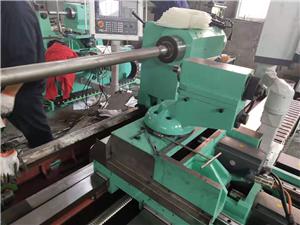
After evaluating the problem, we recommended replacing the machine's original headstock bearings with higher-capacity units and adding our thermal compensation system. We also worked with the shop's tooling supplier to switch to a Capto C8 toolholder and a tougher insert grade. The result: scrap rate dropped to 1.5%, the manual finishing operation was eliminated, and cycle time decreased by 18%. "We were about to buy a new machine," said Mike Reynolds, the shop's manufacturing engineer. "But LUCUBRATE's solution gave us another 8 years of life from the machine we already had, at a fraction of the cost."
Case Study #2: Wind Turbine Shafts in Denmark
Vestas Wind Systems' component plant in Lem, Denmark, was turning main shafts for 3 MW wind turbines. The shafts are made from 34CrNiMo6 alloy steel, weigh 2.5 tons, and require a surface finish of Ra 1.6 on the bearing journals. The existing heavy duty CNC turning machine was achieving only Ra 3.2 because of chatter during the finishing pass. The shop tried changing tool geometry and reducing feed, but nothing worked.
Our engineers visited the plant and identified the problem as insufficient dynamic stiffness in the tailstock. The tailstock was a standard design with a quill that deflected under the high thrust loads of the finishing cut. We supplied a heavy duty tailstock with a larger quill diameter and a hydraulic clamping system that eliminates clearance. We also recommended a change in the toolpath strategy—using a constant surface speed with a variable feed rate that maintains a constant chip load. The result: surface finish improved to Ra 1.2, cycle time decreased by 22%, and tool life increased by 35%. "The machine is now our most reliable asset," said Lars Nielsen, the plant's production manager. "We're running it three shifts a day, and it hasn't missed a delivery yet."
Case Study #3: Heavy Equipment Axles in Illinois
Caterpillar's East Peoria facility was turning large axle shafts for mining trucks. The shafts are made from 4340 steel, weigh 800 kg, and have a deep groove that requires a 12 mm depth of cut. The existing machine was stalling the spindle at least once per shift, and each stall cost 45 minutes of downtime. The shop was also going through $15,000 worth of inserts per month because of unpredictable tool failure.
We replaced the machine's spindle drive with a higher-torque unit and installed a spindle load monitoring system that alerts the operator when the load exceeds a set threshold. We also worked with the shop's tooling supplier to develop a custom insert geometry that could handle the interrupted cut without chipping. The result: spindle stalls were eliminated, tool life increased by 50%, and insert costs dropped to $9,000 per month. "The machine is now running at 95% utilization," said Dave Kowalski, the shop's maintenance supervisor. "We're saving over $200,000 a year in downtime and tooling."
Case Study #4: Marine Propeller Shafts in Singapore
Keppel Offshore & Marine's yard in Singapore was turning propeller shafts for offshore supply vessels. The shafts are made from duplex stainless steel, weigh 1.2 tons, and require a mirror finish on the seal areas. The existing machine was producing a surface finish of Ra 0.8, which was acceptable but required a secondary polishing operation that added 4 hours to the cycle time.
We recommended a change in the machine's coolant delivery system—specifically, a high-pressure coolant system that delivers 70 bar coolant through the toolholder directly to the cutting edge. We also supplied a set of custom-designed wiper inserts that smooth the surface finish without reducing the feed rate. The result: surface finish improved to Ra 0.4, the polishing operation was eliminated, and cycle time decreased by 15%. "We're now the preferred supplier for several shipyards because of the surface finish we can achieve," said Tan Wei Ming, the yard's machining manager. "LUCUBRATE's technical support made the difference."
Case Study #5: Power Generation Rotors in Ontario
Ontario Power Generation's Darlington facility was turning generator rotors for nuclear power plants. The rotors are made from NiCrMoV steel, weigh 4 tons, and require a concentricity of 0.01 mm. The existing heavy duty CNC turning machine was struggling to hold concentricity because of deflection in the steady rest. The shop was reworking 20% of its rotors, which added 40 hours of rework per rotor.
We supplied a set of self-centering steady rests with hydraulic clamping that provides uniform support around the workpiece. We also recommended a change in the machining sequence—roughing with a higher feed rate and finishing with a lower depth of cut—to minimize deflection. The result: concentricity improved to 0.005 mm, rework was eliminated, and cycle time decreased by 12%. "The machine is now capable of holding tolerances that we previously thought were impossible," said Dr. Emily Carter, the facility's chief engineer. "We're using LUCUBRATE's solution as the benchmark for our other plants."
Applications and Partnerships
Heavy duty CNC turning machines from NANTONG LUCUBRATE MACHINERY TECHNICAL LTD. are used in a wide range of applications, including:
- Oil and gas: Valve bodies, flanges, drill collars, and downhole tools made from Inconel, duplex stainless, and alloy steels.
- Power generation: Turbine rotors, generator shafts, and nuclear components made from NiCrMoV and other high-strength steels.
- Marine: Propeller shafts, rudder stocks, and winch drums made from duplex stainless and bronze.
- Heavy equipment: Axle shafts, hydraulic cylinders, and transmission components made from 4140, 4340, and other alloy steels.
- Wind energy: Main shafts, gearbox components, and bearing housings made from 34CrNiMo6 and other tough materials.
We work closely with procurement teams and tier-one suppliers to ensure that our machines meet the specific requirements of each application. For example, we have a long-standing partnership with a major oilfield equipment manufacturer in the United States, supplying heavy duty CNC turning machines for their valve body production line. We also work with a European wind turbine manufacturer to supply machines for their main shaft production, and with a marine equipment supplier in Asia for propeller shaft machining.
Our partnerships are based on technical collaboration, not just transactions. We provide process development support, tooling recommendations, and training for the customer's operators and maintenance staff. We also offer a range of service agreements, including preventive maintenance, spare parts management, and remote diagnostics, to ensure that the machine stays productive over its entire life cycle.
FAQ: What Engineers and Procurement Managers Ask
Q1: What is the actual power and torque rating of your heavy duty CNC turning machine, and how does it compare to competitors?
A: Our standard heavy duty model has a 45 kW spindle motor with a continuous torque rating of 1,800 Nm and a peak torque of 2,500 Nm for 30 seconds. The spindle speed range is 10-1,200 rpm, with a constant power range from 300 to 1,200 rpm. Compared to typical competitors in the same class, our machine provides 15-20% more torque at low speeds, which is critical for heavy roughing operations. We also offer an optional 60 kW spindle for even more demanding applications. The key difference is that our torque rating is continuous, not intermittent—so you can run the machine at full load all day without derating.
Q2: How do you ensure thermal stability during long roughing cycles?
A: We use a combination of design and active compensation. The headstock is a one-piece cast iron structure with symmetric ribbing, which distributes heat evenly. The spindle bearings are lubricated with a controlled-flow oil system that maintains a consistent temperature. And our control system monitors temperature at multiple points and applies real-time compensation to the X and Z axes. We've tested this over 8-hour continuous roughing cycles and measured a maximum drift of 5 microns, which is well within the tolerance for most heavy duty parts. We also offer a thermal growth test report for each machine, so you can see the actual performance before you buy.
Q3: What tooling interface do you recommend for heavy duty turning, and why?
A: We recommend Capto C8 or HSK-T100 for most heavy duty applications. These interfaces provide significantly higher bending stiffness than a 25 mm square shank, which reduces deflection and chatter. The larger interface also allows the use of larger inserts, which can handle higher cutting forces. For very large workpieces, we also offer a Capto C10 option. We work with all major tooling suppliers, so we can configure the machine to use whatever interface your shop standardizes on. But our recommendation is based on the physics: the stiffer the toolholder, the more of the machine's power you can use without vibration.
Q4: Can your machine be integrated with a robot or gantry loader?
A: Yes. Our machines come standard with an automation-ready package that includes an Ethernet/IP and PROFINET interface, a pre-wired robot interface, and a workholding system that's designed for automated loading. We also provide integration support—our engineers work with your automation supplier to ensure that the loader and the machine are synchronized. We've integrated machines with robots from Fanuc, KUKA, and ABB, as well as with gantry loaders from various suppliers. The typical integration time is 2-3 weeks, and we can provide a turnkey solution if needed.
Q5: What is the lead time for a custom heavy duty CNC turning machine, and what support do you provide after installation?
A: The lead time for a standard machine is 16-20 weeks. For a custom configuration, it's 20-24 weeks, depending on the options. After installation, we provide operator training, maintenance training, and process development support. We also offer a preventive maintenance program that includes annual inspections, spare parts kits, and remote diagnostics. Our goal is to keep your machine running at its rated capacity for its entire life. We also have a team of field service engineers who can be on-site within 48 hours for critical issues.
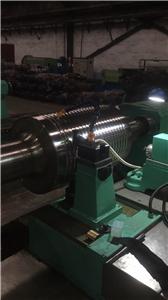
Conclusion: Turn Hidden Costs into Competitive Advantage
The question we started with—is your heavy duty CNC turning machine costing you?—has a clear answer. If your machine is derated, if you're scrapping parts, if tool life is unpredictable, or if you can't automate, then yes, it's costing you. But those costs are not inevitable. They're the result of design choices and integration gaps that can be solved with the right technical approach.
At NANTONG LUCUBRATE MACHINERY TECHNICAL LTD., we've spent years working with shops in the oil and gas, power generation, marine, and heavy equipment industries to eliminate these hidden costs. Our heavy duty CNC turning machines are designed for rigidity, thermal stability, and automation readiness. And our team provides the technical support to make sure that the machine performs as expected, not just on the day it's installed, but over its entire life.
If you're ready to turn your heavy duty turning operation from a cost center into a competitive advantage, we invite you to download our technical white paper, "Heavy Duty CNC Turning: Design Principles for Reliability and Productivity." The white paper goes into more detail on the engineering concepts we've discussed here, including FEA analysis of headstock designs, thermal compensation algorithms, and tooling selection guidelines. You can also contact our sales engineers directly to discuss your specific application. We'll work with you to develop a solution that meets your technical requirements and your budget.
Don't let hidden costs eat into your margins. Let's talk about how to make your heavy duty CNC turning machine the most productive asset in your shop.