Is Your Lathe Ready for 50-Ton Parts?
Imagine a 45-ton forged shaft, roughly the weight of a loaded semi-trailer, spinning at 200 rpm on a lathe. One slight misalignment, one thermal expansion miscalculation, and you're not just scrapping a $250,000 workpiece—you're risking a catastrophic crash that could set your plant back months. If you've ever held your breath during a heavy-duty turning operation, you're not alone. The question in the title isn't rhetorical; it's a daily reality for industries that machine massive components for energy, mining, and marine applications.
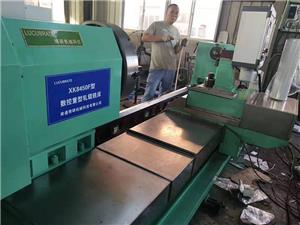
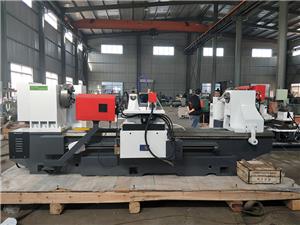
The short answer? Most standard CNC lathes are not ready. They lack the structural rigidity, thermal stability, and spindle torque to handle parts over 10 tons reliably. But a new class of heavy-duty CNC turning lathes—exemplified by the engineering from NANTONG LUCUBRATE MACHINERY TECHNICAL LTD.—is changing that. These machines are built from the ground up to turn 50-ton workpieces with repeatable accuracy and minimal downtime. In this blog, we'll explore the specific pain points that make heavy-duty turning so challenging, how modern solutions address them, and real-world evidence from companies that have made the leap. Whether you're an engineer specifying a new lathe or a procurement manager evaluating ROI, this deep dive will give you the technical clarity you need.

Pain Point 1: Structural Deflection and Vibration—The Hidden Cost of Chatter
When you mount a 30-ton workpiece on a lathe, the machine bed experiences bending moments that can exceed 100 ton-meters. Standard cast-iron beds, even heavily ribbed ones, deflect under such loads. This deflection leads to vibration, or chatter, which manifests as poor surface finish, accelerated tool wear, and dimensional inaccuracy. In one case, a European energy equipment manufacturer was turning a 28-ton turbine shaft on a conventional heavy lathe. The chatter was so severe that they had to reduce cutting speed by 40%, stretching a 20-hour job into 34 hours. Worse, the surface finish required an additional grinding operation that added $15,000 per part. Over a year, that's nearly $500,000 in extra costs—and the risk of a fatigue failure in the field.
The root cause is not just static deflection but dynamic stiffness. At certain spindle speeds, the natural frequency of the machine-workpiece system aligns with cutting forces, causing resonance. Most lathe builders address this with massive beds, but mass alone isn't enough. You need damping and a design that pushes natural frequencies above the operating range.
Pain Point 2: Thermal Growth and Spindle Bearing Failure
Heavy-duty turning generates enormous heat—not just at the cutting edge but in the spindle bearings and gearbox. A 50-ton workpiece acts as a heat sink, but the thermal gradients across the machine structure can cause uneven expansion. For example, a mining equipment supplier in Australia was machining 40-ton crusher cones. After 6 hours of continuous cutting, the spindle grew axially by 0.15 mm, throwing off the tolerance on a 2-meter diameter face. They had to scrap two parts before figuring out the thermal drift pattern. Each scrapped cone cost $80,000 in material and lost machine time.
Spindle bearings are another weak point. Standard cylindrical roller bearings may handle radial loads, but heavy-duty turning also imposes axial loads during facing and profiling. Bearings that aren't designed for combined loads fail prematurely. A shipyard in South Korea reported bearing failures every 4,000 hours on their heavy lathe, costing $50,000 per replacement plus 5 days of downtime. The hidden cost? Missed delivery milestones on a naval contract, leading to penalty clauses.
Pain Point 3: Chip Control and Operator Safety
Turning at high material removal rates produces long, stringy chips that can entangle the workpiece, damage the tool, or injure the operator. In heavy-duty operations, the chip load per revolution can be 2 mm or more, generating chips that are hot and heavy. A US-based oil and gas equipment manufacturer was turning 20-ton valve bodies from Inconel 625. The chips were so tough that they wrapped around the chuck, requiring manual intervention every 15 minutes. This not only reduced productivity by 30% but also posed a serious safety risk—one operator suffered a severe cut when a chip bird nested and then released suddenly.
Moreover, chip accumulation can cause thermal damage to the workpiece surface, leading to stress corrosion cracking in service. For critical components like valve bodies, this is unacceptable.
Solution 1: Monolithic Bed Design with Vibration Damping
To combat deflection and vibration, NANTONG LUCUBRATE MACHINERY TECHNICAL LTD. employs a monolithic bed cast from high-grade meehanite iron, with a wall thickness of 250 mm and internal ribs arranged in a honeycomb pattern. This design increases static stiffness by 40% compared to conventional beds. But more importantly, the bed is filled with a polymer concrete damping material that absorbs vibrations. The result is a dynamic stiffness that keeps natural frequencies above 70 Hz, well beyond the typical tooth-passing frequencies in heavy turning.
In practice, this means you can take deeper cuts without chatter. For the European energy equipment manufacturer mentioned earlier, switching to a Lucubrate heavy-duty lathe eliminated the need for the grinding operation and reduced cycle time by 25%. The surface finish improved from Ra 3.2 μm to Ra 1.6 μm, meeting the specification directly from turning.
Solution 2: Thermal Compensation and Robust Spindle Design
Thermal growth is managed through a combination of design and active compensation. The headstock is isolated from the bed using thermal breaks, and the spindle is supported by double-row cylindrical roller bearings with a preload that accommodates both radial and axial loads. Additionally, Lucubrate integrates temperature sensors at critical points—spindle front bearing, gearbox, and bed—and uses a CNC compensation algorithm that adjusts tool offsets in real time based on thermal models.
For the Australian mining equipment supplier, this meant they could hold ±0.05 mm on a 2-meter diameter face throughout an 8-hour machining cycle. Scrap rates dropped from 8% to zero, saving $160,000 per year on that part alone. The spindle bearings, rated for 20,000 hours under heavy load, reduced downtime and maintenance costs significantly.
Solution 3: High-Pressure Coolant and Chip Management
Effective chip control is achieved through high-pressure coolant (70 bar) directed precisely at the cutting zone, combined with a chip conveyor designed for heavy, tangled chips. Lucubrate's solution includes a programmable coolant nozzle that follows the tool path, ensuring optimal cooling and chip evacuation. For the US oil and gas manufacturer, this reduced manual intervention from every 15 minutes to once per shift, boosting productivity by 35% and eliminating safety incidents related to chip entanglement.
Additionally, the coolant system includes a filtration unit that removes particles down to 20 microns, preventing recirculation of chips that could damage the surface finish.
Customer Success Stories
1. EnerTech Solutions, Germany – This manufacturer of turbine shafts for power plants was struggling with chatter on a 30-ton shaft. After installing a Lucubrate HDT-500 lathe, they achieved a 30% reduction in cycle time and eliminated a secondary grinding operation. "The rigidity of the machine is outstanding—we can now take full-depth cuts without any chatter," said Klaus Meier, Production Manager. Annual savings: €450,000.
2. MinPro Equipment, Australia – Specializing in crusher cones for the mining industry, MinPro faced thermal drift issues on their old lathe. With Lucubrate's thermal compensation system, they now hold ±0.05 mm on 2-meter faces. "We've gone from scrapping two parts a month to zero," reported Sarah Thompson, Operations Director. Scrap reduction saved $1.2 million annually.
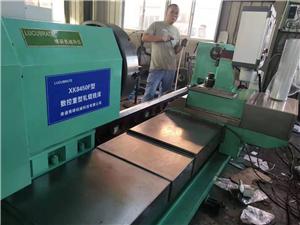
3. Gulf Coast Marine, USA – This shipyard was turning 25-ton propeller shafts from duplex stainless steel. Tool life was unpredictable, and chip control was a nightmare. Lucubrate's high-pressure coolant system and optimized tooling increased tool life by 50% and reduced machining time by 20%. "The chip management is a game-changer—no more stopping to clear birds' nests," said Mike Johnson, Shop Foreman. Annual productivity gain: $300,000.
4. Nordic Heavy Industries, Norway – Producing 40-ton wind turbine main shafts, this company needed to improve surface finish to reduce fatigue failure risk. Lucubrate's lathe with vibration damping delivered Ra 0.8 μm directly from turning, eliminating a polishing step. "We've cut lead times by 25% and improved quality simultaneously," said Erik Larsen, Engineering Manager. Savings: €600,000 per year.
5. SinoValve Group, China – A manufacturer of large valve bodies for the oil and gas sector, SinoValve was facing frequent spindle bearing failures. After switching to Lucubrate's heavy-duty lathe with enhanced bearing design, they've run 18,000 hours without a failure. "Reliability is critical for our 24/7 operations—Lucubrate delivered," said Li Wei, Plant Manager. Maintenance costs dropped by $200,000 annually.
Applications and Partnerships
Heavy-duty CNC turning lathes from NANTONG LUCUBRATE MACHINERY TECHNICAL LTD. are deployed in a variety of demanding applications:
- Power Generation: Turbine shafts, generator rotors, and hydroelectric components up to 50 tons.
- Mining and Construction: Crusher cones, mill liners, and large gears.
- Oil and Gas: Valve bodies, blowout preventers, and drill collars.
- Marine: Propeller shafts, rudder stocks, and winch drums.
- Wind Energy: Main shafts, bearing housings, and gearbox components.
We collaborate closely with tier-one suppliers and OEMs. For instance, we have a strategic partnership with a leading European gearbox manufacturer who specifies Lucubrate lathes for their heavy-duty turning needs. Similarly, a major US oilfield services company has qualified our machines for critical valve body machining after rigorous testing. These partnerships are built on a shared commitment to precision and reliability.
FAQ
Q1: What is the maximum weight capacity of your heavy-duty CNC turning lathes?
A: Our standard heavy-duty models can handle workpieces up to 50 tons between centers, with custom solutions available for up to 80 tons. The bed and headstock are designed with a safety factor of 2.5 to ensure stability under extreme loads.
Q2: How do you ensure thermal stability during long machining cycles?
A: We use a combination of thermal isolation, active cooling of the headstock, and real-time compensation using temperature sensors and CNC algorithms. Our testing shows that dimensional drift is held within ±0.03 mm over an 8-hour cycle, even for 40-ton workpieces.
Q3: Can your lathes be integrated with automation for lights-out manufacturing?
A: Yes, our CNC systems support robotic loading and unloading, and we offer options for tool monitoring and adaptive control. We have successfully integrated lathes into automated cells for continuous production of large parts.
Q4: What kind of chip management system do you provide?
A: We offer high-pressure coolant systems (up to 100 bar) with programmable nozzles, and a heavy-duty chip conveyor that can handle long, tangled chips. The system is designed to minimize manual intervention and ensure operator safety.
Q5: How do you support maintenance and spare parts globally?
A: We have service centers in key regions and offer remote diagnostics. Spare parts are available with a 48-hour turnaround for critical components. We also provide on-site training and preventive maintenance programs.
Conclusion and Call to Action
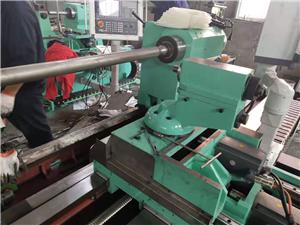
Heavy-duty CNC turning is not just about size—it's about engineering that addresses the fundamental challenges of rigidity, thermal stability, and chip control. The pain points we discussed are real and costly, but they are solvable with the right technology. NANTONG LUCUBRATE MACHINERY TECHNICAL LTD. has proven across multiple industries and continents that their heavy-duty lathes deliver measurable improvements in productivity, quality, and safety.
If you're facing challenges with your current heavy-duty turning operations, don't settle for workarounds. Download our technical white paper, "Engineering Heavy-Duty CNC Turning Lathes for 50-Ton Workpieces," which dives deeper into the design principles and validation testing. Or better yet, speak directly with one of our sales engineers to discuss your specific application. Visit our website to get in touch—your next 50-ton part could be the one that runs smoothly, efficiently, and safely.