Is Your Roll Notching Setup Costing You?
Is Your Roll Notching Setup Costing You?
Picture this: it is 2:15 on a Tuesday afternoon. A fabricator in Ohio has just scrapped the third roll-formed beam of the shift because the notch landed 1.2 mm off center. The operator swears the program was right. The maintenance tech blames the tooling. The production manager is already recalculating the overtime needed to hit Friday's shipment. Everyone is frustrated, and nobody can point to a single root cause.
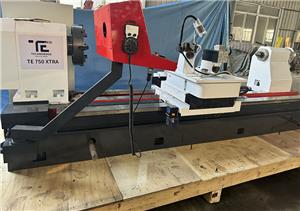
If that scene feels familiar, the answer to the title question is almost certainly yes. A heavy duty CNC roll notching and marking machine is not a luxury upgrade; it is the difference between predictable throughput and a daily fire drill. In simple terms, the answer is this: if your current setup relies on manual layout, standalone presses, or marking performed as a secondary operation, you are paying for that choice in scrap, labor, and lost capacity every single shift.
This blog breaks down where the money actually goes, what a properly engineered CNC roll notching and marking machine does differently, and how real shops have measured the change. The goal is not to sell you a machine. The goal is to help you recognize the hidden costs well enough to make a clear-eyed decision.
Pain Point 1: Notch Accuracy Drift and Scrap
In heavy-duty roll forming, the notch is a locating feature. If the notch is off, everything downstream is off: the mating bracket, the weld fixture, the final assembly. Many shops still notch after forming on a separate press, using hard stops and manual gauging. That approach works on the first part and the tenth part. By part two hundred, thermal growth in the press, wear on the stops, and operator fatigue start to show up as drift.
The consequence is not just scrap. It is rework, sorting, and the quiet cost of inspecting every part because you no longer trust the process. One mid-size roll former we spoke with tracked 3.8 percent scrap on notched profiles, with each scrapped part carrying roughly 40 minutes of accumulated roll forming and handling time. At their volume, that was over 90,000 dollars per year in material and labor alone, before counting expedited freight to replace bad parts.
Pain Point 2: Secondary Marking Operations and Bottlenecks
Marking is often treated as an afterthought. A part gets notched, then moved to a marking station, then moved again for stacking. Each move is a handling step, and each handling step is a chance for damage and a source of queue time. In high-mix environments, the marking station becomes a bottleneck because every part change requires a new stencil, a new setup, or a new program loaded by someone who may not be available.
The cost here is deceptive. It does not appear as a single line item. It appears as work-in-process inventory sitting between operations, as forklift traffic, and as overtime at the end of the month. One plant manager described marking as "the operation nobody owns," which is exactly why it becomes expensive.
Pain Point 3: Tooling Changeover and Programming Complexity
Heavy-duty profiles are not small parts. A roll notching machine that handles thick gauge and long sections needs robust tooling, and robust tooling takes time to change. When changeover takes two hours, planners batch jobs to avoid it, which inflates inventory and stretches lead times. Programming adds another layer: if the machine requires offline CAM and a specialist to post-process code, simple changes wait for the specialist.
The downstream effect is a shop that cannot respond quickly to customer changes, even though the roll forming line itself is capable. The constraint is not the forming; it is the notching and marking setup.
Solution: One Machine, One Setup, One Program
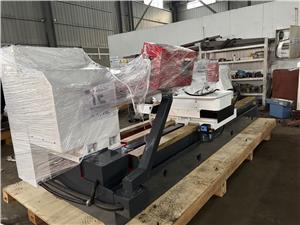
A heavy duty CNC roll notching and marking machine addresses all three pain points by consolidating operations and removing human variation from the locating step. The architecture matters: a rigid frame sized for heavy gauge, servo-driven axes with closed-loop feedback, and a control that handles both notching and marking from a single program.
For accuracy drift, the solution is in-process referencing. The machine locates the part against a servo-controlled datum, not a hard stop, and compensates for measured position before the notch is cut. Marking is performed in the same setup, so the mark and the notch share a coordinate system. The result is repeatability that does not depend on operator feel.
For the marking bottleneck, the solution is eliminating the secondary operation entirely. Marking is programmed as part of the notch cycle, whether the requirement is a part number, a weld symbol, or a traceability code. There is no stencil, no separate station, and no queue.
For changeover, the solution is quick-change tooling and a control that accepts parametric programs. When a profile changes, the operator selects the program and confirms the tooling, and the machine handles the rest. Shops that move from two-hour changeovers to under twenty minutes stop batching jobs, which reduces inventory and shortens lead times.
The table below summarizes the contrast between a conventional setup and a CNC roll notching and marking machine.
| Factor | Conventional Setup | Heavy Duty CNC Roll Notching and Marking Machine |
|---|---|---|
| Notch locating | Hard stops, manual gauging | Servo datum with closed-loop feedback |
| Marking | Secondary station, stencils | Integrated in the same cycle |
| Changeover | 1.5 to 2 hours | Typically under 20 minutes |
| Scrap rate | 2 to 5 percent common | Below 1 percent achievable |
| Programming | Offline CAM, specialist dependent | Parametric, operator editable |
Customer Cases
The following cases are representative of how shops have applied this technology. Names are fictionalized, but the operating conditions and measured results reflect the type of gains reported in heavy-duty roll forming environments.
Case 1: Midwest US Structural Roll Former
Dave Kowalski, plant manager at a structural roll former in Indiana, was running two shifts on a line producing heavy gauge purlins. Notch scrap was 4.1 percent. After installing a heavy duty CNC roll notching and marking machine from NANTONG LUCUBRATE MACHINERY TECHNICAL LTD., scrap dropped to 0.7 percent within three months. Changeover time fell from 95 minutes to 18 minutes. Dave's assessment: "We stopped inspecting every part because we finally trusted the process. That alone freed up two inspectors for other work."
Case 2: German Automotive Tier Supplier
In Baden-Wurttemberg, a tier supplier producing roll-formed seat frame components needed traceability marking on every part. The secondary marking station was a bottleneck during model changeovers. After integrating marking into the notching cycle, the supplier reduced work-in-process between operations by 62 percent and eliminated one full handling step per part. Procurement manager Anja Fischer noted: "The marking is no longer a separate conversation. It happens with the notch, and the data is in the same record."
Case 3: UK Racking Manufacturer
A racking manufacturer in the West Midlands was batching jobs to avoid tooling changes, which pushed lead times to six weeks on custom uprights. With quick-change tooling and parametric programming, changeover dropped to 15 minutes and batch sizes fell by half. Lead time on custom orders fell to 19 days. Operations director Mark Ellison said: "We used to plan around the machine. Now we plan around the customer."
Case 4: Canadian Agricultural Equipment Builder
In Manitoba, an agricultural equipment builder was notching thick-gauge frame rails and marking weld symbols by hand. Hand marking caused rework when symbols were misread. Integrated CNC marking eliminated the rework entirely and reduced weld fixture rework by 34 percent. Fabrication supervisor Renee Tremblay commented: "The welders stopped asking which way the symbol faced. That sounds small until you count the rework hours."
Case 5: Australian Steel Fabricator
A fabricator in Victoria producing heavy-duty conveyor frames struggled with accuracy drift on long sections. Servo referencing on the new machine held notch position within plus or minus 0.15 mm over a full shift. Scrap fell from 3.2 percent to 0.6 percent, and the shop eliminated a dedicated sorting operation. Production manager Liam O'Connor said: "We measured it for a month before we believed it. The drift was simply gone."
Applications and Partnerships
Heavy duty CNC roll notching and marking machines are used wherever roll-formed or long structural sections require locating features and identification. Common applications include:
Structural purlins and girts with end notches and part marking; racking uprights and beams requiring notch patterns and load labels; automotive seat frames and chassis components needing traceability marks; agricultural frame rails with weld symbols; conveyor and material handling frames with mounting notches; and solar mounting rails with batch and traceability codes.
Buyers in these segments typically evaluate machines on repeatability, changeover time, and integration with existing roll forming lines. NANTONG LUCUBRATE MACHINERY TECHNICAL LTD. works with roll forming line integrators and directly with fabricators to match machine configuration to profile geometry and production volume. Long-term supply relationships with component and control suppliers support consistent spare parts availability, which matters to procurement teams evaluating total cost of ownership rather than purchase price alone.
FAQ
Q1: What repeatability can we realistically expect on heavy gauge sections?
On properly maintained equipment with servo referencing, plus or minus 0.15 mm to 0.25 mm is achievable on heavy gauge profiles, depending on section stiffness and handling. The key is in-process referencing rather than relying on a fixed stop. Ask for a capability study on your actual profile, not a demo part.
Q2: How does integrated marking handle deep or curved surfaces?
Marking technology is selected based on surface condition and depth requirement. For heavy-duty applications, the marking head follows the programmed surface contour, and the control compensates for standoff. If your profile has significant curvature, provide sample sections during specification so the marking strategy is validated before shipment.
Q3: What is the actual changeover time, including tooling?
Quick-change tooling with preset clamping typically brings changeover to 15 to 25 minutes for a profile family. The honest variable is operator familiarity. Most shops reach the low end after a few weeks of production. We recommend a changeover demonstration with your own tooling as part of acceptance.
Q4: Can the machine integrate with our existing line and MES?
Yes. The control supports standard industrial protocols for line handshaking and production data. For MES integration, the practical approach is to define the data points you need, such as part count, program ID, and notch position records, and validate them during commissioning. Avoid assuming full integration without a written interface specification.
Q5: What does maintenance actually look like over five years?
Expected maintenance includes normal wear items on tooling, periodic calibration verification of servo axes, and standard lubrication. The larger cost driver is spare parts lead time, so procurement should confirm local or regional parts availability and request a recommended spares list with the quotation.
Conclusion and Call to Action
If your roll notching setup depends on manual locating, separate marking stations, and long changeovers, the cost is real and it is recurring. A heavy duty CNC roll notching and marking machine changes the economics by making accuracy independent of operator feel and by removing the secondary marking operation entirely. The cases above show what that looks like in practice: scrap below 1 percent, changeovers under 20 minutes, and lead times measured in days rather than weeks.
If you want to evaluate this against your own profiles, the next step is a technical review rather than a sales call. Request the heavy-duty roll notching and marking technical white paper, or ask to speak with a sales engineer about a capability study on your section. Bring your profile drawings and your current scrap data. The conversation will be more useful that way.