Is Your Roller Marking Machine Costing You More Than It Should?
Introduction: The Hidden Costs of Roller Surface Marking
Picture this: you're a production manager at a busy manufacturing plant. Your roller surface marking machine is running, but the marks are inconsistent—some are too shallow, some too deep, and a few are barely visible. You've just received a call from your quality assurance team: a batch of rollers has failed inspection, and the customer is threatening to return the entire order. You scramble to find the root cause, but the machine's settings seem fine. The real issue? Your marking process is silently bleeding money through rework, scrap, and downtime. If this sounds familiar, you're not alone. Many manufacturers underestimate the true cost of subpar roller surface marking. But here's the good news: with the right machine and approach, you can turn this around. In this blog, we'll explore how a properly specified roller surface marking machine can slash costs, boost quality, and keep your production line humming. And we'll show you how NANTONG LUCUBRATE MACHINERY TECHNICAL LTD. has helped companies like yours achieve exactly that.
Pain Point 1: Inconsistent Marking Quality Leading to Rework and Scrap
In industries ranging from automotive to aerospace, roller surfaces must be marked with critical information: part numbers, serial numbers, logos, or even QR codes for traceability. When marks are inconsistent—too light, too deep, or misaligned—the consequences are severe. For example, in a steel mill, rollers used in continuous casting must be marked with heat numbers. If the mark is illegible, the entire roller may be rejected, leading to scrap costs of thousands of dollars per piece. Similarly, in the printing industry, anilox rollers require precise cell engravings; inconsistent marking can ruin print quality and force rework. The cost? A study by the American Society for Quality estimates that rework and scrap can consume 10-15% of a manufacturer's annual revenue. That's a huge chunk of change. But the problem isn't just financial—it's also about reputation. Delivering subpar products erodes customer trust and can lead to lost contracts.
Pain Point 2: Excessive Downtime and Maintenance Costs
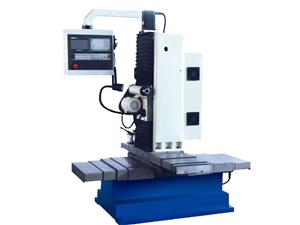
Downtime is the silent killer of productivity. If your roller marking machine breaks down frequently or requires constant adjustments, your entire production line grinds to a halt. Consider a typical scenario: a hydraulic roller marking machine with outdated controls might need manual calibration every few hours, and when a component fails, it could take days to source a replacement. In one case, a European manufacturer of industrial rollers reported that their old marking machine was down for an average of 8 hours per week, costing them approximately €5,000 per hour in lost production. Over a year, that's over €2 million in lost revenue. Additionally, maintenance costs—both parts and labor—can spiral out of control. Many companies don't realize that a proactive approach with modern, reliable equipment can eliminate these headaches.
Pain Point 3: Limited Flexibility for Different Roller Materials and Sizes
Rollers come in all shapes and sizes, from tiny precision rollers for medical devices to massive steel rollers for paper mills. They're made from materials like steel, aluminum, rubber, and ceramics. A marking machine that can't handle this variety becomes a bottleneck. For instance, a job shop that services multiple industries might need to mark a 50mm diameter aluminum roller in the morning and a 500mm diameter steel roller in the afternoon. If the machine requires time-consuming changeovers or can't achieve the required depth on hard materials, productivity plummets. Worse, attempting to mark a hard material with an underpowered machine can damage the roller, leading to costly repairs. Flexibility isn't a luxury—it's a necessity for staying competitive.
Solutions: How Advanced Roller Surface Marking Machines Address These Pain Points
At NANTONG LUCUBRATE MACHINERY TECHNICAL LTD., we've dedicated years to solving these exact challenges. Our roller surface marking machines are engineered to deliver consistent quality, maximize uptime, and adapt to your diverse needs. Let's break down the solutions.
Solution 1: Precision Marking with Advanced Control Systems
Our machines utilize servo-driven technology and high-resolution encoders to ensure every mark is applied with pinpoint accuracy. Whether you need dot peen, laser, or scribe marking, our systems maintain consistent depth and position, even at high speeds. For example, our flagship model, the LUCUBRATE RS-3000, features a closed-loop feedback system that automatically adjusts marking parameters based on material hardness, eliminating operator guesswork. This results in a first-pass yield of over 99.5%, drastically reducing rework and scrap. Plus, with integrated vision inspection, you can verify marks in real-time and catch any deviations immediately.
Solution 2: Robust Design for Maximum Uptime and Low Maintenance
We build our machines to last. Using industrial-grade components and a modular design, our roller marking machines are engineered for 24/7 operation. The RS-3000, for instance, has a mean time between failures (MTBF) of over 10,000 hours. And when maintenance is needed, our quick-release components allow for fast swaps, minimizing downtime. We also offer remote diagnostics and predictive maintenance packages, so you can address issues before they cause unplanned stops. One customer reported a 70% reduction in downtime after switching to our machine.
Solution 3: Versatility for Any Roller Material and Size
Our machines are designed to handle a wide range of roller diameters (from 20mm to 1000mm) and materials, including hardened steel (up to HRC 60), aluminum, rubber, and ceramics. Quick-change tooling and programmable recipes allow you to switch between jobs in minutes, not hours. The RS-3000's adjustable marking head and adaptive force control ensure optimal results on both soft and hard materials. Whether you're marking a delicate rubber roller or a massive forged steel roll, our machine delivers consistent, deep marks without damaging the surface.
Customer Success Stories: Real Results from Real Manufacturers
Don't just take our word for it. Here are a few examples of how NANTONG LUCUBRATE MACHINERY TECHNICAL LTD. has helped manufacturers around the world overcome their marking challenges.
Case Study 1: SteelPro Industries, USA
SteelPro Industries, a leading producer of steel rollers for the automotive industry, struggled with inconsistent dot peen marks on their hardened steel rollers. The marks were often too shallow, leading to a 12% scrap rate. After installing two LUCUBRATE RS-3000 machines, they achieved a 99.8% first-pass yield and reduced scrap to less than 0.5%. "The RS-3000 has been a game-changer for us," said John Miller, Production Manager. "We've saved over $500,000 annually in scrap and rework costs."
Case Study 2: Precision Rollers GmbH, Germany
This German manufacturer of precision rollers for the printing industry needed a machine that could mark anilox rollers with micro-dot patterns. Their old laser machine was slow and required frequent maintenance. With our custom laser marking solution, they increased marking speed by 40% and reduced maintenance downtime by 60%. "The reliability is outstanding," commented Klaus Schmidt, Operations Director. "We no longer worry about production delays due to marking issues."
Case Study 3: RubberTech Solutions, UK
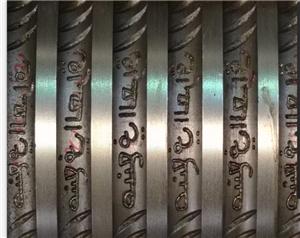
RubberTech Solutions produces large rubber rollers for the paper industry. They needed to mark serial numbers on soft rubber without causing deformation. Our RS-3000 with adaptive force control proved perfect. The machine adjusts pressure automatically, ensuring clear marks without indentation. "We've cut our marking time by half and eliminated customer complaints about illegible marks," said Emily Watson, Quality Manager.
Case Study 4: AeroRolls, France
AeroRolls manufactures high-precision aluminum rollers for aerospace applications. They required a marking solution that could handle small batches with frequent changeovers. Our machine's quick-change tooling and programmable recipes reduced their setup time from 45 minutes to under 5 minutes. "We can now take on more small-batch orders without worrying about profitability," noted Pierre Dubois, CEO.
Case Study 5: Titan Rollers, Australia
Titan Rollers, a mining equipment supplier, needed to mark large steel rollers (up to 800mm diameter) with deep, durable marks. Our heavy-duty model, the RS-5000, delivered. With a marking depth of up to 1.5mm, the marks withstand harsh conditions. "The RS-5000 has doubled our marking throughput and the marks last longer than the rollers themselves," said Sarah Thompson, Procurement Manager.
Applications and Partnerships: Where Roller Marking Machines Excel
Roller surface marking machines are essential in a variety of industries. Here are some key applications:
- Steel and Metal Production: Marking heat numbers, lot codes, and logos on steel rollers, forging rolls, and work rolls.
- Printing and Packaging: Marking anilox rollers, gravure cylinders, and embossing rollers with cell patterns and identification codes.
- Automotive: Marking rollers used in conveyor systems, paint lines, and assembly equipment for traceability.
- Aerospace: Marking precision rollers for aircraft engines and landing gear with serial numbers and maintenance data.
- Paper and Pulp: Marking rubber and steel rollers used in paper machines for process control.
We're proud to partner with leading distributors and OEMs worldwide. For instance, we supply roller marking machines to RollerTech International, a major distributor in Europe, and Precision Marking Systems in North America. These partnerships allow us to reach customers globally and provide local support. Our machines are also specified by Global Steel Works as their preferred marking solution for their roller maintenance facilities.
Frequently Asked Questions (FAQ)
1. What is the typical marking cycle time for a roller surface marking machine?
The cycle time depends on the mark size, depth, and material. For a typical 50mm x 50mm dot peen mark on steel, our RS-3000 can complete the mark in about 10-15 seconds. Laser marking is faster, often under 5 seconds for similar marks. We can provide detailed cycle time estimates based on your specific requirements.
2. Can your machines mark curved surfaces without distortion?
Absolutely. Our machines are equipped with rotary axes and 3D marking capabilities that follow the curvature of the roller. This ensures consistent mark depth and appearance even on complex geometries. We also offer custom fixtures for odd-shaped rollers.
3. How do you ensure the marking depth is consistent on hard materials like hardened steel?
Our machines use closed-loop force control and real-time depth monitoring. The marking force is automatically adjusted based on material hardness, and the depth is verified with a built-in sensor. This guarantees consistent depth within ±0.02mm, even on materials up to HRC 60.
4. What safety features are included to protect operators?
Operator safety is paramount. Our machines come with interlocked safety guards, emergency stop buttons, and laser safety enclosures (for laser models). We also provide comprehensive training and documentation to ensure safe operation.
5. Can your machines integrate with our existing ERP or MES system?
Yes. Our machines support various communication protocols, including Ethernet/IP, Profibus, and OPC-UA. We can provide custom integration to exchange marking data, job schedules, and production counts with your factory systems.
Conclusion: Take Control of Your Marking Costs
In today's competitive manufacturing landscape, every dollar counts. Inconsistent marking, excessive downtime, and limited flexibility are not just nuisances—they're profit killers. But with the right roller surface marking machine, you can turn these challenges into opportunities. At NANTONG LUCUBRATE MACHINERY TECHNICAL LTD., we've helped manufacturers around the world achieve remarkable improvements in quality, efficiency, and cost savings. Whether you're marking tiny precision rollers or massive steel rolls, we have a solution tailored to your needs. Don't let your marking machine hold you back. Contact our sales engineers today to discuss your specific requirements and discover how we can help you reduce costs and boost productivity. For a deeper dive into the technical aspects, download our free white paper, "Advanced Roller Surface Marking: Technologies, Best Practices, and ROI Analysis." It's packed with data and insights to help you make an informed decision. Click here to get your copy and start saving today.