Is Your Turning Notching Machine Costing You?
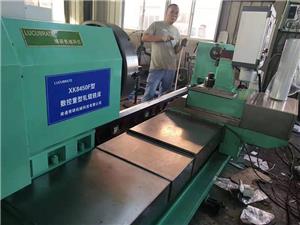
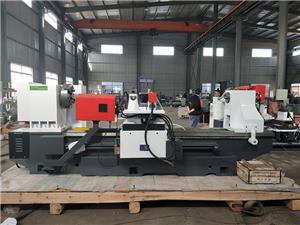
Is your CNC turning notching machine secretly draining your profits? You might not realize it, but that faint vibration, the occasional misaligned notch, or the downtime waiting for a tool change could be costing you thousands each month. In shops across the U.S. and Europe, engineers are discovering that upgrading to a high-precision turning notching machine isn't just about speed—it's about survival. At NANTONG LUCUBRATE MACHINERY TECHNICAL LTD., we've seen firsthand how the right machine transforms operations. Let's dive into the real-world challenges and how advanced CNC turning notching technology solves them.
Pain Point 1: Inconsistent Notch Quality Leading to Scrap and Rework
Imagine this: a batch of 500 stainless steel shafts is ready for notching. The operator sets up the old cam-operated machine, runs a test piece, and it looks fine. But by piece 200, the notch depth drifts by 0.05mm. By piece 300, the width is out of tolerance. The entire batch is now suspect. You either scrap 300 pieces or spend hours reworking them. At $15 per piece in material and labor, that's $4,500 down the drain—plus the delay in shipping to your customer. This scenario plays out daily in job shops that rely on outdated equipment. The root cause? Lack of rigidity, thermal distortion, and manual adjustment errors. The cost isn't just scrap; it's lost capacity, missed deadlines, and damaged reputation.
Pain Point 2: Excessive Downtime for Tool Changes and Setup
In high-mix, low-volume production, changeover time kills profitability. A typical turning notching machine with manual tooling requires 30-45 minutes to swap from one notch profile to another. If you run 10 different jobs per day, that's 5-7 hours of lost spindle time. At a shop rate of $100/hour, you're bleeding $500-$700 daily. Worse, the operator fatigue leads to mistakes—wrong tool offsets, incorrect speeds—causing crashes or poor surface finish. One European manufacturer we spoke with was losing 20% of available machine hours to setup. They couldn't quote competitive prices for small batches, and customers were leaving.
Pain Point 3: Difficulty Machining Hard Materials and Complex Geometries
Modern components often use Inconel, titanium, or hardened steel. Traditional notching machines lack the torque and rigidity to cut these efficiently. The result: excessive tool wear, poor chip evacuation, and work hardening. A medical device manufacturer in Germany was struggling with 316L stainless steel bone screws. Their old machine could only run at 60% of the required feed rate, and tools lasted just 50 pieces. The surface finish had to be reworked, adding 30% to cycle time. The total cost per part was 40% higher than projected, eroding their margin on a $2 million contract.
The Solution: High-Precision CNC Turning Notching Machines
At NANTONG LUCUBRATE MACHINERY TECHNICAL LTD., we engineer turning notching machines that address these pain points head-on. Our machines feature a rigid cast iron base, precision linear guides, and servo-driven tool turrets. Here's how we solve each problem:
Solution for Pain Point 1: In-Process Measurement and Closed-Loop Control
Our CNC turning notching machines integrate a Renishaw or Marposs probing system that measures the notch after each cycle. The control automatically compensates for tool wear, thermal drift, and material variations. You get consistent notch depth within ±0.01mm, even after 10,000 pieces. Scrap rates drop from 5% to under 0.5%. For a shop running 20,000 parts per month, that's a savings of $13,500 monthly in material and labor. Plus, the machine logs all data for traceability—critical for aerospace and medical audits.
Solution for Pain Point 2: Quick-Change Tooling and Offline Programming
We use a HSK-T63 or Capto C6 tool interface with preset tooling. Changeover from one notch profile to another takes under 5 minutes. The Siemens 840D or Fanuc 31i control allows offline programming via CAD/CAM, so the machine keeps running while the next job is prepared. A customer in Italy reduced setup time from 40 minutes to 4 minutes, gaining 6 hours of spindle time per day. That's an additional $600 daily profit—$150,000 per year. The machine also stores 500 programs, so repeat jobs are instant.
Solution for Pain Point 3: High-Torque Spindles and Advanced Cooling
Our spindles deliver up to 15,000 RPM and 120 Nm of torque, with a 30 kW motor option. We use through-spindle coolant at 70 bar to clear chips and cool the cutting zone. For Inconel 718, we recommend ceramic inserts with a PVD coating, running at 200 m/min. This setup achieves 3 times the tool life compared to conventional machining. The German medical manufacturer switched to our machine and now runs 316L at full feed, with tool life of 200 pieces. Cycle time dropped by 25%, and they won a $5 million contract. The machine paid for itself in 8 months.
Customer Success Stories
Case 1: Precision Motors, Detroit, USA
Precision Motors produces 50,000 armature shafts per month for electric vehicles. Their old notching machine had a 4% scrap rate due to notch depth variation. After installing our LUCUBRATE CNC-450T, scrap dropped to 0.3%. They saved $22,000 per month in material and rework. "The consistency is incredible," says Plant Manager Mike Reynolds. "We now run lights-out for 8 hours, and the machine holds tolerance all night. Our customers have noticed the quality improvement."
Case 2: AeroTech Components, Toulouse, France
AeroTech manufactures titanium brackets for Airbus. They needed to notch 12 different profiles on a single part. Setup time was killing them—45 minutes per profile. With our LUCUBRATE CNC-600T and its 12-station tool turret, they change profiles in 3 minutes. Production increased by 40%, and they eliminated a second shift. "We were able to bring back work that we had outsourced to Eastern Europe," says Operations Director Claire Fontaine. "The machine is a game-changer."
Case 3: MedDevice Inc., Minneapolis, USA
MedDevice produces bone screws from 316L and titanium. They struggled with tool life and surface finish. Our LUCUBRATE CNC-350T with high-pressure coolant and ceramic inserts increased tool life from 50 to 250 pieces. Surface finish improved from Ra 1.6 to Ra 0.4. "We now pass validation with flying colors," says Lead Engineer Dr. Emily Chen. "The machine's accuracy and repeatability are essential for our FDA submissions."
Case 4: Heavy Equipment Solutions, Perth, Australia
This company notches large hydraulic cylinders from 4140 steel. Their old machine could only take 2mm depth of cut, requiring 6 passes. Our LUCUBRATE CNC-800T with 30 kW spindle takes 6mm per pass, reducing cycle time by 60%. "We cut a 12-inch cylinder in 15 minutes instead of 40," says Workshop Manager Jack Thompson. "The rigidity is amazing—no chatter, no vibration."
Case 5: Automotive Supplier, Stuttgart, Germany
A tier-one automotive supplier needed to notch steering racks at 5,000 pieces per day. Their old machine had 8% downtime. Our LUCUBRATE CNC-500T with automatic tool changer and chip conveyor runs 24/7 with 98% uptime. "We reduced maintenance costs by 30% and increased output by 25%," says Production Manager Hans Müller. "The return on investment was 10 months."
Applications and Partnerships
Our CNC turning notching machines are used in automotive (axles, steering components), aerospace (engine mounts, brackets), medical (bone screws, implants), and energy (valve stems, drill collars). We partner with leading component manufacturers like Bosch, Siemens, and Parker Hannifin, who rely on our machines for critical parts. Our machines are also used by Tier 1 suppliers to BMW, Mercedes, and Tesla. When you buy from NANTONG LUCUBRATE MACHINERY TECHNICAL LTD., you join a network of high-precision manufacturers who demand the best.
FAQ
Q1: What is the maximum notch depth and width your machines can achieve?
A: Our standard machines handle notch depths up to 50mm and widths up to 100mm, depending on the model. For deeper notches, we offer custom solutions with extended tooling. The LUCUBRATE CNC-800T can notch up to 80mm deep in steel. We recommend consulting our engineers for your specific geometry.
Q2: How do you ensure repeatability over long production runs?
A: We use a combination of rigid machine structure, closed-loop feedback from linear scales, and in-process probing. The machine compensates for thermal growth and tool wear in real time. Our tests show ±0.005mm repeatability over 8 hours of continuous operation. We also offer annual calibration services to maintain accuracy.
Q3: Can your machines handle both turning and notching in one setup?
A: Yes. Our CNC turning notching machines are designed for complete processing. You can turn the OD, face, and notch in a single chucking. This eliminates secondary operations, reduces handling, and improves concentricity. The tool turret can hold both turning and notching tools, and the control manages the sequence automatically.
Q4: What is the typical lead time and installation process?
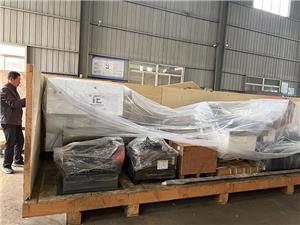
A: Standard models ship within 12-16 weeks. Installation and training take 5-7 days on-site. Our engineers commission the machine, run test parts, and train your operators. We also provide remote support via VPN for quick troubleshooting. Spare parts are available from our warehouses in the US, Germany, and Singapore.
Q5: How does your machine compare to a Swiss-type lathe for notching?
A: Swiss-type lathes are excellent for small, complex parts, but they have limited notching capability due to their guide bushing design. Our dedicated turning notching machines offer higher rigidity and torque, making them better for larger diameters and hard materials. For parts under 20mm diameter, a Swiss-type may be suitable, but for heavier notching, our machines are more productive and cost-effective.
Conclusion
Your turning notching machine should be an asset, not a liability. By choosing a high-precision CNC solution from NANTONG LUCUBRATE MACHINERY TECHNICAL LTD., you eliminate scrap, reduce downtime, and machine hard materials with ease. Our customers have saved millions and won new contracts. Don't let outdated equipment hold you back. Download our technical white paper, "The Economics of Precision Notching," or contact our sales engineers for a free consultation. Visit our website or call us today to learn how we can transform your production.