What Makes a CNC Cylindrical Engraving Machine Essential?
Imagine this: It's 2 a.m. on a Friday, and your production line is down because a critical batch of cylindrical components—maybe hydraulic cylinders or decorative tubes—has inconsistent engraving depths. Your client is threatening to cancel the order, and your team is scrambling to recalibrate a manual lathe that was never designed for precision engraving. If this sounds familiar, you're not alone. Many manufacturers still rely on outdated methods for cylindrical engraving, leading to costly delays and quality issues. The answer? A CNC cylindrical engraving machine that brings automation, precision, and repeatability to your workflow. In this blog, we'll explore why this technology is no longer a luxury but a necessity, and how it can transform your operations.
Pain Point 1: Inconsistent Engraving Depth and Quality

Manual engraving on cylindrical surfaces is notoriously tricky. The curvature of the workpiece means that the engraving tool must maintain constant contact and pressure, which is nearly impossible to achieve by hand. The result? Variations in depth that can compromise the functionality of the part (e.g., in hydraulic cylinders where engraving marks serve as wear indicators) or ruin the aesthetics of decorative pieces. The cost? Rework, scrap, and dissatisfied customers. For a mid-sized manufacturer producing 500 cylinders per month, a 5% scrap rate due to poor engraving can cost upwards of $50,000 annually in materials and labor.
Pain Point 2: Low Throughput and High Labor Costs
Manual engraving is slow. Skilled operators are hard to find, and even the best can only produce a limited number of pieces per hour. Moreover, the repetitive nature of the task leads to fatigue and errors. In an era where lead times are shrinking, this bottleneck can cause you to miss deadlines and lose contracts. Consider a job shop that engraves 200 tubes per day manually; with a CNC machine, that number could triple, freeing up operators for more complex tasks.
Pain Point 3: Difficulty in Handling Complex Geometries and Large Workpieces
Many cylindrical parts require engraving of intricate patterns, text, or logos along the axis or around the circumference. Manual methods struggle with such complexity, especially on large, heavy workpieces that are hard to rotate smoothly. This limits your ability to take on high-value projects, such as engraving calibration marks on large industrial rollers or decorative patterns on architectural columns.
Solution: The CNC Cylindrical Engraving Machine Advantage
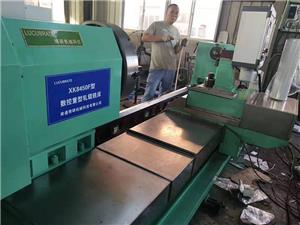
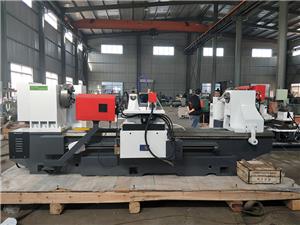
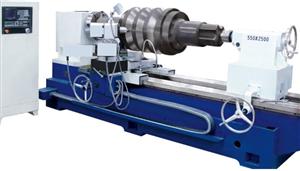
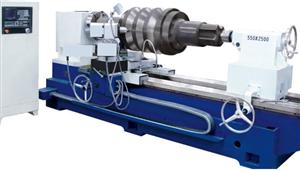
A CNC cylindrical engraving machine addresses these pain points head-on. By integrating a rotary axis (typically a 4th axis) with precise servo control and advanced CAM software, these machines ensure consistent engraving depth regardless of the workpiece diameter. The rotary axis rotates the cylinder in sync with the engraving tool's movement, maintaining optimal cutting parameters. For example, a machine equipped with a high-resolution rotary encoder and a closed-loop control system can achieve depth tolerances of ±0.01 mm, eliminating inconsistencies.
Throughput is dramatically improved. Automatic tool changes, high-speed spindles, and optimized toolpaths reduce cycle times. A typical CNC cylindrical engraving machine can engrave a 100 mm diameter, 500 mm long cylinder with a complex pattern in under 10 minutes, compared to 30-45 minutes manually. This not only increases output but also reduces labor costs—one operator can oversee multiple machines.
Complex geometries and large workpieces are no match for CNC. The machine's software can handle 3D surfacing and wrap-around engraving, and the rotary axis can support workpieces weighing up to several tons. With a robust tailstock and steady rest, even long shafts can be engraved without deflection.
Customer Success Stories
Case 1: Hydraulic Cylinder Manufacturer in Houston, Texas
John Richardson, Production Manager at Lone Star Hydraulics, was struggling with inconsistent depth on wear-indicator grooves. After installing a CNC cylindrical engraving machine from NANTONG LUCUBRATE MACHINERY TECHNICAL LTD., scrap rates dropped from 8% to 1.5%, saving $120,000 annually. "The machine's repeatability is incredible—we no longer worry about depth variations," says Richardson.
Case 2: Decorative Tube Producer in Milan, Italy
Maria Bianchi, owner of Bianchi Metalworks, needed to engrave intricate floral patterns on stainless steel tubes. Manual engraving took 45 minutes per tube and often required touch-ups. With the CNC machine, cycle time is 8 minutes, and the patterns are flawless. "Our customers love the precision, and we've doubled our output," Bianchi notes.
Case 3: Industrial Roller Manufacturer in Osaka, Japan
Kenji Tanaka, Engineering Director at Tanaka Rollers, faced challenges engraving large rollers weighing 2 tons. The CNC machine's heavy-duty rotary axis and steady rest allowed them to engrave circumference marks accurately. "We've reduced setup time by 70% and can now take on projects we previously declined," Tanaka says.
Applications and Partnerships
CNC cylindrical engraving machines are used across industries: automotive (engraving VIN numbers on drive shafts), oil and gas (marking pipe sections), aerospace (serial numbers on landing gear components), and decorative arts (patterns on columns). NANTONG LUCUBRATE MACHINERY TECHNICAL LTD. has established partnerships with major distributors in Europe and North America, providing localized support and training. Their machines are known for reliability and after-sales service, with many clients reporting over 95% uptime.
FAQ
Q1: What is the maximum workpiece diameter and length your machines can handle?
A: Our standard models handle diameters up to 800 mm and lengths up to 3000 mm. Custom solutions are available for larger sizes.
Q2: Can the machine engrave on hardened materials?
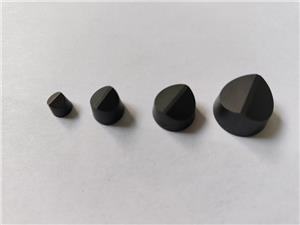
A: Yes, with appropriate tooling (e.g., carbide or diamond-tipped), our machines can engrave materials up to 60 HRC.
Q3: How do you ensure engraving depth consistency on tapered cylinders?
A: Our software compensates for taper by dynamically adjusting the tool path based on real-time feedback from the rotary encoder.
Q4: What CAD/CAM software is compatible?
A: We support industry-standard formats (DXF, DWG, STEP) and provide a dedicated post-processor for popular CAM software like Mastercam and Fusion 360.
Q5: What is the typical lead time for delivery and installation?
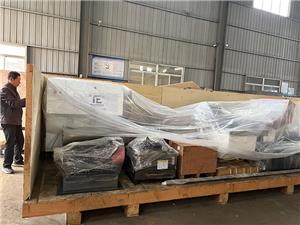
A: Standard models ship within 8-10 weeks; installation and training take 3-5 days on-site.
Conclusion
A CNC cylindrical engraving machine is no longer a niche tool—it's a strategic investment that pays for itself through reduced scrap, increased throughput, and expanded capabilities. Whether you're in hydraulics, decorative metals, or heavy industry, the precision and reliability of CNC engraving can give you a competitive edge. To learn more about how NANTONG LUCUBRATE MACHINERY TECHNICAL LTD. can tailor a solution for your needs, contact our sales engineers for a free consultation and technical whitepaper.