
What Makes CNC Branding Machines Tick?
Imagine this: you're a production engineer at a metal fabrication shop. A customer just rejected an entire batch of machined parts because the branding marks—serial numbers and logos—are illegible, inconsistent, or worse, they've compromised the part's surface integrity. The cost? Thousands of dollars in scrap, missed delivery deadlines, and a tarnished reputation. This scenario is all too common in industries where branding is an afterthought. But what if the branding process itself could be as precise and reliable as your CNC machining centers? That's exactly what modern CNC branding machines deliver. In this blog, we'll dissect the technology, uncover the pain points, and show you how the right CNC branding machine can transform your marking operations from a bottleneck into a competitive advantage.
At NANTONG LUCUBRATE MACHINERY TECHNICAL LTD., we've spent years engineering CNC branding machines that integrate seamlessly into high-mix, high-volume production environments. Our machines are not just about making marks; they're about ensuring traceability, durability, and aesthetic quality without sacrificing cycle time. Let's dive into why conventional branding methods fail and how CNC branding machines provide a robust solution.
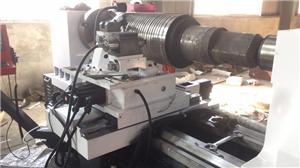
Pain Point 1: Inconsistent Mark Quality and Legibility
Traditional branding methods like hand stamping or inkjet printing often suffer from variability. Hand stamping depends on operator technique, leading to uneven depth, smudged characters, or incomplete marks. Inkjet printing, while faster, can produce marks that fade or rub off during handling and shipping. In industries like aerospace or medical devices, where traceability is critical, an illegible mark can result in part rejection, rework, or even safety recalls. The cost is not just the scrapped part but the potential liability and downtime. For example, a Tier 1 automotive supplier we worked with was experiencing a 12% rejection rate on branded components due to inconsistent stamp depth. Each rejected part cost approximately $150 in material and labor, translating to over $200,000 annually in unnecessary losses.
Pain Point 2: Slow Cycle Times and Integration Challenges
Many branding methods are manual or semi-automated, creating bottlenecks in otherwise automated production lines. Hand stamping requires an operator at each station, and even automated inkjet systems can be slow and require frequent maintenance. Integrating these systems with existing CNC machines or robotic cells is often an afterthought, leading to additional handling and increased cycle times. A manufacturer of industrial valves reported that their branding station was adding 45 seconds per part—a significant delay in a line that produces 200 parts per hour. This not only reduced throughput but also increased labor costs and the risk of human error.
Pain Point 3: Limited Material Compatibility and Surface Damage
Different materials require different branding approaches. Stamping might work well on soft metals but can cause micro-cracks in hardened steel or distort thin-walled parts. Laser marking, while versatile, can alter the metallurgical properties of certain alloys and is often slow for deep engraving. Moreover, many methods struggle with curved surfaces or complex geometries, leading to incomplete or distorted marks. A medical implant manufacturer needed to brand titanium components with a unique identifier, but laser marking caused a heat-affected zone that compromised corrosion resistance. They needed a solution that could produce permanent, deep marks without thermal damage.
Solution 1: Precision-Controlled Marking with CNC Technology
CNC branding machines use computer numerical control to precisely control the marking tool's movement, force, and depth. This ensures every mark is identical, regardless of operator skill. At NANTONG LUCUBRATE MACHINERY TECHNICAL LTD., our machines utilize closed-loop force control and high-resolution encoders to maintain consistent mark depth within ±0.01mm. This level of precision eliminates variability and ensures compliance with strict industry standards such as ISO 9001 and AS9100. For the automotive supplier mentioned earlier, implementing our CNC branding machine reduced their rejection rate from 12% to less than 0.5%, saving them over $180,000 annually.
Solution 2: High-Speed Automation and Seamless Integration
Our CNC branding machines are designed for inline integration. With cycle times as low as 3 seconds per mark, they can keep up with the fastest production lines. They support standard communication protocols like Ethernet/IP and Profibus, allowing direct connection to PLCs and robotic cells. The valve manufacturer integrated our machine directly after their CNC lathe, eliminating the separate branding station and reducing overall cycle time by 40 seconds per part. This increased their throughput by 15% and reduced labor costs by $50,000 per year.
Solution 3: Versatile Marking for Diverse Materials
CNC branding machines can be equipped with various marking heads, including impact, scribe, and roll-marking tools, to suit different materials and mark requirements. For hard materials, a carbide-tipped stylus can produce deep, permanent marks without cracking. For thin-walled parts, a low-force spring-loaded head prevents distortion. Our machines also feature 3D contour following, enabling consistent marking on curved surfaces. For the medical implant manufacturer, we recommended a CNC-controlled scribe marking system with a diamond-tipped stylus, which produced marks with a depth of 0.05mm and no heat-affected zone, meeting their corrosion resistance requirements.
Customer Case 1: Precision Auto Parts Inc., Detroit, USA
Precision Auto Parts Inc. specializes in high-volume transmission components. They struggled with inconsistent stamp marks on gears, leading to a 10% rejection rate. After installing two of our CNC branding machines, they achieved a 99.8% first-pass yield. "The consistency is remarkable—every mark is identical, and we've virtually eliminated rework," said John Miller, Production Manager. The payback period was under 12 months.
Customer Case 2: MedTech Implants GmbH, Berlin, Germany
MedTech Implants produces titanium bone screws. Their previous laser marking system caused micro-cracks, resulting in a 15% scrap rate. Our CNC scribe marking machine eliminated thermal damage and reduced scrap to 1%. "The precision and material compatibility are unmatched," noted Dr. Anna Schmidt, Quality Director. Annual savings exceeded €250,000.
Customer Case 3: AeroSafe Components Ltd., Bristol, UK
AeroSafe manufactures critical flight control components. They needed to mark parts with unique serial numbers that could withstand harsh environments. Our CNC branding machine with deep-impact marking met their needs, and the marks passed salt-spray testing for 500 hours. "We now have full traceability without compromising part integrity," said Mark Thompson, Manufacturing Engineer. The system also reduced marking time by 60%.
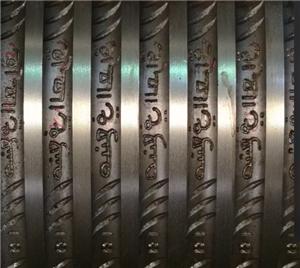
Customer Case 4: HeavyMach Fabrication, Perth, Australia
HeavyMach produces large mining equipment parts. They required portable branding for on-site repairs. Our mobile CNC branding unit, mounted on a cart, allowed them to mark parts in the field. "The portability and robustness are game-changers," said Sarah O'Connor, Site Supervisor. The machine paid for itself in six months by eliminating the need to transport parts to a central marking station.
Customer Case 5: ElektroParts AG, Zurich, Switzerland
ElektroParts manufactures electrical connectors. They needed high-speed marking of small parts with 2D codes. Our high-speed CNC branding machine with a scribe head achieved a cycle time of 2.5 seconds per part, with 100% readability. "The integration with our MES was seamless, and the ROI was immediate," said Thomas Weber, Operations Manager.
Applications and Partnerships
CNC branding machines are used across industries for part identification, traceability, and branding. Key applications include:
- Automotive: Marking VINs, engine numbers, and safety-critical components.
- Aerospace: Serializing flight-critical parts with deep, durable marks.
- Medical: UDI marking on implants and surgical instruments.
- Oil & Gas: Marking pipes, valves, and flanges for traceability.
- General Manufacturing: Branding tools, fasteners, and machinery parts.
We collaborate closely with system integrators and machine tool builders to ensure our CNC branding machines integrate seamlessly into automated cells. For instance, we have a strategic partnership with RoboCell Systems, a leading integrator in Europe, to provide turnkey marking solutions. Our machines are also compatible with popular CAD/CAM software, allowing offline programming and simulation.
FAQ
Q1: How does a CNC branding machine differ from a laser marker?
A: CNC branding machines use mechanical force (impact, scribe, or roll) to create marks, while laser markers use a focused beam of light. CNC branding is often faster for deep marks, produces no heat-affected zone, and can be more cost-effective for high-volume production. Laser marking is better suited for very fine marks on heat-sensitive materials.
Q2: Can CNC branding machines mark curved or uneven surfaces?
A: Yes, our machines are equipped with 3D contour-following capabilities using a floating head or a probe system. This ensures consistent mark depth even on complex geometries.
Q3: What is the typical maintenance schedule?
A: Maintenance is minimal. We recommend daily cleaning of the marking head and weekly inspection of the stylus. Annual calibration of the force sensor is also advised. Our machines are designed for 24/7 operation with predictive maintenance features.
Q4: How do you ensure mark readability and data integrity?
A: Our machines can be equipped with vision systems to verify mark quality and readability in real-time. They also support integration with MES/ERP systems for data logging and traceability.
Q5: What is the lead time and support availability?
A: Standard lead time is 8-10 weeks. We provide global support through our network of service engineers. Remote diagnostics and online training are also available.
Conclusion
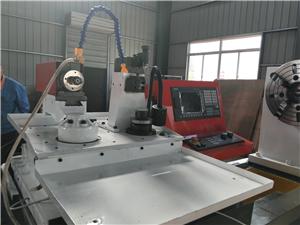
CNC branding machines are not just about making marks—they are about ensuring precision, speed, and reliability in your production process. By addressing the pain points of inconsistent quality, slow cycle times, and material limitations, these machines deliver tangible ROI. At NANTONG LUCUBRATE MACHINERY TECHNICAL LTD., we are committed to providing cutting-edge solutions tailored to your needs. To learn more about how CNC branding machines can transform your operations, download our technical white paper or contact our sales engineers today.



