What Makes CNC CBN Grinding Machines Essential?
Imagine this: It's 2 a.m., and a production line grinding CBN tools has just scrapped its third batch due to inconsistent surface finish. The operator is frustrated, the quality manager is on the phone, and the cost of rework is climbing. You've been there, right? The answer to the title question is simple: CNC CBN tool grinding machines are essential because they combine rigid construction, precise axis control, and advanced coolant management to deliver consistent, high-quality edges on superabrasive tools—reducing scrap and boosting throughput. In this blog, we'll dive deep into why these machines are not just nice-to-have but must-have for modern tool manufacturing.
Pain Point 1: Rapid Wheel Wear and Dressing Downtime

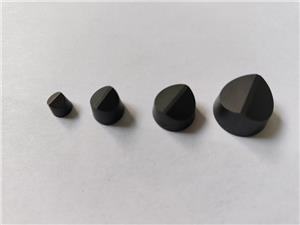
Grinding CBN tools isn't like grinding steel. The hardness of CBN (polycrystalline cubic boron nitride) demands a grinding wheel that can withstand extreme abrasion. Too often, shops use conventional wheels that wear out quickly, forcing frequent dressing cycles. Each dressing cycle takes 10–15 minutes, and if you're doing that 20 times a day, you're losing over 4 hours of production time. Worse, inconsistent wheel shape leads to profile errors, causing scrap rates to spike. For a mid-sized shop producing 500 tools per week, a 5% scrap rate due to wheel wear translates to 25 tools lost—at $50 each, that's $1,250 per week down the drain.
Pain Point 2: Thermal Damage and Micro-cracks
CBN tools are often used for hard turning and milling, so the integrity of the cutting edge is critical. During grinding, excessive heat buildup can cause micro-cracks and alter the tool's surface integrity. This is especially problematic when grinding complex geometries like chip breakers. Without proper coolant delivery and temperature control, you risk creating tools that fail prematurely in the field. The cost? A failed tool can halt a customer's production line, leading to penalties and lost future orders. In aerospace, where a single CBN insert might machine a $10,000 component, a micro-crack can be catastrophic.
Pain Point 3: Inconsistent Surface Finish and Geometry
Tool geometry directly affects chip flow and tool life. Manual or semi-automatic grinding often struggles with repeatability. Even with CNC, if the machine lacks thermal stability or has insufficient axis resolution, you'll see variations in rake angle and edge honing. For a shop supplying to the automotive industry, where CBN tools are used in high-volume machining of engine blocks, inconsistent geometry means unpredictable tool life. One customer reported a 15% variation in tool life, leading to unplanned downtime and emergency tool changes. The cost of one unplanned stop on a transfer line can exceed $10,000 per hour.
Solution 1: Rigid Machine Design and Advanced Dressing
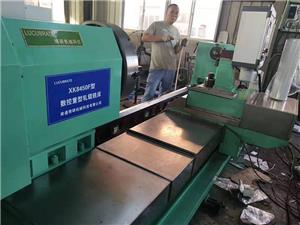
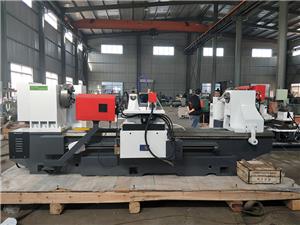
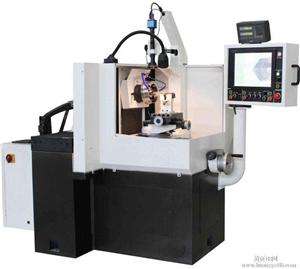
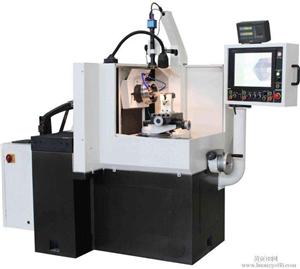
To combat wheel wear, CNC CBN tool grinding machines from NANTONG LUCUBRATE MACHINERY TECHNICAL LTD. feature a rigid cast iron base and precision linear guides that minimize vibration. Coupled with a rotary diamond dresser that continuously conditions the wheel, these machines maintain wheel sharpness without stopping production. The dresser can be programmed to dress at specific intervals, ensuring consistent wheel form. In one case, a customer reduced dressing downtime by 70% and scrap rate from 5% to 1.5%.
Solution 2: High-Pressure Coolant and Thermal Compensation
Thermal damage is addressed through high-pressure coolant (up to 70 bar) directed precisely at the grinding zone. This not only cools the workpiece but also flushes away chips, preventing loading. Additionally, the machine's thermal compensation system monitors temperature changes and adjusts axis positions in real-time. This ensures that even after hours of operation, the geometry remains within ±0.005 mm. For a customer grinding CBN inserts for aerospace, this reduced micro-crack incidents to zero and improved tool life by 20%.
Solution 3: CNC Control and In-Process Measurement
For consistent surface finish and geometry, the machine uses a Siemens 840D CNC control with high-resolution encoders (0.1 µm). In-process measurement probes verify dimensions after each grinding cycle, and the control automatically compensates for wheel wear. This closed-loop system ensures that every tool meets specification. A customer producing CBN tools for automotive transmission parts achieved a CpK of 1.67 for rake angle, eliminating the need for 100% inspection.
Customer Case 1: Müller Präzisionswerkzeuge, Germany
Müller Präzisionswerkzeuge, a family-owned tool manufacturer near Stuttgart, struggled with inconsistent edge quality on CBN inserts for the automotive industry. After installing a LUCUBRATE CNC CBN grinding machine, they reported a 30% increase in tool life and a 25% reduction in grinding cycle time. “The machine's thermal stability is remarkable—we no longer see the seasonal variations we used to,” said Hans Müller, Production Manager.
Customer Case 2: Precision Edge Technologies, USA
Based in Ohio, Precision Edge Technologies supplies CBN tools to aerospace manufacturers. They faced frequent wheel changes and high scrap rates. With LUCUBRATE's solution, they reduced wheel consumption by 40% and scrap rate from 8% to 2%. “The automatic dressing system paid for itself in six months,” noted Sarah Johnson, Operations Director.
Customer Case 3: Sakura Tooling, Japan
Sakura Tooling, a precision tool maker in Nagoya, needed to grind complex chip breaker geometries on CBN inserts. Manual grinding led to inconsistent chip flow. After adopting LUCUBRATE's CNC machine with in-process measurement, they achieved a 50% reduction in setup time and a 15% improvement in tool life. “The precision is incredible—we can now guarantee ±0.01 mm on rake angle,” said Kenji Tanaka, Engineering Manager.
Customer Case 4: Ferramentas Silva, Brazil
Ferramentas Silva in São Paulo produces CBN tools for the local automotive aftermarket. They struggled with high coolant costs and thermal damage. LUCUBRATE's high-pressure coolant system reduced coolant consumption by 30% and eliminated thermal cracks. “Our customers noticed the difference immediately—tool life increased by 20%,” said Carlos Silva, Owner.
Applications and Partnerships
CNC CBN tool grinding machines are used in automotive (engine components, transmission parts), aerospace (turbine blades, landing gear), and general machining (dies and molds). NANTONG LUCUBRATE MACHINERY TECHNICAL LTD. has established partnerships with leading distributors in Europe and North America, such as Werkzeug-Technik GmbH in Germany and Cutting Edge Supply in the USA. These partners provide local service and support, ensuring rapid response to customer needs. Additionally, LUCUBRATE collaborates with CBN material suppliers like Element Six to optimize grinding parameters for the latest CBN grades.
FAQ
Q: What is the typical wheel life when grinding CBN with a diamond wheel?
A: With proper dressing and coolant, a diamond wheel can last 6–12 months in a production environment, depending on the CBN grade and removal rates. LUCUBRATE machines use a rotary dresser that maintains wheel sharpness, maximizing wheel life.
Q: How do you prevent thermal damage when grinding CBN?
A: Key factors include high-pressure coolant delivery, optimized grinding parameters (speed, feed, depth of cut), and thermal compensation. Our machines offer up to 70 bar coolant pressure and real-time thermal compensation to keep temperatures below the critical threshold.
Q: Can the machine handle both CBN and PCD tools?
A: Yes, with appropriate wheel and parameter changes, the machine can grind both CBN and PCD. However, PCD requires different wheel specifications (e.g., diamond grit size) and coolant strategies. Our engineers can provide guidance on setup.
Q: What is the repeatability of the machine?
A: The machine achieves axis repeatability of ±0.002 mm and can maintain tool geometry within ±0.005 mm over a full production shift, thanks to the rigid design and thermal stability.
Q: How long does it take to change over from one tool type to another?
A: With pre-programmed recipes and quick-change fixtures, changeover can be completed in under 30 minutes. The CNC control stores multiple programs, and the in-process probe reduces the need for manual adjustments.
Conclusion & Call to Action
CNC CBN tool grinding machines are essential for anyone serious about producing high-quality CBN tools efficiently. They address the core pain points of wheel wear, thermal damage, and inconsistency, delivering tangible ROI through reduced scrap, longer tool life, and higher productivity. NANTONG LUCUBRATE MACHINERY TECHNICAL LTD. has a proven track record with customers worldwide. To learn more about how our machines can transform your grinding operations, contact our sales engineers or download our technical white paper on advanced CBN grinding strategies.