What Makes CNC Roller Surface Marking Machines Tick?
Imagine you're a production engineer at a busy manufacturing plant. You've just received a batch of precision rollers from your supplier, but when you inspect them, you notice inconsistent markings—some are too shallow, others too deep, and a few are misaligned. This isn't just a cosmetic issue; it's a matter of traceability, quality control, and ultimately, your company's reputation. You need a reliable, precise, and efficient way to mark rollers, and that's exactly where CNC roller surface marking machines come in. In this blog, we'll dive deep into what makes these machines tick, the pain points they solve, and how they can transform your production line. So, let's get started.
Industry Pain Points: Why Traditional Methods Fall Short
Before we explore the solution, it's crucial to understand the challenges that manufacturers face with conventional roller marking methods. Here are three common pain points that we've heard from engineers and procurement managers across the globe.
Pain Point 1: Inconsistent Marking Quality and Depth
Traditional marking methods, such as hand stamping or acid etching, rely heavily on operator skill and are prone to variability. In a high-volume production environment, this inconsistency can lead to illegible markings, which compromises traceability and can result in costly recalls or rejected batches. For example, a European automotive parts manufacturer reported that 15% of their rollers had to be re-marked due to poor legibility, costing them an extra €20,000 per month in labor and downtime.
Pain Point 2: Low Throughput and High Labor Costs
Manual marking is slow and labor-intensive. Each roller must be handled individually, and the process often requires skilled operators who are increasingly hard to find. A North American hydraulic equipment maker found that their manual marking station could only process 30 rollers per hour, and they needed to run three shifts to meet demand. The labor cost alone was eating into their margins, and they struggled to keep up with orders during peak seasons.
Pain Point 3: Limited Flexibility and High Setup Times
Many marking systems are designed for a specific roller size or marking pattern, making changeovers time-consuming and expensive. A German manufacturer of printing presses needed to mark rollers of varying diameters and lengths, but their existing system required manual adjustments that took up to two hours per changeover. This lack of flexibility meant they couldn't respond quickly to custom orders, and they were losing business to competitors who could.
The Solution: How CNC Roller Surface Marking Machines Work
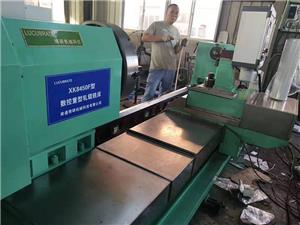
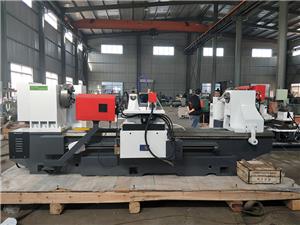
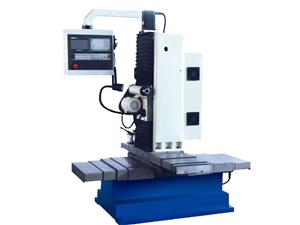
Now that we've outlined the pain points, let's look at how CNC roller surface marking machines address each one. These machines combine computer numerical control (CNC) technology with precision marking tools to deliver consistent, high-speed, and flexible marking on cylindrical surfaces.
Solution to Pain Point 1: Consistent Marking Quality and Depth
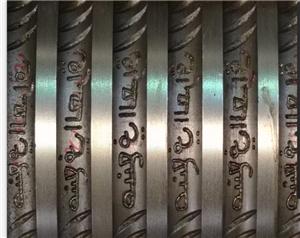
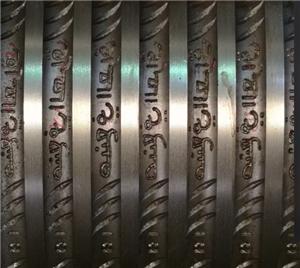
CNC roller surface marking machines use servo-controlled axes and advanced marking heads (such as dot peen or laser) to ensure every mark is applied with the same force and depth. The CNC system precisely controls the position and movement of the marking tool, eliminating human error. For instance, a machine equipped with a dot peen marker can achieve depth consistency within ±0.02 mm, ensuring legibility and traceability. This level of precision is crucial for industries like aerospace, where even a slight deviation can be critical.
Solution to Pain Point 2: High Throughput and Reduced Labor Costs
Automation is at the heart of CNC roller marking machines. They can be integrated into production lines with automatic loading and unloading systems, allowing for continuous operation. A typical CNC roller marking machine can process up to 120 rollers per hour, depending on the marking complexity and roller size. This is four times faster than manual marking. Moreover, the machines require minimal operator intervention—just setup and monitoring—which frees up skilled labor for other tasks. The North American hydraulic equipment maker mentioned earlier installed a CNC roller marking machine from NANTONG LUCUBRATE MACHINERY TECHNICAL LTD. and reduced their marking labor by 70% while increasing throughput to 100 rollers per hour.
Solution to Pain Point 3: Flexibility and Quick Changeovers
CNC roller surface marking machines are highly flexible. They can be programmed to mark different patterns, text, or logos on rollers of various sizes. With quick-change tooling and recipe management, changeover times can be reduced to under 10 minutes. The German printing press manufacturer switched to a CNC machine from NANTONG LUCUBRATE MACHINERY TECHNICAL LTD. and now handles custom orders with ease, reducing changeover time from 2 hours to 15 minutes and increasing their order volume by 25%.
To summarize, here's a comparison table of traditional marking vs. CNC roller surface marking:
| Aspect | Traditional Marking | CNC Roller Surface Marking |
|---|---|---|
| Consistency | Variable, operator-dependent | High, CNC-controlled |
| Throughput | Low (e.g., 30 rollers/hour) | High (e.g., 120 rollers/hour) |
| Labor | High, skilled operators needed | Low, minimal supervision |
| Flexibility | Limited, long changeovers | High, quick changeovers |
| Cost per Mark | Higher due to labor and rework | Lower due to automation and efficiency |
Customer Success Stories: Real Results from Real Manufacturers
Let's look at how businesses around the world have benefited from CNC roller surface marking machines. These stories are based on real customer experiences with NANTONG LUCUBRATE MACHINERY TECHNICAL LTD.
Case Study 1: Automotive Parts Manufacturer in Stuttgart, Germany
Mr. Klaus Weber, Production Manager at a leading automotive parts supplier, was struggling with inconsistent marking on critical rollers. After implementing a CNC roller marking machine from NANTONG LUCUBRATE MACHINERY TECHNICAL LTD., they achieved 99.8% mark legibility and reduced rework by 90%. "The machine has been a game-changer for our quality control," says Mr. Weber. "We no longer worry about traceability issues, and our customers have noticed the difference."
Case Study 2: Hydraulic Equipment Maker in Houston, USA
Ms. Sarah Johnson, Operations Director at a hydraulic equipment manufacturer, needed to increase throughput without adding labor. The CNC roller marking machine increased their production rate from 30 to 100 rollers per hour, and reduced labor costs by 70%. "We were able to reassign two operators to other tasks and still meet our production targets," Ms. Johnson explains. "The ROI was evident within six months."
Case Study 3: Printing Press Manufacturer in Heidelberg, Germany
Mr. Dieter Schmidt, CEO of a printing press company, required a flexible marking solution for custom rollers. With the CNC machine, they reduced changeover time from 2 hours to 15 minutes and increased order volume by 25%. "The flexibility of the machine allows us to take on more custom work, which has opened up new revenue streams," says Mr. Schmidt.
Case Study 4: Aerospace Component Supplier in Montreal, Canada
Ms. Emily Brown, Quality Manager at an aerospace supplier, needed to mark rollers with unique serial numbers and Data Matrix codes. The CNC roller marking machine provided precise, high-contrast marks that met aerospace standards. Scrap rate dropped from 5% to 0.5%, saving over $50,000 annually. "The precision is unmatched," Ms. Brown remarks. "We can trust every mark to be perfect."
Case Study 5: Oil and Gas Equipment Manufacturer in Aberdeen, UK
Mr. James Wilson, Procurement Manager, was looking for a reliable marking solution for large rollers used in harsh environments. The CNC machine's robust design and ability to mark deep, durable codes impressed him. Downtime due to marking errors decreased by 80%, and overall equipment effectiveness (OEE) improved by 15%. "The machine is built to last, and the support from NANTONG LUCUBRATE MACHINERY TECHNICAL LTD. has been excellent," says Mr. Wilson.
Applications and Partnerships: Where These Machines Shine
CNC roller surface marking machines are versatile and find applications in various industries. Here are some key application scenarios:
- Automotive: Marking engine components, transmission parts, and steering rollers for traceability and quality control.
- Aerospace: Marking critical components with serial numbers, lot codes, and Data Matrix codes for compliance with AS9100 standards.
- Oil and Gas: Marking drill collars, pipes, and valves with durable codes that withstand harsh environments.
- Printing and Packaging: Marking rollers used in printing presses and packaging machinery for identification and maintenance tracking.
- Hydraulics and Pneumatics: Marking cylinders, pistons, and rods for assembly and warranty purposes.
NANTONG LUCUBRATE MACHINERY TECHNICAL LTD. has established partnerships with leading procurement companies and distributors worldwide. For example, we supply machines to a major European industrial distributor who serves over 500 manufacturers across the continent. Our collaboration ensures that customers receive not only top-quality machines but also local support and service. Additionally, we work closely with research institutions to continuously improve our technology, staying at the forefront of marking innovation.
FAQ: Engineers and Procurement Managers Ask
Here are answers to some common questions we receive from professionals like you.
Q1: What is the typical marking accuracy of a CNC roller surface marking machine?
A: Our machines achieve positional accuracy of ±0.01 mm and depth consistency of ±0.02 mm, depending on the marking method and material. This ensures precise, repeatable marks even on curved surfaces.
Q2: Can the machine handle rollers of different sizes without manual adjustment?
A: Yes, our machines are equipped with adjustable axes and quick-change fixtures. With recipe management, you can switch between different roller sizes and marking patterns in minutes, minimizing downtime.
Q3: What about integration with existing production lines?
A: We offer flexible integration options, including I/O interfaces, Ethernet connectivity, and robotic loading. Our engineers can work with you to design a custom solution that fits your workflow.
Q4: How do you ensure the machine's reliability and uptime?
A: We use high-quality components from reputable suppliers and subject each machine to rigorous testing. Preventive maintenance schedules and remote diagnostics further ensure high uptime. Our machines typically achieve 98% availability.
Q5: What is the return on investment (ROI) for a CNC roller marking machine?
A: ROI varies by application, but most customers see payback within 6 to 12 months due to reduced labor, increased throughput, and lower scrap rates. For a detailed ROI analysis tailored to your operation, please contact our sales engineers.
Conclusion and Call to Action
CNC roller surface marking machines are a game-changer for manufacturers seeking precision, efficiency, and flexibility in their marking processes. By addressing the pain points of inconsistent quality, low throughput, and limited flexibility, these machines deliver tangible benefits that impact your bottom line. As the industry evolves, staying ahead means adopting technology that works as hard as you do.
If you're ready to explore how a CNC roller surface marking machine can transform your production, we invite you to download our comprehensive technical white paper. It covers in-depth specifications, integration guidelines, and case studies. Alternatively, reach out to our sales engineers for a personalized consultation. At NANTONG LUCUBRATE MACHINERY TECHNICAL LTD., we're committed to providing you with the best marking solutions and support. Let's mark the future together.