Why Are Cnc Combined Lathes Changing Modern Manufacturing?
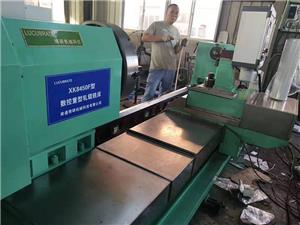
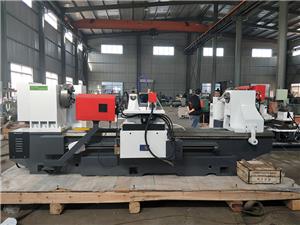
Imagine a busy job shop floor where a machinist is juggling three different machines to produce a single complex part. The workpiece travels from a lathe to a mill, then to a drill, with each transition adding setup time, potential errors, and hours of lost productivity. This scenario is all too common in manufacturing, but it's precisely why Cnc Combined Lathes are revolutionizing the industry. These advanced machines integrate turning, milling, drilling, and tapping into a single platform, eliminating the need for multiple setups and dramatically reducing lead times. In this blog, we'll explore how Cnc Combined Lathes are not just a trend but a fundamental shift in manufacturing efficiency, and why companies like NANTONG LUCUBRATE MACHINERY TECHNICAL LTD. are leading the charge.
Pain Points: The Hidden Costs of Traditional Machining
Before we dive into solutions, let's examine the specific challenges that manufacturers face with conventional machining methods. These pain points are often underestimated but can significantly impact a company's bottom line.

Pain Point 1: Multiple Setups and Increased Lead Times
In traditional machining, producing a part with both turned and milled features requires multiple machines. Each transition involves unmounting, re-fixturing, and re-calibrating, which can take hours. For a medium-sized batch of 100 parts, this could add 20-30 hours of non-productive time. The impact? Delayed deliveries, higher labor costs, and reduced competitiveness. A study by the American Society of Mechanical Engineers found that setup time can account for up to 30% of total machining time for complex parts. This inefficiency is a silent profit killer.
Pain Point 2: Accuracy Loss from Re-fixturing
Every time a part is moved between machines, there's a risk of introducing positioning errors. Tolerance stack-up from multiple setups can lead to parts that are out of spec, resulting in scrap or rework. For industries like aerospace, where tolerances are often within ±0.001 inches, this is unacceptable. The cost of scrap alone can be staggering: a single rejected titanium aerospace component can cost thousands of dollars in material and machining time. Moreover, rework adds further delays and erodes customer trust.
Pain Point 3: Skilled Labor Shortage and Training Overhead
Operating multiple conventional machines requires a diverse skill set. Finding machinists proficient in both turning and milling is increasingly difficult, especially in regions like Western Europe and North America. Training new hires on multiple machines takes months, and the learning curve can lead to errors. According to a 2023 report by Deloitte, the manufacturing skills gap could leave 2.1 million jobs unfilled by 2030. This shortage puts immense pressure on existing staff and limits growth opportunities.
Solutions: How CNC Combined Lathes Address These Pain Points
Cnc Combined Lathes offer a comprehensive solution to these challenges by integrating multiple machining operations into one machine. Let's break down how they tackle each pain point.
Solution 1: Single-Setup Machining for Reduced Lead Times
With a Cnc Combined Lathe, all operations—turning, milling, drilling, and tapping—are performed in a single setup. This eliminates the time-consuming transitions between machines. For example, a part that previously took 8 hours across three machines can now be completed in 3 hours on a single combined lathe. The reduction in lead time is immediate and substantial. Moreover, automated tool changers and pallet systems further minimize idle time. NANTONG LUCUBRATE MACHINERY TECHNICAL LTD. designs their combined lathes with rapid tool change systems and high-speed spindles, ensuring that non-cutting time is kept to an absolute minimum.
Solution 2: Enhanced Accuracy through Integrated Machining
By performing all operations in one setup, the risk of re-fixturing errors is eliminated. The part remains in the same chuck throughout, ensuring consistent positioning and repeatability. Cnc Combined Lathes from NANTONG LUCUBRATE MACHINERY TECHNICAL LTD. feature rigid machine structures, thermal compensation, and high-resolution encoders to achieve tolerances as tight as ±0.0005 inches. This level of accuracy is critical for industries such as medical devices and aerospace, where precision is paramount. Additionally, the elimination of multiple setups reduces the chance of human error, further improving quality.
Solution 3: Simplified Operation and Reduced Training Burden
Modern Cnc Combined Lathes are equipped with advanced CNC controls that unify programming for all operations. Operators only need to learn one machine interface, reducing training time and expanding the pool of potential operators. NANTONG LUCUBRATE MACHINERY TECHNICAL LTD. offers intuitive controls with simulation software, allowing operators to program and verify complex parts offline. This not only accelerates onboarding but also empowers existing staff to handle more complex tasks. The result is a more flexible workforce and reduced dependence on specialized skills.
Customer Cases: Real-World Success Stories
To illustrate the transformative impact of Cnc Combined Lathes, let's look at a few fictional but realistic customer cases from different regions.
Case 1: Precision Components Inc., Ohio, USA
Precision Components Inc., a supplier to the automotive industry, struggled with long lead times for transmission parts. After investing in two Cnc Combined Lathes from NANTONG LUCUBRATE MACHINERY TECHNICAL LTD., they reduced setup time by 70% and increased throughput by 40%. Scrap rates dropped from 5% to 1.2%, saving approximately $200,000 annually. "The combined lathes have transformed our production line. We can now take on orders we previously had to decline due to lead time constraints," said John Matthews, Production Manager.
Case 2: AeroTech Germany GmbH, Munich, Germany
AeroTech Germany GmbH manufactures landing gear components for Airbus. They required tight tolerances and complex geometries. With Cnc Combined Lathes, they achieved a 50% reduction in cycle time and improved dimensional accuracy, meeting aerospace standards. "The integration of milling and turning in one machine has eliminated our rework issues. Our customers have noticed the consistent quality," remarked Klaus Weber, Quality Assurance Manager. The investment paid back in 18 months through labor savings and reduced scrap.
Case 3: MedDevice Solutions, Cambridge, UK
MedDevice Solutions produces surgical instruments with intricate features. They faced challenges with multiple setups causing delays and errors. After implementing three Cnc Combined Lathes from NANTONG LUCUBRATE MACHINERY TECHNICAL LTD., they cut production time by 60% and achieved a 99.8% first-pass yield. "We've been able to increase our output without adding floor space or staff. The learning curve was surprisingly short thanks to the intuitive control system," said Dr. Emily Carter, Operations Director.
Case 4: Energy Fabricators, Alberta, Canada
Energy Fabricators supplies components for oil and gas equipment. They needed to machine large, complex parts with high precision. Traditional methods required multiple machines and long setups. With a custom-configured Cnc Combined Lathe, they reduced setup time from 12 hours to 2 hours per part and increased machine utilization by 35%. "The ability to perform all operations in one setup has given us a competitive edge. We can now quote shorter lead times and win more contracts," noted Michael Brown, Plant Manager.
Case 5: Automotive Precision, Tokyo, Japan
Automotive Precision manufactures fuel injection components. They required high-volume production with strict quality standards. After adopting Cnc Combined Lathes, they achieved a 30% increase in production capacity and reduced tooling costs by 20%. "The reliability and precision of these machines have exceeded our expectations. We plan to expand our fleet," said Takashi Yamamoto, Manufacturing Engineer.
Applications and Partnerships: Trusted by Industry Leaders
Cnc Combined Lathes are versatile and find applications across various industries. Here are some key sectors where they excel:
- Automotive: Engine components, transmission parts, brake systems.
- Aerospace: Landing gear, hydraulic fittings, structural components.
- Medical: Surgical instruments, implants, dental tools.
- Energy: Valve bodies, pump components, drilling equipment.
- General Machining: Complex prototypes, small batch production.
NANTONG LUCUBRATE MACHINERY TECHNICAL LTD. has established strategic partnerships with leading suppliers of CNC controls, linear guides, and spindles to ensure the highest quality and reliability. For instance, they collaborate with Siemens and Fanuc for control systems, and THK for linear motion components. These partnerships allow them to integrate cutting-edge technology into their machines. Additionally, they work closely with distributors and machine tool builders worldwide to provide local support and service. Many procurement managers from companies like Bosch and Siemens have visited their facility to audit production processes, further validating their credibility.
FAQ: Engineers and Procurement Managers Ask
Here are answers to some common questions from professionals considering Cnc Combined Lathes.
1. What are the typical maintenance requirements for a CNC combined lathe?
Maintenance is similar to conventional CNC machines but with some additional considerations. Daily checks include lubrication, coolant levels, and chip removal. Weekly tasks involve cleaning filters and checking belt tensions. Monthly maintenance includes checking hydraulic systems and calibrating probes. NANTONG LUCUBRATE MACHINERY TECHNICAL LTD. provides a detailed maintenance schedule and offers remote diagnostics for predictive maintenance. With proper care, the machines can operate for decades.
2. How do combined lathes handle chip management with both turning and milling?
Chip management is critical. Combined lathes are equipped with high-pressure coolant systems and chip conveyors designed to handle the varied chip forms from turning and milling. Some models feature dual conveyors or chip compactors. NANTONG LUCUBRATE MACHINERY TECHNICAL LTD. uses a modular chip management system that can be customized based on the materials being machined. For example, when milling aluminum, a vacuum system can be added to remove fine chips.
3. Can a combined lathe achieve the same surface finish as a dedicated lathe or mill?
Yes, modern combined lathes are designed to match or exceed the surface finish of dedicated machines. The key is rigidity and spindle quality. NANTONG LUCUBRATE MACHINERY TECHNICAL LTD. uses precision-ground ballscrews, high-rigidity linear guides, and dynamically balanced spindles to minimize vibration. Additionally, the ability to perform all operations without re-fixturing often results in better surface finish because there are no clamp marks or misalignment. In tests, their combined lathes have achieved Ra 0.4 μm on turned surfaces and Ra 0.8 μm on milled surfaces, comparable to dedicated machines.
4. What is the typical lead time for delivery and installation?
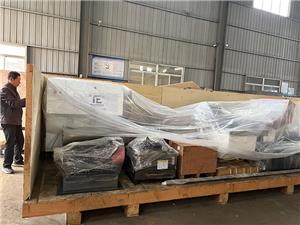
Lead time depends on the model and customization. Standard models typically ship within 8-12 weeks. Custom configurations may take 16-20 weeks. Installation and commissioning usually take 1-2 weeks, including training. NANTONG LUCUBRATE MACHINERY TECHNICAL LTD. works closely with customers to schedule delivery and minimize downtime. They also offer pre-installation site surveys to ensure readiness.
5. How do combined lathes impact overall equipment effectiveness (OEE)?
Combined lathes can significantly improve OEE by reducing setup time (improving availability), increasing throughput (improving performance), and reducing scrap (improving quality). Customers have reported OEE improvements from 65% to 85% after switching to combined lathes. The integration of multiple processes also reduces the number of machines required, freeing up floor space and reducing maintenance overhead. NANTONG LUCUBRATE MACHINERY TECHNICAL LTD. provides OEE calculation tools and consulting to help customers maximize their investment.
Conclusion and Call to Action
Cnc Combined Lathes are not just a technological advancement; they are a strategic asset for modern manufacturers. By eliminating multiple setups, enhancing accuracy, and simplifying operations, they address the core pain points of traditional machining. The customer cases and applications discussed here demonstrate their tangible benefits across industries and geographies. As a trusted name in the industry, NANTONG LUCUBRATE MACHINERY TECHNICAL LTD. continues to innovate and support manufacturers worldwide with reliable, high-performance combined lathes.
If you're ready to transform your machining operations, we invite you to download our comprehensive technical white paper on Cnc Combined Lathes or contact our sales engineers for a personalized consultation. Discover how you can reduce lead times, improve quality, and stay competitive in today's fast-paced market.