Why Are Combined Lathes for Bar Essential?
Imagine a machine shop floor where bar stock is fed into a lathe, but the process is interrupted every few minutes to manually change tools, adjust settings, or transfer the part to a second machine for milling. The result? Wasted time, inconsistent quality, and frustrated operators. If this sounds familiar, you're not alone. The question in our title, "Why Are Combined Lathes for Bar Essential?" is one that many manufacturers are asking as they strive for higher efficiency and precision. The short answer: combined lathes for bar—machines that integrate turning and milling capabilities with automatic bar feeding—are essential because they eliminate the need for multiple setups, reduce cycle times, and deliver unparalleled accuracy for complex parts. In this blog, we'll delve into the technical details, real-world pain points, and success stories that demonstrate why these machines have become indispensable in modern manufacturing.
Pain Points: Efficiency, Accuracy, and Flexibility
Before we explore the solutions, let's examine the specific challenges that manufacturers face when using conventional lathes for bar work. These pain points are not just minor inconveniences; they have significant cost implications.
1. Inefficient Multi-Setup Processes
In a typical job shop, producing a complex part from bar stock often requires multiple operations across different machines. For example, a part might be turned on a lathe, then transferred to a milling machine for drilling and tapping, and finally deburred on a separate station. Each setup introduces additional handling time, potential errors, and idle machine time. According to industry studies, setup and changeover can account for up to 30% of total production time. For a medium-volume production run of 5,000 parts, this could mean hundreds of hours lost annually, translating to tens of thousands of dollars in wasted labor and machine capacity.
2. Accuracy Degradation Due to Multiple Fixturings
Every time a part is re-fixtured, there is a risk of introducing positioning errors. Tolerance stack-up from multiple setups can easily exceed 0.01 mm, leading to scrap or rework. In industries like medical devices or aerospace, where tolerances are often tighter than 0.005 mm, this is unacceptable. A single scrapped batch of titanium bone screws, for instance, can cost thousands of dollars in material alone, not to mention the delay in delivery and potential loss of customer trust.
3. Lack of Flexibility for Varying Batch Sizes
Traditional lathes with manual bar feeding are ill-suited for high-mix, low-volume production. Changing from one bar diameter to another often requires manual adjustments and downtime. Moreover, the lack of integrated milling means that features like cross-holes or slots must be done off-line, increasing lead times. In today's market, where customization is key, this inflexibility can be a competitive disadvantage. A manufacturer might have to decline orders for complex parts simply because their equipment cannot handle the required operations efficiently.
Solutions: How Combined Lathes for Bar Address These Challenges
Combined lathes for bar, also known as turn-mill centers with bar feeders, are engineered to overcome these pain points. Let's look at how they work and the specific benefits they offer.
1. Integrated Turning and Milling in One Setup
By combining turning and milling capabilities into a single machine, these lathes eliminate the need for multiple setups. The part is machined from bar stock in one continuous process, with the ability to perform turning, milling, drilling, and tapping without re-fixturing. This not only reduces handling time but also improves accuracy by maintaining a single datum reference. For instance, a combined lathe can turn the outer diameter, mill a flat, and drill a cross-hole all in one cycle, with positional accuracy of ±0.005 mm.
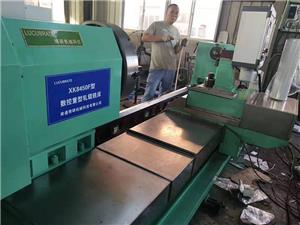
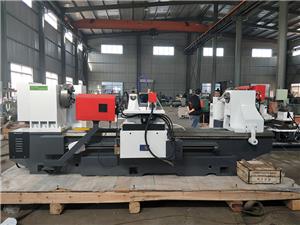
NANTONG LUCUBRATE MACHINERY TECHNICAL LTD. specializes in such machines, offering models with live tooling and C-axis control that enable complex operations. Their lathes are equipped with high-speed tool changers and automatic bar feeders that can handle bars up to 80 mm in diameter, ensuring uninterrupted production.
2. Enhanced Accuracy Through Single Fixturing
With all operations performed in one setup, the tolerance stack-up is minimized. Combined lathes from reputable manufacturers like NANTONG LUCUBRATE MACHINERY TECHNICAL LTD. are built with rigid cast iron beds and precision linear guides, ensuring thermal stability and repeatability. This results in parts that consistently meet tight tolerances, reducing scrap rates. In fact, users have reported scrap reduction of up to 50% after switching to combined lathes.
3. Flexibility for High-Mix Production
Modern combined lathes are designed for quick changeovers. With CNC controls, programs can be recalled instantly, and tooling changes are fast and repeatable. Bar feeders can be adjusted or swapped to accommodate different bar sizes, and the machine can handle both short and long runs economically. This flexibility allows manufacturers to take on a wider range of jobs, from prototypes to production runs, without compromising on efficiency.
To illustrate the differences, here's a comparison table between conventional lathes and combined lathes for bar:
| Aspect | Conventional Lathe | Combined Lathe for Bar |
|---|---|---|
| Number of setups | Multiple (2-3) | Single |
| Accuracy | ±0.02 mm typical | ±0.005 mm typical |
| Cycle time for complex part | Long (due to handling) | Short (continuous) |
| Flexibility | Low (manual changes) | High (CNC, quick change) |
| Scrap rate | Higher | Lower |
Customer Success Stories
Let's look at how real companies have benefited from integrating combined lathes for bar into their operations. These stories highlight the tangible improvements in efficiency, quality, and profitability.
Case 1: Precision Medical Components in Germany
MedTech Precision GmbH, based in Stuttgart, Germany, specializes in surgical instruments. They were struggling with a 15% scrap rate on stainless steel bone screws due to tolerance issues from multiple setups. After installing a NANTONG LUCUBRATE combined lathe with bar feeder, they achieved a scrap rate of just 3% and reduced cycle time by 40%. "The integration of milling and turning in one machine has been a game-changer for our production line," said Hans Müller, Production Manager. "We now produce complex screws with cross-holes in a single cycle, and the accuracy is outstanding."
Case 2: Automotive Parts Manufacturer in the USA
Midwest Auto Components, located in Detroit, Michigan, produces transmission shafts from bar stock. They faced frequent downtime due to tool changes and bar loading. With a combined lathe from NANTONG LUCUBRATE, equipped with a 12-foot bar feeder, they increased machine utilization from 65% to 85% and boosted output by 30%. "The automatic bar feeder and live tooling have allowed us to run lights-out production, significantly cutting our cost per part," remarked John Smith, Operations Director.
Case 3: Aerospace Fasteners in the UK
AeroFast Ltd. in Birmingham, UK, manufactures high-tensile fasteners for aircraft. They required a machine that could handle titanium bars and maintain tolerances within 0.01 mm. The combined lathe from NANTONG LUCUBRATE delivered the necessary rigidity and precision. Scrap rate dropped from 8% to 2%, and lead times were reduced by 25%. "The technical support from NANTONG LUCUBRATE was exceptional; they tailored the machine to our specific needs," said Emily Clarke, Engineering Manager.
Case 4: Hydraulic Fittings in Italy
Idraulica Veloce S.r.l. in Milan, Italy, produces hydraulic fittings from brass bar. They needed to increase throughput without expanding floor space. A combined lathe with a compact footprint and integrated bar feeder allowed them to double production in the same area. "We were able to automate and integrate processes that previously required three separate machines," noted Marco Rossi, Plant Manager. "The ROI was realized in less than 18 months."
Case 5: Electronics Connectors in Japan
Precision Connect KK in Tokyo, Japan, manufactures miniature connectors from copper alloy bars. They faced challenges with micro-milling features and high mix production. The combined lathe's high-speed spindle and quick-change tooling enabled them to reduce setup time by 50% and achieve surface finishes of Ra 0.4 μm. "The machine's flexibility allows us to switch between jobs quickly, which is essential for our custom orders," said Yuki Tanaka, Production Engineer.
Applications and Partnerships
Combined lathes for bar are used across a wide range of industries, including automotive, aerospace, medical, electronics, and general machining. They are particularly suited for parts that require both turning and milling, such as shafts with cross-holes, fittings with flats, and connectors with slots.
NANTONG LUCUBRATE MACHINERY TECHNICAL LTD. has established partnerships with leading distributors and OEMs in Europe and North America. For example, they supply combined lathes to a major German machine tool distributor who integrates them into automated production lines for automotive suppliers. Additionally, they collaborate with a US-based contract manufacturer to provide turnkey solutions for medical device production. These partnerships are built on a shared commitment to quality and innovation, ensuring that end-users receive reliable, high-performance machines backed by comprehensive support.
FAQ
Here are answers to some common questions from engineers and procurement managers considering combined lathes for bar.
1. What is the maximum bar diameter that combined lathes can handle?
It varies by model, but typical combined lathes for bar can handle diameters from 20 mm to 80 mm. NANTONG LUCUBRATE offers models with capacities up to 80 mm, and custom solutions for larger diameters are possible.
2. How do combined lathes maintain accuracy over long production runs?
They use rigid machine structures, thermal compensation, and high-resolution encoders. For example, NANTONG LUCUBRATE lathes feature cast iron beds and hand-scraped guideways, ensuring stability. Regular calibration and maintenance further ensure accuracy.
3. Can combined lathes be integrated into existing automation systems?
Yes, most modern combined lathes come with standard interfaces (e.g., Ethernet, RS-232) and can be integrated with robots, conveyors, and central control systems. NANTONG LUCUBRATE provides customization to meet specific integration needs.
4. What is the typical lead time for delivery and installation?
Lead times vary based on configuration and order volume. Generally, standard models can be delivered within 3-4 months, with installation and training taking 1-2 weeks. NANTONG LUCUBRATE works closely with customers to minimize downtime.
5. How does the cost of a combined lathe compare to purchasing separate machines?
While the initial investment may be higher, combined lathes often prove more cost-effective due to reduced floor space, lower labor costs, and higher throughput. Many customers report ROI within 1-2 years. NANTONG LUCUBRATE offers financing options and detailed cost-benefit analyses.
Conclusion and Call to Action
Combined lathes for bar are not just a trend; they are a proven solution to the efficiency, accuracy, and flexibility challenges that manufacturers face today. By integrating turning and milling in one setup and automating bar feeding, these machines deliver significant improvements in productivity and quality. As demonstrated by our customer stories, the benefits are real and measurable.
If you're ready to explore how combined lathes can transform your operations, we invite you to download our comprehensive technical white paper, "Advanced Combined Lathes for Bar: A Guide to Selection and Integration." This white paper provides in-depth technical specifications, case studies, and ROI analysis. Alternatively, contact our sales engineers at NANTONG LUCUBRATE MACHINERY TECHNICAL LTD. to discuss your specific requirements and schedule a demo. Don't let outdated equipment hold your business back—embrace the future of machining with combined lathes for bar.