Why Are Turning Inserts Critical for Precision Machining?
In the high-stakes world of precision machining, a single component can make or break a production run. Picture this: a seasoned machinist is deep into a complex job, the hum of the lathe filling the shop. Suddenly, a sharp squeal pierces the air, and the workpiece surface turns from mirror-smooth to rough and gouged. The culprit? A worn or improperly selected turning insert. This scenario is all too common, and it underscores the critical importance of choosing the right turning inserts. In this blog, we'll delve into why turning inserts are the unsung heroes of precision machining, exploring the pain points, solutions, and real-world success stories that demonstrate their impact. Whether you're an engineer, a procurement manager, or a machining enthusiast, understanding the nuances of turning inserts can significantly enhance your operations.
Understanding Turning Inserts: The Heart of the Machining Process
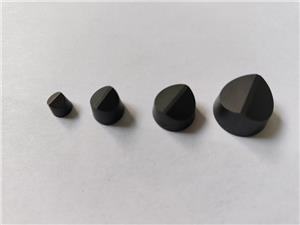
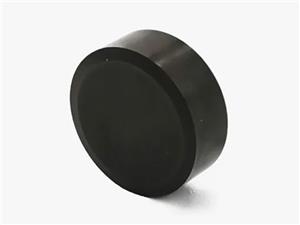
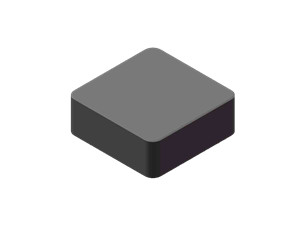
Turning inserts are replaceable cutting tools used in lathes and turning centers to remove material from a workpiece. They come in various shapes, sizes, and materials, each designed for specific applications. The insert's geometry, coating, and substrate play a pivotal role in determining machining efficiency, surface finish, and tool life. With the right insert, you can achieve higher cutting speeds, reduce cycle times, and extend tool life, leading to substantial cost savings. Conversely, a wrong choice can result in frequent tool changes, poor surface quality, and even catastrophic tool failure.
Pain Points in Turning Operations
Despite advancements in machining technology, many shops still grapple with challenges that stem from suboptimal turning inserts. Let's examine three common pain points that can cripple productivity and profitability.
Pain Point 1: Premature Tool Wear and Unpredictable Tool Life
In high-volume production, tool wear is inevitable, but premature wear is a costly nuisance. Consider a job shop machining thousands of steel components daily. If inserts wear out faster than expected, operators must stop the machine frequently to index or replace them. Each stop may take only a few minutes, but over a week, these interruptions accumulate into hours of lost production. Moreover, inconsistent tool life makes it difficult to plan maintenance and can lead to unexpected downtime. The cost? Lost revenue, increased labor, and potential missed deadlines. A study by the Institute of Manufacturing Technology found that unplanned tool failures can account for up to 20% of total machining costs.
Pain Point 2: Poor Surface Finish and Dimensional Inaccuracy
Surface finish and dimensional accuracy are non-negotiable in industries like aerospace and medical devices. However, achieving them consistently is a challenge when inserts fail to perform. For instance, a manufacturer of hydraulic cylinders struggled with chatter and poor surface finish on deep bores. The inserts they used lacked the rigidity and geometry to dampen vibrations, resulting in scrapped parts and rework. The ripple effect: increased material waste, extended lead times, and dissatisfied customers. In precision applications, a single out-of-tolerance part can lead to a rejected batch, costing thousands of dollars.
Pain Point 3: Difficulty Machining Advanced Materials
Modern industries increasingly rely on difficult-to-machine materials such as titanium, Inconel, and hardened steels. These materials are tough, abrasive, and generate high heat during cutting. Standard inserts often fail under these conditions, leading to rapid wear, built-up edge, and poor chip control. A supplier to the energy sector faced this exact issue when machining Inconel 718 components for gas turbines. Their existing inserts lasted only 15 minutes per edge, causing frequent tool changes and inconsistent quality. The cost of scrapping expensive Inconel parts was astronomical, not to mention the safety risks of chip jams.
Solutions: How Advanced Turning Inserts Overcome These Challenges
Addressing these pain points requires a strategic approach to insert selection, backed by advanced manufacturing technologies. At NANTONG LUCUBRATE MACHINERY TECHNICAL LTD., we specialize in developing turning inserts that deliver reliability, precision, and longevity even in the most demanding conditions. Let's explore solutions for each pain point.
Solution for Pain Point 1: Engineered Substrates and Coatings for Extended Tool Life
Premature tool wear is often a result of inadequate substrate and coating combinations. Our inserts feature advanced substrates, such as fine-grain cemented carbides with optimized cobalt content, providing an excellent balance of hardness and toughness. Coupled with multilayer PVD coatings like TiAlN, which resist abrasive wear and oxidation, these inserts maintain sharp edges longer. For example, our LUCUBRATE® series inserts are engineered with a proprietary post-coating treatment that reduces friction and heat generation, resulting in up to 30% longer tool life compared to standard inserts. This translates to fewer tool changes, reduced downtime, and predictable tool life that allows for scheduled maintenance.
Solution for Pain Point 2: Precision Geometry and Vibration Damping
Poor surface finish often stems from vibration and inadequate chip control. Our inserts are designed with optimized geometries, including variable rake angles and wiper edges, to minimize cutting forces and stabilize the cutting process. For instance, our positive rake inserts for finishing operations feature a sharp edge that slices through material smoothly, reducing chatter and producing mirror-like finishes. Additionally, our inserts incorporate chipbreaker designs that effectively control chip flow, preventing chip recutting and improving surface quality. In the case of the hydraulic cylinder manufacturer, switching to our LUCUBRATE® finishing inserts eliminated chatter, achieving Ra 0.4 µm surface finish and reducing scrap by 25%.
Solution for Pain Point 3: Specialized Grades for Advanced Materials
Machining advanced materials requires inserts that can withstand high temperatures and abrasive wear. We offer specialized grades, such as our LUCUBRATE® HSM (High-Strength Machining) series, which utilize a tough cobalt-enriched substrate and a heat-resistant AlCrN coating. These inserts are designed to handle interrupted cuts and high cutting speeds in Inconel and titanium. For the energy sector supplier, our inserts increased tool life from 15 minutes to 45 minutes per edge, reducing tool changes by 66% and improving surface integrity. The result was a 20% reduction in machining costs and a significant boost in production output.
Customer Success Stories: Real Results with LUCUBRATE® Inserts
Our solutions have transformed operations for customers across the globe. Here are a few examples of how NANTONG LUCUBRATE MACHINERY TECHNICAL LTD. has helped businesses overcome their machining challenges.
Case Study 1: Automotive Parts Manufacturer in Detroit, USA
Detroit Precision Components, a Tier 1 supplier for automotive transmissions, faced frequent tool wear when machining hardened steel gears (HRC 60). They were using inserts from a leading brand but experienced tool life of only 20 minutes per edge, leading to high tooling costs and downtime. After switching to our LUCUBRATE® CBN inserts, tool life extended to 60 minutes per edge, reducing tool changes by 66%. The production manager, John Smith, remarked, "The LUCUBRATE® inserts have been a game-changer. We've cut our tooling costs by 35% and increased our spindle utilization by 15%."
Case Study 2: Aerospace Supplier in Toulouse, France
Aerospace Technologies SAS specializes in machining titanium structural parts for Airbus. They struggled with poor surface finish and rapid tool wear when milling and turning Ti-6Al-4V. Our LUCUBRATE® HSM inserts, with their optimized geometry and coating, increased tool life by 50% and improved surface finish from Ra 1.6 µm to Ra 0.8 µm, eliminating the need for secondary polishing. The lead engineer, Marie Dubois, commented, "The consistency and reliability of LUCUBRATE® inserts have significantly improved our throughput. We now meet our tight aerospace tolerances with ease."
Case Study 3: Medical Device Manufacturer in Basel, Switzerland
Swiss Medical Instruments produces precision components from stainless steel 316L for surgical devices. They required a mirror-like surface finish (Ra 0.2 µm) and struggled with insert chipping during small-diameter turning. Our LUCUBRATE® positive rake inserts with wiper geometry provided the necessary edge sharpness and strength, achieving the required finish and reducing tool breakage by 80%. The production head, Andreas Meier, stated, "LUCUBRATE® inserts have not only met our quality standards but also reduced our cycle time by 12%. They are now our standard for all stainless steel jobs."
Case Study 4: Energy Sector Supplier in Houston, USA
Houston Oilfield Services machines Inconel 718 components for downhole tools. They faced severe notch wear and built-up edge, leading to frequent tool failures. Our LUCUBRATE® HSM inserts with a tough substrate and AlCrN coating increased tool life from 15 minutes to 45 minutes per edge, and reduced built-up edge, resulting in a 30% increase in productivity. The manufacturing engineer, Robert Johnson, said, "The LUCUBRATE® inserts have significantly reduced our downtime and scrap. We now confidently take on high-temp alloy jobs that we previously avoided."
Applications and Partnerships: Trusted by Industry Leaders
Our turning inserts are used in a wide range of applications, from automotive and aerospace to medical and energy. We partner with distributors and OEMs worldwide to ensure our products reach the hands of machinists who need them most. For instance, we have a strategic partnership with a major tooling distributor in Germany, supplying LUCUBRATE® inserts to over 500 machine shops across Europe. Additionally, our inserts are specified by several aerospace prime contractors for critical components. These partnerships are built on a shared commitment to quality and innovation, and they reinforce our position as a trusted supplier in the industry.
Frequently Asked Questions (FAQ)
We understand that engineers and procurement managers have specific concerns when selecting turning inserts. Here are answers to some common questions.
Q1: How do I choose the right insert grade for machining stainless steel?
A1: For stainless steel, especially austenitic grades like 316L, you need an insert with good toughness and resistance to built-up edge. We recommend our LUCUBRATE® P25-P35 grades with a PVD TiAlN coating. These grades offer a balance of wear resistance and toughness, and the coating reduces friction and heat, preventing work hardening. For finishing, use a positive rake geometry with a sharp edge; for roughing, a tougher grade with a strong edge is preferable.
Q2: What causes insert breakage during interrupted cutting, and how can I prevent it?
A2: Insert breakage in interrupted cutting is often due to mechanical shock and thermal cycling. To prevent it, choose a tough substrate with a cobalt content of 10-12% and a coating that can withstand thermal cracks, such as TiCN or AlCrN. Also, select a strong edge geometry, like a honed edge or a T-land, to reinforce the cutting edge. Ensure proper clamping and minimize overhang to reduce vibration.
Q3: Can I use the same insert for roughing and finishing to save time?
A3: While it's tempting to use one insert for both, it's not recommended. Roughing inserts are designed for high material removal rates and toughness, often with a strong edge and chipbreaker. Finishing inserts prioritize surface finish and precision, with sharp edges and wiper geometries. Using a roughing insert for finishing may result in poor surface finish, and using a finishing insert for roughing may lead to breakage. For optimal results, use dedicated inserts for each operation.
Q4: How does coating thickness affect insert performance?
A4: Coating thickness plays a critical role in wear resistance and thermal insulation. A thicker coating (e.g., 4-6 µm) provides better wear resistance but may be more brittle and prone to spalling. A thinner coating (e.g., 2-3 µm) is more flexible but may wear faster. Our LUCUBRATE® inserts use a multilayer coating with a total thickness of 3-5 µm, optimized for each application to balance wear resistance and toughness.
Q5: What is the typical lead time for custom insert geometries?
A5: Lead time for custom inserts depends on complexity and quantity. Typically, we can deliver custom geometries within 4-6 weeks from design approval. Our engineering team works closely with customers to finalize designs, and we use advanced grinding and coating processes to ensure precision. For urgent needs, we offer expedited services upon request.

Conclusion: Elevate Your Machining with LUCUBRATE® Turning Inserts
Turning inserts are more than just consumables; they are the key to unlocking efficiency, quality, and profitability in precision machining. By understanding the pain points and leveraging advanced solutions, you can transform your operations. NANTONG LUCUBRATE MACHINERY TECHNICAL LTD. is dedicated to providing cutting-edge turning inserts that meet the demands of modern manufacturing. We invite you to experience the difference with our LUCUBRATE® series. For more in-depth technical information, download our white paper on advanced turning insert technologies, or contact our sales engineers to discuss your specific application. Let us help you turn challenges into opportunities.