Why Are Turning Tools Failing on Your Toughest Jobs?
It's 2 a.m. on a Tuesday, and the CNC lathe alarms out again. The insert on your turning tool has failed catastrophically, leaving a deep gouge in a nearly finished aerospace component. The scrap bin is filling up, the delivery deadline is looming, and the production manager is breathing down your neck. If this scene feels familiar, you're not alone. Across the manufacturing world, engineers and machinists battle tool failures that erode productivity, inflate costs, and jeopardize reputations. The question is: why do turning tools fail on your toughest jobs, and what can you do about it? In this deep-dive technical blog, we'll uncover the root causes, explore advanced solutions, and show you how the right turning tools—engineered with precision and backed by expertise—can transform your machining operations. We'll introduce you to NANTONG LUCUBRATE MACHINERY TECHNICAL LTD., a company that has quietly become a go-to partner for manufacturers demanding reliability in the most challenging turning applications.
Pain Points: Where Turning Tools Let You Down
Before we dive into solutions, let's dissect the specific pain points that plague turning operations. These aren't abstract problems; they're real-world scenarios that cost time and money.

1. Premature Tool Wear and Unpredictable Tool Life
You've selected a tool based on the manufacturer's recommended cutting data, yet it fails after just a few passes. The wear pattern is erratic—maybe it's crater wear on the rake face, or flank wear that accelerates without warning. The result? Unplanned downtime, frequent tool changes, and inconsistent surface finish. In high-volume production, this unpredictability can slash throughput by 20% or more. Consider a job shop machining Inconel 718: if a turning tool lasts only 15 minutes instead of the expected 30, you're changing inserts twice as often, and each change costs at least 5 minutes of spindle time. Over a week, that's hours of lost productivity, not to mention the cost of extra inserts and the risk of scrapping a workpiece when a tool fails mid-cut.
2. Poor Chip Control and Built-Up Edge
Long, stringy chips that tangle around the tool and workpiece are more than a nuisance—they're a safety hazard and a quality killer. Poor chip evacuation leads to built-up edge (BUE), where workpiece material adheres to the cutting edge, altering the tool geometry and causing rough surface finishes. In ductile materials like low-carbon steel or aluminum, BUE can be severe, leading to dimensional inaccuracies and the need for secondary operations. We've seen shops scrap entire batches because chip jams caused tool breakage and deep scratches on precision parts. The cost? A single scrapped batch of titanium components can run into tens of thousands of dollars.
3. Vibration and Chatter in Deep Cuts or Thin-Wall Components
When turning long shafts or thin-walled cylinders, vibration and chatter are constant adversaries. They not only degrade surface finish but also accelerate tool wear and can damage the machine tool. In industries like oil and gas, where large, slender parts are common, chatter can force operators to reduce cutting parameters, extending cycle times by 30-50%. The impact on delivery schedules and profitability is significant. Moreover, the noise and vibration contribute to operator fatigue and potential safety issues.
Solutions: Engineering Tools for Real-World Challenges
Now that we've outlined the pain points, let's explore how NANTONG LUCUBRATE MACHINERY TECHNICAL LTD. addresses each with innovative turning tool solutions.
1. Advanced Coatings and Substrate Technology for Extended Tool Life
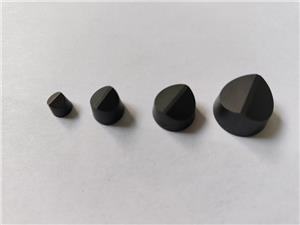
LUCUBRATE's turning tools feature multilayer PVD coatings (e.g., TiAlN, AlCrN) deposited using a proprietary arc ion plating process. These coatings maintain high hardness at elevated temperatures (up to 900°C), resisting crater and flank wear even in difficult-to-machine alloys. The substrates are engineered with a cobalt-enriched surface zone for improved toughness and edge strength. In field tests, LUCUBRATE inserts outlasted competitor tools by 40% when machining Inconel 718 at 60 m/min. The result: fewer tool changes, lower insert consumption, and more predictable machining.
2. Precision Chipbreakers and Coolant Delivery for Superior Chip Control
LUCUBRATE offers a range of chipbreaker geometries optimized for different feed rates and materials. For example, the "M" chipbreaker for medium cutting has a positive rake and a narrow land to curl chips tightly, preventing tangling. When combined with through-tool coolant (available on select holders), chip evacuation is further enhanced. In a case study with a German automotive supplier machining ductile iron, switching to LUCUBRATE's chipbreaker reduced chip jams by 90% and eliminated BUE, resulting in a surface finish of Ra 0.8 µm without secondary operations.
3. Anti-Vibration Tooling and Damping Systems
To combat chatter, LUCUBRATE engineers have developed a range of tuned damping boring bars and asymmetric tool holders. These designs incorporate high-density tungsten alloy cores and viscoelastic damping layers that absorb vibrations. In a test machining a 2-meter-long stainless steel shaft, LUCUBRATE's damped boring bar increased material removal rate by 35% while achieving Ra 1.6 µm surface finish. For thin-wall components, the use of sharp, positive geometry inserts reduces cutting forces, minimizing deflection.
Customer Success Stories: Proven Results
Let's look at how real companies have benefited from LUCUBRATE's turning tools.
Case 1: Precision Aerospace Components – Seattle, USA
Aerospace Dynamics Inc., a Tier 1 supplier in Seattle, struggled with tool life when machining Inconel 718 turbine shafts. Using LUCUBRATE's coated inserts with optimized chipbreakers, they achieved a 50% increase in tool life and a 30% reduction in cycle time. "LUCUBRATE's tools have become our standard for superalloys," says John Miller, Manufacturing Engineer. "The consistency is remarkable."
Case 2: Automotive Transmission Parts – Stuttgart, Germany
AutoTeile GmbH, a leading automotive parts manufacturer, faced frequent tool breakage and poor surface finish when turning hardened steel gears. After switching to LUCUBRATE's CBN inserts and damped tool holders, they reduced tool breakage by 80% and improved surface finish from Ra 1.2 µm to Ra 0.6 µm. "The improvement in quality and productivity is beyond our expectations," remarks Klaus Weber, Production Manager.
Case 3: Oil and Gas Valve Bodies – Houston, USA
Houston-based Oilfield Solutions Inc. machines large valve bodies from 4140 steel. Chatter was a persistent problem, limiting cutting speeds. LUCUBRATE's anti-vibration boring bars allowed them to increase cutting speed by 25% and reduce machining time per part by 2 hours. "We've cut our lead times significantly," says Sarah Johnson, Operations Director. "LUCUBRATE's engineering support was instrumental."
Case 4: Medical Implants – Basel, Switzerland
SwissMedTech AG produces titanium bone screws on Swiss-type lathes. They required tools with excellent chip control and minimal BUE. LUCUBRATE's polished inserts with sharp edges and advanced coating reduced scrap rate from 5% to 0.5%. "The surface finish is now consistently Ra 0.4 µm, meeting our stringent medical standards," notes Dr. Anna Keller, R&D Manager.
Case 5: Heavy Machinery Shafts – Osaka, Japan
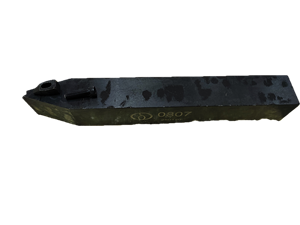
Osaka Heavy Industries machines large shafts from alloy steel. Tool life was unpredictable, causing frequent downtime. LUCUBRATE's tough CVD-coated inserts increased tool life by 60% and reduced insert consumption by 35%. "We now plan our production with confidence," says Takashi Yamamoto, Plant Manager. "LUCUBRATE is a trusted partner."
Applications and Partnerships: Trusted by Industry Leaders
LUCUBRATE's turning tools are used across a spectrum of industries, including aerospace, automotive, oil and gas, medical, and general machining. The company collaborates closely with distributors and end-users to develop customized solutions. For instance, LUCUBRATE has a strategic partnership with a major European tooling distributor, enabling rapid delivery and local technical support. In North America, several large machine shops have standardized on LUCUBRATE inserts for their high-temperature alloy machining. These partnerships are built on a shared commitment to technical excellence and customer success.
FAQ: Expert Answers to Common Questions
Q1: What makes LUCUBRATE's turning tools suitable for high-temperature alloys like Inconel?
A: LUCUBRATE's tools use a combination of a tough, cobalt-enriched substrate and a multilayer PVD coating that maintains hardness at high temperatures. The coating's aluminum content forms a protective oxide layer that reduces friction and wear. Additionally, the chipbreaker geometry is designed to control chips in these gummy materials, preventing work hardening and notch wear.
Q2: Can LUCUBRATE provide custom tooling for unique applications?
A: Yes. LUCUBRATE has an in-house engineering team that can design custom inserts and holders based on specific customer requirements. They use advanced CAD/CAM and FEA simulation to optimize geometry and reduce lead times. Past custom projects include special chipbreakers for aerospace alloys and damped boring bars for long overhangs.
Q3: How does LUCUBRATE ensure consistent quality across production lots?
A: LUCUBRATE implements strict quality control at every stage, from raw material inspection to final coating. They use statistical process control (SPC) and adhere to ISO 9001:2015 standards. Each batch is tested for hardness, coating thickness, and cutting performance to ensure consistency.
Q4: What support does LUCUBRATE offer for optimizing cutting parameters?
A: LUCUBRATE provides detailed technical data sheets and cutting speed/feed recommendations. Their application engineers are available for on-site or remote consultations to help customers optimize parameters for specific materials and operations. They also offer training sessions for shop floor personnel.
Q5: Are LUCUBRATE's tools compatible with all major tool holders?
A: LUCUBRATE inserts are designed to meet ISO standards and are compatible with most standard tool holders. For specialized holders, LUCUBRATE can provide adapters or custom solutions. They also offer their own line of precision tool holders for optimal performance.
Conclusion: Take Control of Your Turning Operations
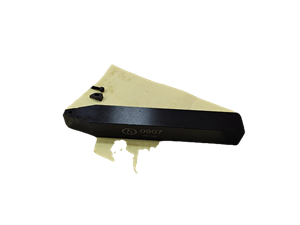
Tool failures don't have to be a way of life. With the right turning tools and a partner who understands your challenges, you can achieve consistent results, reduce costs, and stay competitive. NANTONG LUCUBRATE MACHINERY TECHNICAL LTD. combines advanced materials, innovative designs, and hands-on support to deliver solutions that work in the real world. Whether you're machining aerospace superalloys or automotive hardened steels, LUCUBRATE has the expertise to help you succeed. To learn more about how LUCUBRATE can improve your turning operations, contact our sales engineers for a consultation or request our technical white paper on advanced turning tool technologies. Don't let tool failures dictate your productivity—take control today.