Why Choose a CNC Lathe for HSS?
Introduction
Imagine a busy machine shop where the operator is struggling to achieve a consistent surface finish on a batch of hardened steel shafts. The HSS tool is wearing out quickly, and the manual lathe just can't hold the tolerance. Scrap rates are climbing, and deadlines are looming. This is a common scenario in many shops that still rely on manual machines for HSS machining. The answer? A CNC lathe specifically designed for HSS tooling. In this blog, we'll explore why investing in a CNC lathe for HSS can transform your operations, boost productivity, and reduce costs. We'll dive into the pain points, solutions, real-world cases, and more. So, let's get started.

Pain Points
When machining with HSS tools, many shops face significant challenges that impact their bottom line. Here are three common pain points:
1. Inconsistent Surface Finish and Tool Wear
HSS tools are known for their toughness and ability to withstand shock, but they also wear out faster than carbide in high-speed applications. On a manual lathe, operators often struggle to maintain consistent cutting speeds and feeds, leading to uneven tool wear and poor surface finish. This results in frequent tool changes, increased downtime, and scrapped parts. For example, a shop machining a batch of 500 stainless steel components might see a 15% scrap rate due to inconsistent finishes, costing thousands of dollars in wasted material and labor.
2. Low Productivity and High Scrap Rates
Manual lathes rely heavily on operator skill and are limited in their ability to optimize cutting parameters. With HSS tools, achieving the right balance of speed, feed, and depth of cut is crucial. Without precise control, cycle times increase, and scrap rates soar. A typical job that should take 10 minutes might take 15, and the scrap rate could be as high as 20%. This not only eats into profits but also delays deliveries, damaging customer relationships.
3. Difficulty Machining Complex Geometries
HSS tools are often used for complex profiles, threads, and grooving. On a manual lathe, producing these features requires high operator skill and time. Complex geometries often necessitate multiple setups, increasing the risk of errors. For instance, machining a threaded shaft with a relief groove might require three different operations on a manual lathe, each with its own setup and potential for misalignment. This leads to longer lead times and higher costs.
Solutions
To address these pain points, a CNC lathe designed for HSS tooling offers targeted solutions. Here's how:
1. Rigid Machine Design and Optimized Tool Paths
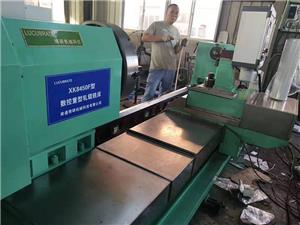
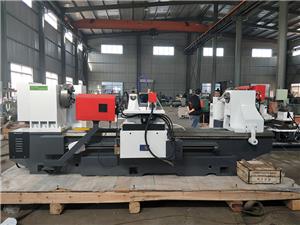
CNC lathes from reputable manufacturers like NANTONG LUCUBRATE MACHINERY TECHNICAL LTD. are built with rigid structures that minimize vibration, which is critical when using HSS tools. The machines feature precision spindles and heavy-duty beds that ensure stability during cutting. Additionally, CNC controls allow for optimized tool paths that maintain consistent chip load and cutting speed, reducing tool wear and improving surface finish. For example, using constant surface speed (CSS) control, the CNC lathe automatically adjusts spindle speed as the tool moves across the workpiece, ensuring optimal cutting conditions for HSS.
2. Advanced Control Systems for HSS
Modern CNC systems offer features specifically beneficial for HSS machining. These include:
- Feed rate override: Allows operators to fine-tune feed rates on the fly to accommodate HSS tool wear.
- Tool life management: Tracks tool usage and alerts operators when to change tools, preventing sudden failures.
- Canned cycles: Pre-programmed cycles for common operations like threading, grooving, and drilling reduce programming time and errors.
NANTONG LUCUBRATE MACHINERY TECHNICAL LTD. equips its CNC lathes with user-friendly controls that make it easy to optimize HSS machining parameters.
3. Custom Tooling and Process Optimization
Every HSS machining application is unique. That's why NANTONG LUCUBRATE MACHINERY TECHNICAL LTD. works closely with customers to develop custom tooling solutions and optimize processes. This includes selecting the right grade of HSS, designing custom tool geometries, and providing recommended cutting parameters. For instance, for machining a tough alloy, they might recommend a cobalt-based HSS tool with a specific coating and a feed rate of 0.2 mm/rev and a cutting speed of 30 m/min. This tailored approach ensures maximum tool life and productivity.
Customer Cases
Let's look at how real customers have benefited from CNC lathes for HSS from NANTONG LUCUBRATE MACHINERY TECHNICAL LTD.
Case 1: Precision Parts Inc., Ohio, USA
Precision Parts Inc. specializes in small-batch production of hydraulic components. They were using manual lathes with HSS tools and struggling with a 20% scrap rate on a critical part. After installing a LUCUBRATE CNC lathe, they reduced scrap to 3% and increased productivity by 40%. "The CNC lathe has transformed our shop. We can now hold tolerances we never thought possible with HSS," said John Smith, Production Manager.
Case 2: ToolCraft GmbH, Germany
ToolCraft GmbH manufactures custom tooling for the automotive industry. They needed to machine complex profiles in HSS blanks. With the LUCUBRATE CNC lathe, they reduced cycle time by 30% and improved surface finish, eliminating the need for secondary grinding. "The precision and repeatability of the LUCUBRATE machine have given us a competitive edge," remarked Klaus Müller, CEO.
Case 3: Midwest Manufacturing, Illinois, USA
Midwest Manufacturing produces agricultural equipment parts. They faced frequent tool breakage with HSS on their manual lathes. After switching to a LUCUBRATE CNC lathe with tool life management, tool breakage decreased by 70%, and overall tool costs dropped by 25%. "We're saving thousands annually on tooling," said Mike Johnson, Shop Owner.
Case 4: Nordic Machining AB, Sweden
Nordic Machining AB machines large shafts for the paper industry. They required a lathe that could handle HSS tools for roughing and finishing. The LUCUBRATE CNC lathe with a 2-meter bed and 15 kW spindle motor delivered. They achieved a 50% reduction in machining time and a surface finish of Ra 0.8 μm. "The machine's rigidity is outstanding; we can take deep cuts without chatter," noted Lars Eriksson, Production Engineer.
Applications and Partnerships
CNC lathes for HSS are used in a wide range of applications, including:
- Automotive: Machining shafts, gears, and axles.
- Aerospace: Producing critical components from tough alloys.
- Medical: Manufacturing surgical instruments and implants.
- General Machining: Job shops producing a variety of parts.
NANTONG LUCUBRATE MACHINERY TECHNICAL LTD. has established partnerships with distributors and end-users across Europe and North America. For example, they supply several major automotive tier suppliers in Germany and the USA. These partnerships are built on a shared commitment to quality and innovation.
FAQ
Here are answers to some common questions from engineers and procurement managers:
1. Can a standard CNC lathe handle HSS tools?
Yes, but not optimally. Standard CNC lathes are typically designed for carbide tooling, which operates at higher speeds and feeds. HSS tools require lower speeds and higher rigidity to avoid vibration. A CNC lathe specifically designed for HSS, like those from LUCUBRATE, features a more rigid structure and control algorithms optimized for HSS cutting parameters.
2. What spindle speeds are best for HSS?
HSS tools generally operate at surface speeds of 20-40 m/min for steel, depending on the material and tool grade. On a CNC lathe, you can use constant surface speed (CSS) to maintain the optimal speed as the diameter changes. For example, for a 50 mm diameter workpiece, a spindle speed of about 200 RPM would give a surface speed of 31 m/min.
3. How to extend HSS tool life?
Tool life can be extended by using proper cutting parameters, adequate coolant, and sharp tools. On a CNC lathe, you can program tool life management to change tools at predetermined intervals. Additionally, using a rigid machine reduces vibration, which is a major cause of tool wear.
4. What are the cost benefits?
While HSS tools are cheaper than carbide, the real savings come from reduced scrap, less downtime, and longer tool life. Customers have reported up to 30% reduction in machining costs after switching to a LUCUBRATE CNC lathe. The initial investment is typically recovered within 12-18 months.
5. Can I retrofit an existing lathe?
Retrofitting is possible but often not cost-effective. A dedicated CNC lathe for HSS offers better rigidity, advanced controls, and a warranty. LUCUBRATE offers a range of new CNC lathes that are affordable and tailored for HSS machining.
Conclusion and Call to Action
In summary, a CNC lathe for HSS from NANTONG LUCUBRATE MACHINERY TECHNICAL LTD. can address the pain points of inconsistent finish, low productivity, and complex geometries. With real-world success stories and a commitment to partnership, LUCUBRATE is your trusted partner for HSS machining. To learn more, download our technical white paper or contact our sales engineers today. Don't let HSS machining challenges hold your shop back—embrace the precision of CNC.