Why CNC Combined Lathes Cut Costs?
It's 6:30 AM on a Tuesday. The shop floor is already buzzing, but not in a good way. A seasoned machinist is scrambling to move a half-finished batch of parts from a turning center to a milling machine, re-fixturing, re-zeroing, and praying the tolerance holds. The job is a complex aluminum housing that requires both turning and milling. What should be a single operation has become a logistical nightmare, and the delivery truck is scheduled for noon.
If this scene feels familiar, you're not alone. For decades, manufacturers have accepted the “turn, then mill” two-step as an unavoidable cost of doing business. But what if you could eliminate that dance entirely? The answer is CNC combined lathes—machines that integrate turning and milling capabilities into a single, powerful platform. These aren't just lathes with a milling attachment; they are true multi-tasking centers designed to slash setup times, reduce floor space, and combat the skilled labor shortage. In this deep dive, we'll explore how CNC combined lathes are reshaping production economics, backed by real-world data and insights from NANTONG LUCUBRATE MACHINERY TECHNICAL LTD., a company at the forefront of this technology.
Pain Point 1: The Setup Time Trap
Every time a part moves from one machine to another, you incur setup time: fixturing, tool changes, offsets, and the dreaded first-article inspection. For a complex part, this can easily consume 2-4 hours per transition. Multiply that by several operations and a batch of 50 parts, and you're looking at days of non-value-added time. The impact? Late deliveries, inflated work-in-progress (WIP), and a shop floor that feels like a game of Tetris gone wrong. The cost? Easily $100-$200 per hour in lost machine time, not to mention the overtime to catch up.
Consider the case of a mid-sized job shop in Ohio. They were producing hydraulic manifolds that required turning, milling, and drilling. Each part made three trips across the floor. Their on-time delivery rate was a dismal 65%, and they were losing quotes to competitors who could promise faster turnarounds. The owner estimated that setup and handling accounted for 40% of their total production time.
Pain Point 2: The Floor Space Squeeze
Real estate in a machine shop is expensive. A typical turning center and a vertical machining center each occupy 100-150 square feet, plus the space for WIP between them. In a lean manufacturing environment, that's wasted capital. Moreover, the more machines you have, the more utilities, maintenance, and operators you need. For a growing shop, space constraints can literally cap your ability to take on new work.
A precision components manufacturer in the UK faced this exact issue. Their facility was maxed out, and they were considering a costly expansion. They had six turning centers and four machining centers, but the layout was inefficient. Parts traveled an average of 200 meters during production, leading to bottlenecks and damaged parts from excessive handling.
Pain Point 3: The Skilled Labor Shortage
Finding machinists who can set up and operate both lathes and mills is like finding a unicorn. Most operators are trained in one discipline, and cross-training takes years. The result? You have highly paid specialists doing repetitive loading and unloading, or you have to hire two people for what should be one job. The cost isn't just wages; it's the inability to run lights-out or unattended operations because no one is available to tend multiple machines.
A German automotive supplier reported that they had to delay a new product launch because they couldn't staff the second shift. They had the machines, but not the people. The HR manager noted that the average age of their skilled machinists was 52, and retirements were looming. They needed a way to do more with fewer people.
Solution: How CNC Combined Lathes Turn the Tables
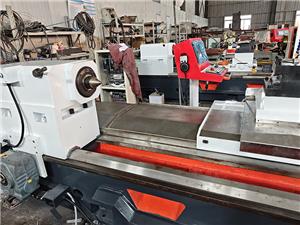
CNC combined lathes—also known as turn-mill centers or multi-tasking machines—address these pain points head-on. By integrating a powerful turning spindle with a high-speed milling spindle (and often a lower turret or subspindle), these machines can complete complex parts in a single setup. Let's break down the solutions.
Solution to Setup Time: One and Done
With a CNC combined lathe, you load the raw material once, and the machine performs all turning, milling, drilling, and tapping operations without re-fixturing. Setup time is reduced to a single event, and the risk of locational errors is eliminated. For the Ohio job shop, investing in a combined lathe from NANTONG LUCUBRATE MACHINERY TECHNICAL LTD. reduced their setup time from 4 hours to 45 minutes per part. Their on-time delivery rate jumped to 98%, and they were able to take on 30% more work without adding staff.
But it's not just about speed. The elimination of multiple setups also improves accuracy. When a part is re-fixtured, you introduce stacking tolerances. A combined lathe maintains a single datum, so concentricity and perpendicularity are inherently better. This is crucial for industries like aerospace, where a 0.001” deviation can mean a scrapped part.
Solution to Floor Space: Compact Powerhouses
A modern CNC combined lathe occupies about the same footprint as a standard turning center, yet it replaces two or three separate machines. This frees up valuable floor space for additional revenue-generating equipment or lean assembly cells. The UK manufacturer mentioned earlier replaced three turning centers and two machining centers with two combined lathes from NANTONG LUCUBRATE MACHINERY TECHNICAL LTD. Their floor space utilization improved by 40%, and they avoided a $500,000 expansion. Moreover, the reduced part travel minimized handling damage, cutting their scrap rate from 5% to 1.2%.
Energy consumption is another often-overlooked benefit. One combined lathe uses less power than two separate machines, and it reduces the HVAC load because there's less heat generation. For a shop running 24/7, that adds up to thousands of dollars in savings per year.
Solution to Labor Shortage: One Operator, Many Tasks
Combined lathes are force multipliers. A single operator can load a part, press cycle start, and then tend to another machine while the combined lathe runs unattended. With advanced features like bar feeders and part catchers, you can achieve lights-out operation for extended periods. The German automotive supplier implemented two combined lathes with automatic bar feeders and robotic loading. They were able to run a third shift with just one operator instead of three, and they increased output by 25%. The HR manager said, “We finally have a path to growth without needing to find unicorns.”
Furthermore, the learning curve for a combined lathe is not as steep as you might think. Modern CNC controls, like those on NANTONG LUCUBRATE MACHINERY TECHNICAL LTD.'s machines, feature intuitive interfaces and simulation software that allow operators to program and verify complex operations offline. This means you can upskill your existing turning operators to become multi-tasking experts in weeks, not years.
Customer Success Stories: Real Results from Real Shops
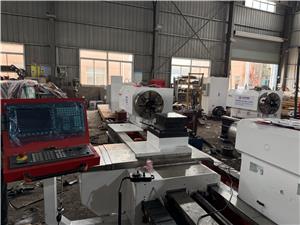
Let's look at four specific examples of companies that have harnessed the power of CNC combined lathes from NANTONG LUCUBRATE MACHINERY TECHNICAL LTD.
Case 1: Precision Medical Components in Minnesota, USA
"North Star Medical Devices" produces surgical instrument components from titanium. They struggled with burr formation and tolerance drift from multiple setups. After installing a LUCUBRATE combined lathe with a subspindle, they reduced cycle time by 35% and eliminated secondary deburring operations. Their scrap rate dropped from 8% to 0.5%. The production manager commented, “The ability to finish both ends of the part in one cycle has been a game-changer for our quality.”
Case 2: Automotive Transmission Parts in Stuttgart, Germany
"Schwaben Antriebstechnik" needed to increase throughput on aluminum valve bodies. They were running three shifts on two separate machines. With one LUCUBRATE combined lathe, they achieved a 50% reduction in floor-to-floor time and were able to consolidate to a single shift. Their cost per part fell by 22%. The lead engineer said, “We were skeptical about the rigidity of a combined machine, but the surface finishes we achieve are comparable to a dedicated mill.”
Case 3: Oil & Gas Fittings in Aberdeen, UK
"Caledonia Flow Control" manufactures high-pressure fittings from Inconel. The material is tough, and traditional turning inserts wore out quickly. The LUCUBRATE combined lathe's high-torque milling spindle and rigid construction allowed them to use advanced tooling and optimized cutting strategies. Tool life improved by 40%, and cycle time was cut by 28%. The shop foreman noted, “The machine's thermal stability is impressive; we hold tolerances all day long.”
Case 4: Aerospace Bushings in Montreal, Canada
"Aero Precision Machining" produces bushings for landing gear. They required a perfect surface finish and concentricity within 0.0005”. The LUCUBRATE combined lathe's integrated measuring probe and temperature compensation ensured consistent results. They reduced inspection time by 60% and increased production by 20%. The quality manager stated, “We now have the confidence to run unattended overnight, which we never could before.”
These stories highlight the tangible benefits: reduced cycle times, improved quality, and increased capacity—all without adding floor space or headcount.
Applications and Partnerships: Where Combined Lathes Shine
CNC combined lathes are versatile workhorses, but they excel in specific applications:
- Medical implants and instruments: Complex geometries, tight tolerances, and exotic materials like titanium and cobalt chrome.
- Aerospace components: Bushings, fittings, and hydraulic parts that require multi-axis machining and high precision.
- Automotive powertrain: Valve bodies, transmission shafts, and connectors that need both turning and milling.
- Oil & gas: High-pressure fittings, valves, and connectors made from tough alloys.
- General job shops: High-mix, low-volume work where setup time reduction is critical.
NANTONG LUCUBRATE MACHINERY TECHNICAL LTD. has established partnerships with distributors and machine integrators across North America and Europe. For example, they supply combined lathes to a network of authorized resellers who provide local service and support. One such partner, a distributor in the Netherlands, has integrated LUCUBRATE machines into turnkey production cells for several Tier 1 automotive suppliers. This collaboration ensures that end-users receive not just a machine, but a complete solution with process validation and training.
Moreover, LUCUBRATE works closely with tooling manufacturers to optimize cutting parameters for their machines. This partnership approach means that when you buy a combined lathe, you're getting a proven ecosystem, not just a piece of iron.
FAQ: Answers from the Shop Floor
Q1: What is the typical lead time for a CNC combined lathe, and how does installation work?
A: Lead times vary based on configuration, but typically 12-16 weeks from order to delivery. Installation is handled by factory-trained technicians who ensure the machine is leveled, calibrated, and producing parts to your specifications. We also provide on-site training for your operators. For a recent installation in Texas, the machine was up and running in 5 days, including a 2-day training session.
Q2: Can a combined lathe handle both small and large batches economically?
A: Absolutely. For small batches, the single-setup advantage reduces lead time dramatically. For large batches, the machine's rigidity and automation options (bar feeders, gantry loaders) allow for high-volume production. The key is to program efficiently; with features like parametric programming and tool life management, you can switch between jobs quickly.
Q3: How do you ensure accuracy when milling on a lathe? Isn't it less rigid?
A: Modern combined lathes use a rigid B-axis with a direct-drive milling spindle and a robust turret design. For example, LUCUBRATE's machines feature a cast iron bed and box ways for vibration damping. In tests, we've achieved milling tolerances of ±0.0005” and surface finishes of Ra 0.4 μm. It's not a lightweight attachment; it's a true machining center integrated into a lathe.
Q4: What about chip management? Combined operations generate a lot of chips.
A: Chip management is critical. Our machines are equipped with high-pressure coolant systems and efficient chip conveyors. The enclosure is designed to direct chips away from the work zone. We also offer options like chip shredders for stringy materials. In practice, customers report fewer chip-related downtime incidents compared to separate machines.
Q5: How does the cost of a combined lathe compare to buying two separate machines?
A: The initial investment for a combined lathe is typically 20-30% higher than a single turning center, but it replaces two or three machines. When you factor in the savings from reduced floor space, setup time, and labor, the payback period is often 12-18 months. For the Minnesota medical device company, the payback was 14 months based on scrap reduction and cycle time alone.
Conclusion: The Future of Machining is Combined
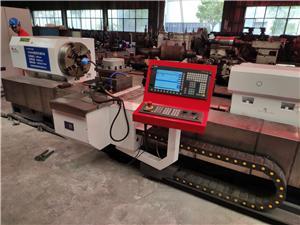
The evidence is clear: CNC combined lathes are not just a trend; they are a strategic response to the mounting pressures of modern manufacturing. By eliminating multiple setups, freeing up floor space, and empowering fewer operators to do more, these machines deliver a rapid return on investment. The customer stories from Minnesota to Germany illustrate that the benefits are real and measurable.
If you're tired of the setup shuffle, the space squeeze, and the labor headache, it's time to explore how a combined lathe can transform your shop. NANTONG LUCUBRATE MACHINERY TECHNICAL LTD. offers a range of combined lathes engineered for rigidity, precision, and ease of use. To learn more about the technical specifications and to see if a combined lathe is right for your operation, we invite you to download our comprehensive technical whitepaper, “The Economics of Multi-Tasking Machining.” Or, better yet, speak with one of our sales engineers who can walk you through a personalized cost-benefit analysis. Contact us today to schedule a consultation—your shop floor will thank you.