Why Cnc Combined Lathes Outperform?
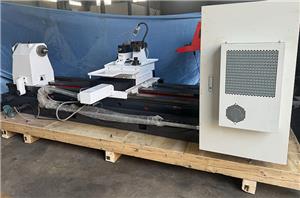
In the high-stakes world of precision machining, a single bottleneck can cascade into missed deadlines, inflated costs, and lost contracts. Picture this: a shop floor manager watching a batch of complex parts pile up because the turning center can’t handle the milling operations without a second setup. Each hour of downtime bleeds money, and the competition is only getting faster. This is the reality for many manufacturers still relying on conventional lathes. But what if you could eliminate those bottlenecks entirely? The answer lies in Cnc Combined Lathes—machines that integrate turning, milling, drilling, and tapping into a single, seamless workflow. In this blog, we’ll explore why these hybrid powerhouses are transforming the industry, backed by technical depth and real-world results.
The Pain Points: Where Traditional Lathes Fall Short
Before diving into solutions, let’s dissect the specific challenges that plague traditional lathe operations. These aren’t abstract issues; they’re daily frustrations that erode profitability.
Pain Point 1: Multiple Setups Inflate Cycle Times and Errors
In a typical job shop, producing a part with both turned and milled features requires moving the workpiece from a lathe to a milling machine. Each setup introduces positioning errors, and the cumulative tolerance stack-up can exceed ±0.005 inches—enough to scrap expensive aerospace components. Moreover, the extra handling adds 30-50% to cycle times. For a medium-volume run of 500 parts, that’s hundreds of hours lost annually. The cost? Not just machine time, but skilled labor, work-in-progress inventory, and the risk of rework.
Pain Point 2: Fixture Complexity and Tooling Costs
Traditional lathes often require custom fixtures to hold parts for secondary operations. Designing and building these fixtures can take weeks and cost thousands of dollars. For high-mix, low-volume production, the fixture overhead can eclipse the machining cost itself. Additionally, each setup demands a new tooling array, driving up inventory and changeover time. One European automotive supplier reported spending €120,000 annually on fixtures alone—a figure that could be slashed with combined machining.
Pain Point 3: Skilled Labor Shortage Amplifies Inefficiency
With the retirement of experienced machinists, finding operators who can seamlessly transition between lathe and mill operations is increasingly difficult. Training new hires on multiple machines takes months, and the learning curve often leads to costly mistakes. A survey by the National Association of Manufacturers found that 78% of shops struggle to fill skilled positions. The result: machines sit idle, and delivery schedules slip.
The Solution: How Cnc Combined Lathes Redefine Efficiency
Cnc Combined Lathes—also known as turn-mill centers—address these pain points head-on by consolidating operations into a single platform. Here’s how they deliver tangible benefits.
Solution 1: Single-Setup Machining Eliminates Errors
By integrating a powerful milling spindle and a tool turret with live tooling, combined lathes perform turning, milling, drilling, and tapping in one setup. This reduces positioning errors and achieves tolerances as tight as ±0.0002 inches. Cycle times drop by up to 40% because there’s no transfer between machines. For a typical aerospace part, this means cutting lead time from 10 days to 6—a game-changer for just-in-time production.
Solution 2: Eliminate Fixtures and Reduce Tooling Inventory
With combined lathes, the main spindle and subspindle act as the workholding, so complex fixtures become unnecessary. Bar feeders and part catchers automate the process further. Tooling costs decrease because the same tool can often be used for multiple operations. One study showed that shops implementing combined lathes reduced fixture costs by 70% and tooling inventory by 30%.
Solution 3: Simplify Operations and Empower Operators
Modern combined lathes feature intuitive CNC controls with graphical interfaces, making them accessible to operators with basic training. Advanced simulation software allows offline programming, so new parts can be proven out without occupying the machine. This reduces the skills barrier and allows shops to cross-train employees more easily. The result: higher machine utilization and a more resilient workforce.
At NANTONG LUCUBRATE MACHINERY TECHNICAL LTD., we’ve dedicated over two decades to refining combined lathe technology. Our machines are engineered with rigid cast iron beds, high-torque spindles, and advanced thermal compensation to ensure consistent performance in demanding environments.
Real-World Success: Customer Cases and Testimonials
Numbers speak louder than words. Here are four examples of how businesses transformed their operations with combined lathes from NANTONG LUCUBRATE MACHINERY TECHNICAL LTD.
Case 1: Precision Medical Components in Germany
Client: Müller Medizintechnik GmbH, Stuttgart
Challenge: Producing stainless steel bone screws with complex threads and cross-holes required three setups, leading to a 12% scrap rate.
Solution: Installing a LUCUBRATE combined lathe with a subspindle and live tooling.
Result: Scrap rate dropped to 1.5%, cycle time reduced by 35%, and annual savings exceeded €200,000.
Quote: “The integration of milling and turning has been seamless. Our operators love the ease of use, and our customers love the quality.” – Dr. Klaus Richter, Production Manager
Case 2: Automotive Transmission Shafts in the USA
Client: Midwest Gear & Shaft, Ohio
Challenge: High-volume production of splined shafts required multiple machines, causing bottlenecks and 20% overtime costs.
Solution: Two LUCUBRATE combined lathes with automatic bar feeders.
Result: Throughput increased by 50%, overtime eliminated, and lead times cut from 8 weeks to 4.
Quote: “We’ve doubled our output without adding floor space. The ROI was under 18 months.” – Sarah Thompson, Operations Director
Case 3: Aerospace Connectors in France
Client: AéroComposants SAS, Toulouse
Challenge: Machining titanium connectors with tight tolerances and complex geometries led to frequent tool breakages and 15% rework.
Solution: A LUCUBRATE combined lathe with high-pressure coolant and adaptive control.
Result: Tool life increased by 40%, rework reduced to 2%, and on-time delivery improved to 99%.
Quote: “The thermal stability of the machine is remarkable. We’ve seen consistent results even during long unattended runs.” – Jean-Luc Dubois, Manufacturing Engineer
Case 4: Oil & Gas Valves in Canada
Client: Alberta Valve Works, Edmonton
Challenge: Producing large valve bodies with multiple angled ports required expensive fixtures and long setups.
Solution: A heavy-duty LUCUBRATE combined lathe with a C-axis and driven tools.
Result: Setup time reduced from 6 hours to 45 minutes, and machining cost per part dropped by 28%.
Quote: “The flexibility to drill and mill at any angle has revolutionized our workflow. We can now take on jobs we previously outsourced.” – Mike Johnson, Shop Owner
Applications and Partnerships: Trusted by Industry Leaders
Cnc Combined Lathes from NANTONG LUCUBRATE MACHINERY TECHNICAL LTD. are deployed across diverse sectors, including:
- Aerospace: Engine components, landing gear parts, and structural fittings.
- Automotive: Transmission shafts, brake calipers, and steering knuckles.
- Medical: Orthopedic implants, surgical instruments, and dental components.
- Energy: Valve bodies, pump housings, and drilling connectors.
Our machines are trusted by tier-one suppliers and OEMs globally. For instance, we have a strategic partnership with a leading German automotive supplier, providing over 50 combined lathes for their powertrain division. Similarly, a major American aerospace contractor relies on our turn-mill centers for critical flight hardware. These collaborations underscore our commitment to quality and innovation.
FAQ: Engineers and Procurement Managers Ask
Here are answers to common questions from professionals evaluating combined lathes.
Q1: What are the typical tolerances achievable with Cnc Combined Lathes?
A: With proper thermal compensation and rigid construction, combined lathes can achieve turning tolerances of ±0.0002 inches (0.005 mm) and milling tolerances of ±0.0005 inches (0.0127 mm). However, actual performance depends on tooling, material, and environmental conditions. Our machines feature linear scales and cooling systems to maintain accuracy over long runs.
Q2: How do combined lathes handle chip control during milling operations?
A: Chip control is critical. Our machines use high-pressure coolant (up to 1000 psi) directed precisely at the cutting zone, breaking chips effectively. Additionally, the tool turret design allows for optimal chip evacuation, and programming can adjust feed rates to manage chip formation. For deep holes, we recommend peck drilling cycles with coolant-through tools.
Q3: What is the learning curve for operators transitioning from conventional lathes?
A: Operators with basic CNC experience typically become proficient in 1-2 weeks, thanks to our intuitive Siemens or Fanuc controls with graphical programming. We also provide comprehensive training and simulation software that allows operators to practice offline. Most shops report a smooth transition, with productivity gains within the first month.
Q4: How do you ensure thermal stability during long machining cycles?
A: Thermal stability is achieved through several design features: a cast iron bed with ribbed structure, symmetrical headstock design, and an active cooling system for ball screws and spindles. Our machines also incorporate thermal growth compensation algorithms in the CNC. In field tests, we’ve maintained ±0.0004 inches over 8-hour continuous runs.
Q5: What maintenance is required for the milling spindle?
A: The milling spindle requires periodic greasing (every 500 hours) and annual bearing inspection. We use sealed, maintenance-free bearings in many models. Our predictive maintenance system monitors vibration and temperature, alerting operators to potential issues before failure. This reduces unplanned downtime and extends spindle life.
Conclusion and Call to Action
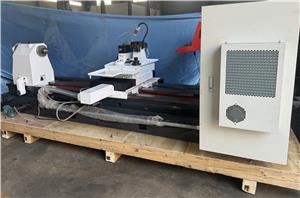
Cnc Combined Lathes are not just an upgrade; they’re a strategic investment that pays dividends through reduced setups, lower costs, and higher quality. As the manufacturing landscape evolves, embracing this technology can position your shop ahead of the competition. At NANTONG LUCUBRATE MACHINERY TECHNICAL LTD., we’re committed to helping you navigate this transition with expert guidance and robust machines.
Ready to explore how combined lathes can transform your operations? Contact our sales engineers for a personalized consultation. For a deeper technical dive, request our white paper, “Maximizing Efficiency with Turn-Mill Technology,” which includes detailed case studies and ROI analysis. Let’s turn your challenges into opportunities.