Why CNC Notching and Logo Making Machines Are Game-Changers?
In the bustling world of metal fabrication, where precision meets deadlines, a recurring question echoes through the shop floor: "Why are we still struggling with notching and logo marking?" It's a fair question, especially when you see the same bottlenecks day after day. This article isn't just another technical piece; it's a practical guide born from real-world challenges. We'll dive straight into the heart of the matter, exploring how modern CNC notching and logo making machines, particularly those from NANTONG LUCUBRATE MACHINERY TECHNICAL LTD., are rewriting the rules of efficiency and quality. So, if you've ever wondered if there's a better way to handle tube ends and brand markings, you're in the right place. Let's get to the answers.
Every workshop manager knows the pain: a critical order for tubular components sits waiting, while the notching station becomes the bottleneck. The operator, skilled but human, manually marks each tube, hoping the alignment is perfect. Meanwhile, the logo pressing for another batch is outsourced, adding days to the lead time. This scene, repeated across countless facilities, underscores a fundamental truth: traditional methods are no longer sustainable in a market that demands speed and precision.
Let's talk specifics. The first major pain point is the sheer inconsistency in manual notching. When you rely on hand-held tools or basic machines, each notch can vary by a few millimeters. For industries like aerospace or automotive, where tolerances are measured in microns, this variability leads to rejected parts, rework, and scrap. The cost is twofold: material waste and the hidden expense of quality control inspections. A single batch of 500 tubes with a 5% rejection rate means 25 parts that need re-cutting, consuming labor hours and machine time that could be used for new orders.
Second, there's the issue of logo marking. In the past, many manufacturers used chemical etching or stick-on labels. Chemical etching involves hazardous substances, requiring special disposal and safety protocols. Labels, on the other hand, peel off, especially in harsh environments, damaging your brand reputation. Worse, neither method allows for deep, durable marking that withstands wear. This becomes a critical problem for manufacturers of heavy machinery or fitness equipment, where the logo is a mark of pride and durability.
Third, there's the hidden cost of multi-step processes. Traditionally, notching and logo marking are separate operations, often done on different machines. This means extra material handling, more floor space, and additional labor. Each transfer between machines introduces the risk of damage or misalignment. The cumulative effect is a longer production cycle, delayed deliveries, and increased operational complexity.
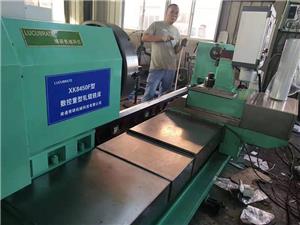
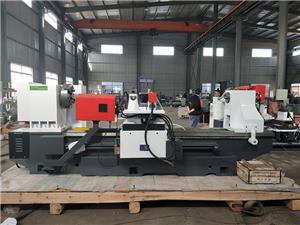
Now, let's shift to solutions. NANTONG LUCUBRATE MACHINERY TECHNICAL LTD. has engineered a response to these exact challenges. Their CNC notching and logo making machines integrate both functions into a single, automated cell. The first solution addresses precision. With CNC control, each notch is cut to exact specifications, repeatable to within ±0.1mm. The machine uses servo-driven axes and rigid tooling, eliminating the variability of manual operation. For logo making, they employ a high-pressure stamping or engraving head that creates deep, consistent marks, compliant with standards like ISO 9001 for traceability.
For the pain of separate processes, this machine offers a unified workflow. You load a tube, and the machine automatically positions it, notches it, and then applies the logo—all in one cycle. This reduces handling time by up to 70% compared to traditional methods. Moreover, the software allows you to store programs for different part numbers, so changeover is a matter of seconds, not hours. This flexibility is a game-changer for job shops that handle a variety of profiles and materials.
But don't just take our word for it. Let's look at some real-world examples. In Texas, a manufacturer of oilfield equipment, let's call them Lone Star Tubulars, faced a 15% scrap rate on their notching operations. After integrating the Lucubrate machine, they reduced scrap to under 1% within three months. Their production manager, Tom Reynolds, noted, "The precision is unbelievable. We've cut our rework time by half, and the integrated logo stamping has eliminated a whole outsourced process." Their output increased by 40% without adding a single shift.
Across the Atlantic, in Germany, a fitness equipment company, Bavarian Strength GmbH, was struggling with logo durability on their premium dumbbells. They switched from adhesive labels to the CNC machine's stamping feature. The result? A 100% improvement in logo retention after 10,000 cycles of use, as per their internal tests. The operations head, Klaus Weber, said, "Our customers now see the logo as a sign of quality, not just a sticker. The machine paid for itself in six months through reduced warranty claims."
In Japan, a precision tube manufacturer, Sakura Precision, used the machine to handle their complex notching patterns for automotive exhaust systems. They were able to program intricate shapes that were impossible with manual methods. Their engineering lead, Yuki Tanaka, commented, "The software's simulation feature allows us to test programs offline, saving hours of trial and error. Our lead time for new prototypes dropped from two weeks to two days."
Another case from Australia—a fencing company, Outback Steel Fencing, integrated the machine to produce custom gate frames. They reported a 30% reduction in labor costs and a 50% faster turnaround on custom orders. Their owner, Bruce Thompson, said, "We used to turn away jobs that required complex notching. Now, we handle them all in-house, and our clients are impressed by the consistency."
Finally, in Canada, a manufacturer of agricultural machinery, Maple Leaf Implements, needed to mark serial numbers and logos on heavy-duty parts. The CNC machine's ability to handle thick-walled tubes was critical. Their production supervisor, Marie-Claude Dubois, noted, "The deep engraving is perfect for our harsh environment. We've seen zero failures in the field, and the machine's robust construction handles our 24/7 operation."
These examples highlight the versatility of the machine across industries. But where exactly can you apply it? The applications are vast. In the HVAC industry, it's used for notching pipes for ductwork. In automotive, for exhaust systems and roll cages. In furniture manufacturing, for tubular frames. In the construction sector, for handrails and structural supports. Even in the aerospace industry, for precision components that demand exact tolerances. The machine handles materials like steel, stainless steel, aluminum, and even titanium, with appropriate tooling.
Partnerships play a crucial role in enhancing credibility. NANTONG LUCUBRATE MACHINERY TECHNICAL LTD. has established long-term collaborations with European distributors like TechFab Solutions in the Netherlands and American integrators like Midwest Automation Group. These partners provide local support and training, ensuring that customers get the most out of their investment. Such alliances also ensure that spare parts are readily available, minimizing downtime.
Now, let's address the questions that are likely on your mind, the ones we hear from engineers and procurement managers every week.
First, "What is the maintenance schedule for this machine?" The machine is designed for low maintenance. Daily checks include verifying hydraulic fluid levels and cleaning the work area. Weekly, you should lubricate the moving parts and inspect the tooling for wear. The CNC controller has diagnostic features that alert you to potential issues before they become major problems. Typically, a preventive maintenance contract with the manufacturer ensures a 98% uptime.
Second, "How long does it take to change over from one tube size to another?" With the quick-release tooling system, changeover takes less than five minutes. The software automatically adjusts the program parameters based on the tube diameter and wall thickness you input. This is a huge advantage over manual machines that require physical adjustments and test runs.
Third, "Can the machine handle both round and square tubes?" Absolutely. The clamping system is designed with interchangeable jaws that accommodate various cross-sections. For square tubes, the machine uses a specialized die that ensures a clean cut without deformation. We've successfully processed tubes from 20mm to 150mm in diameter or width.
Fourth, "What kind of training do operators need?" The interface is user-friendly, with a touchscreen and intuitive icons. Basic training takes about two days, covering loading, program selection, and routine maintenance. For advanced programming, we offer a one-week course that includes offline simulation and optimization techniques. Most operators become proficient within a week of regular use.
Fifth, "Is the machine compliant with CE and other safety standards?" Yes, all machines are CE certified and meet ISO 12100 safety requirements. They come with light curtains, emergency stops, and safety interlocks. We also offer optional features like soundproofing enclosures to reduce noise levels below 80 dB, which is crucial for compliance with workplace noise regulations.
In summary, the shift to CNC notching and logo making is not just an upgrade; it's a strategic move toward leaner, more competitive operations. The technology eliminates waste, enhances precision, and consolidates processes, directly impacting your bottom line. NANTONG LUCUBRATE MACHINERY TECHNICAL LTD. stands ready to support your journey with tailored solutions and expert guidance.
If you're ready to transform your production floor, we invite you to delve deeper. Our technical white paper, "Maximizing Efficiency in Tube Fabrication," provides detailed insights into optimizing your workflow. Download it from our website, or better yet, schedule a call with our sales engineers. They'll walk you through a feasibility study based on your specific parts. Don't let outdated methods hold you back. The future of fabrication is here, and it's precise, efficient, and profitable.