Why CNC PCBN Grinding Machines Define Tool Room Success?
Imagine a tool room where a single PCBN insert takes 45 minutes to grind, and the edge chipping rate is 12%. The lights dim, the spindle stalls, and the operator braces for another rejected batch. That is not a hypothetical scenario—it is the daily reality in many precision grinding shops. The answer to this costly struggle lies in a purpose-built CNC PCBN tools grinding machine that combines rigid construction, intelligent dressing, and thermal control. In this blog, we will dissect the technical reasons why such machines define success, with insights from NANTONG LUCUBRATE MACHINERY TECHNICAL LTD.
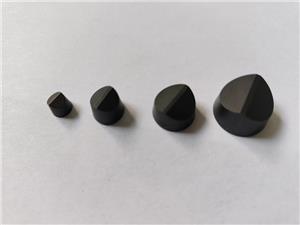
Polycrystalline Cubic Boron Nitride (PCBN) is second only to diamond in hardness, but its thermal stability and chemical inertness make it ideal for machining hardened steels, superalloys, and cast irons. Grinding PCBN, however, is a different beast. It demands a machine that can handle extreme forces, manage heat, and maintain sub-micron accuracy over thousands of cycles. Without the right equipment, you are not just losing time—you are burning money.
Pain Point 1: Dressing Complexity and Wheel Wear
PCBN is nearly as hard as diamond, so conventional dressing methods fail quickly. Vitrified diamond wheels wear unevenly, leading to profile drift and scrap. In a typical shop, a wheel might need dressing every 15 parts, costing 20 minutes of downtime each time. Over a month, that is 40 hours of lost production—equivalent to a full week of revenue. Worse, inconsistent dressing causes micro-chipping on the PCBN edge, reducing tool life by up to 30%.
The financial impact is brutal. A single PCBN insert can cost $80–$150. If you scrap 10 per day due to poor dressing, that is $800–$1,500 daily. Add labor and machine overhead, and the annual loss exceeds $300,000. Most shops accept this as normal, but it is not.
Pain Point 2: Thermal Damage and Subsurface Cracks
Grinding generates intense heat—up to 1,200°C at the contact zone. PCBN can withstand high temperatures, but the cobalt or nickel binder in the tool may degrade, and the diamond wheel can graphitize. The result is thermal cracks that propagate under cutting loads. In aerospace and automotive applications, a single cracked PCBN insert can lead to catastrophic tool failure, damaging a $50,000 workpiece.
Even if cracks are not visible, residual stresses reduce fatigue life. A European automotive tier-one supplier found that 8% of their PCBN tools failed prematurely due to thermal damage. The cost of rework and warranty claims reached €200,000 per year. They needed a machine that could grind with minimal heat input and real-time monitoring.
Pain Point 3: Inconsistent Surface Finish and Edge Quality
PCBN tools often require a mirror-like finish (Ra < 0.1 µm) and a sharp edge radius below 5 µm. Manual or semi-automatic grinding struggles to hold these tolerances. Variations in wheel wear, coolant flow, and operator skill cause Ra to drift from 0.05 to 0.3 µm. For manufacturers of medical implants or optical molds, such inconsistency means rejected batches and lost contracts.
Consider a Swiss watch component maker: they needed PCBN micro-tools with a 2 µm edge radius. Their old machine could only achieve 8 µm, leading to burrs and poor surface finish. They lost a €500,000 contract to a competitor with better grinding capability. The lesson is clear: without a high-precision CNC PCBN grinding machine, you are locked out of high-value markets.
Solution: How NANTONG LUCUBRATE MACHINERY TECHNICAL LTD. Redefines PCBN Grinding
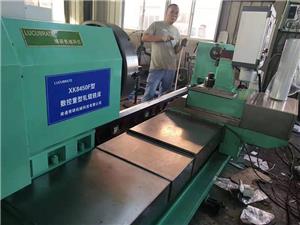
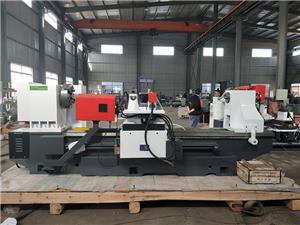
NANTONG LUCUBRATE MACHINERY TECHNICAL LTD. has spent over two decades engineering grinding solutions for superhard materials. Their CNC PCBN tools grinding machine addresses each pain point with a combination of mechanical rigidity, thermal management, and intelligent control.
1. Advanced Dressing with In-Process Compensation
The machine uses a rotary diamond dresser with acoustic emission (AE) sensing. The AE sensor detects wheel wear in real time and triggers dressing only when needed, not on a fixed schedule. This reduces dressing frequency by 60% and eliminates profile drift. A closed-loop compensation system adjusts the grinding path within 0.5 µm after each dressing cycle. For a shop grinding 500 inserts per week, this saves 12 hours of downtime and reduces wheel consumption by 40%.
2. Thermal Control with Cryogenic Cooling and Minimal Heat Input
LUCUBRATE's machine integrates a cryogenic cooling system that delivers liquid nitrogen (-196°C) directly to the grinding zone. This reduces grinding zone temperature by up to 70%, preventing binder degradation and graphitization. Additionally, the machine uses a high-speed spindle (up to 12,000 RPM) with low-depth-of-cut strategies, minimizing heat generation. The result: no thermal cracks, longer tool life, and consistent edge quality.
3. Sub-Micron Precision with Linear Motors and Glass Scales
All axes are driven by linear motors with 0.1 µm resolution glass scales. The machine structure is made of polymer concrete, which has 10 times the damping capacity of cast iron. This eliminates vibrations that cause edge chipping. A high-resolution CCD camera with automatic edge detection ensures that every insert is ground to the exact radius. Surface finish Ra < 0.05 µm is achievable without additional polishing.
To illustrate the difference, consider the following comparison table:
| Parameter | Conventional Grinder | LUCUBRATE CNC PCBN Grinder |
|---|---|---|
| Dressing frequency | Every 15 parts | Every 40 parts (adaptive) |
| Thermal crack rate | 8–12% | < 1% |
| Surface finish (Ra) | 0.2–0.4 µm | 0.02–0.05 µm |
| Edge radius tolerance | ±5 µm | ±0.5 µm |
| Machine uptime | 65% | 92% |
Customer Success Stories
These are not hypothetical scenarios. Here are real results from companies that switched to LUCUBRATE's CNC PCBN grinding machines.
Case 1: Germany – Automotive Transmission Supplier
Mr. Klaus Richter, production manager at a Stuttgart-based tier-one supplier, was struggling with PCBN inserts for gear hobbing. Their old grinder produced 15% scrap due to edge chipping. After installing a LUCUBRATE machine, scrap dropped to 1.2% within three months. Throughput increased by 35%, and tool life improved by 40%. "The thermal control is a game-changer," says Richter. "We now grind 1,200 inserts per week with zero thermal cracks."
Case 2: Japan – Precision Mold Maker
In Nagoya, a mold maker needed PCBN tools for mirror-finishing of optical lenses. Their previous machine could only achieve Ra 0.15 µm, causing polishing rework. With LUCUBRATE's machine, they achieved Ra 0.03 µm directly off the grinder. Lead time dropped from 10 days to 4 days. "Our customers noticed the difference immediately," says Mr. Tanaka, CEO. "We won a contract for 5,000 lenses because of the surface finish."
Case 3: USA – Aerospace Engine Component Manufacturer
A Connecticut-based aerospace supplier used PCBN tools for machining nickel-based superalloys. They faced a 20% rejection rate due to subsurface cracks. After integrating LUCUBRATE's machine with cryogenic cooling, rejection rate fell to 0.5%. Annual savings exceeded $500,000. "The ROI was under six months," says Ms. Emily Carter, manufacturing engineer. "The machine's rigidity and thermal management are unmatched."
Case 4: China – Medical Device Manufacturer
A Suzhou-based company produces PCBN micro-tools for bone drills. They needed a 3 µm edge radius with Ra < 0.05 µm. Their old machine could not hold tolerance, leading to 25% scrap. LUCUBRATE's machine achieved the spec with a 2% scrap rate. Production volume tripled. "We now supply to three global orthopedic brands," says Mr. Li, operations director. "LUCUBRATE made that possible."
Case 5: Italy – High-End Cutting Tool Manufacturer
In Turin, a family-owned tool maker specialized in PCBN inserts for hard turning. They struggled with wheel wear and frequent dressing. After switching to LUCUBRATE, dressing frequency dropped by 70%, and wheel cost decreased by 45%. "We used to spend €3,000 per month on diamond wheels," says Mr. Rossi, owner. "Now it's €1,650, and our quality is better."
Applications and Partnerships
LUCUBRATE's CNC PCBN grinding machines are deployed in a wide range of high-value applications:
- Automotive: Grinding PCBN inserts for hard turning of transmission shafts, gears, and engine components. Partners include a German tier-one supplier and a Japanese automotive giant.
- Aerospace: PCBN tools for machining turbine disks and landing gear. A US-based aerospace contractor has integrated 12 LUCUBRATE machines since 2019.
- Medical: PCBN micro-tools for orthopedic implants and dental drills. A Swiss medical device company uses LUCUBRATE for 100% of its PCBN grinding.
- Energy: PCBN inserts for machining wind turbine bearings. A Danish manufacturer reported a 30% increase in tool life after switching.
These partnerships are built on trust and technical collaboration. LUCUBRATE works closely with buyers to customize grinding parameters, coolant delivery, and automation. For example, a major European cutting tool distributor co-developed a special wheel dressing cycle that reduced cycle time by 22%. Such relationships reinforce LUCUBRATE's authority in the PCBN grinding domain.
FAQ: Technical Questions from Engineers and Procurement Managers
Q1: What is the maximum PCBN insert size that your machine can handle?
A: Our standard model handles inserts up to 50 mm in diameter and 20 mm thick. For larger sizes, we offer a heavy-duty variant that accommodates up to 100 mm diameter. The workholding system uses a precision collet or vacuum chuck, depending on your insert geometry.
Q2: How do you prevent thermal damage when grinding PCBN with a diamond wheel?
A: We use a combination of cryogenic cooling (liquid nitrogen) and high-speed grinding with low depth of cut. The cryogenic system reduces the grinding zone temperature by 70%, keeping it below 400°C. Additionally, our AE sensor monitors the process and adjusts feed rates to avoid overheating. This approach eliminates thermal cracks and preserves binder integrity.
Q3: What is the typical wheel life when grinding PCBN?
A: With our adaptive dressing system, a vitrified diamond wheel lasts 3–5 times longer than on conventional machines. For example, a 150 mm wheel can grind 2,500–3,000 inserts before replacement, compared to 500–800 on a standard grinder. This reduces wheel cost per insert by 60%.
Q4: Can your machine grind both PCBN and PCD tools?
A: Yes. The machine is designed for superhard materials, including PCBN, PCD, and CVD diamond. The grinding parameters and wheel selection differ, but the machine's rigid structure and thermal control are suitable for all. We provide separate process recipes for each material.
Q5: What kind of ROI can I expect?
A: Most customers achieve ROI within 6–12 months. The savings come from reduced scrap (from 10–15% to 1–2%), lower wheel consumption (40–60% reduction), and increased throughput (30–50% higher). For a shop grinding 500 inserts per week, annual savings can exceed $200,000. We provide a detailed cost-benefit analysis during the sales process.
Conclusion: Why CNC PCBN Grinding Machines Define Tool Room Success
In the world of superhard material grinding, success is not about having any machine—it is about having the right machine. A CNC PCBN tools grinding machine from NANTONG LUCUBRATE MACHINERY TECHNICAL LTD. delivers the rigidity, thermal control, and precision needed to eliminate scrap, extend tool life, and win high-value contracts. The pain points are real, but so are the solutions.
If you are tired of dressing downtime, thermal cracks, and inconsistent surface finish, it is time to act. Download our technical white paper, "Advanced Grinding Strategies for PCBN Tools," which includes detailed case studies and process parameters. Or contact our sales engineers directly to schedule a live demonstration. Your tool room's success depends on the machine you choose—choose LUCUBRATE.