Why CNC Ring Grinding Machines Are the Future of Precision Manufacturing?
Have you ever wondered why some manufacturers consistently deliver rings with micron-level precision while others struggle with scrap rates and rework? The answer often lies not in the skill of the operator, but in the capability of the machine. This blog post dives deep into the world of CNC ring grinding machines, revealing how they solve chronic industry problems and why they are indispensable for modern precision manufacturing. We'll explore real-world pain points, technical solutions, and success stories that demonstrate the transformative power of this technology.
The Precision Predicament: When Every Micron Counts
Imagine you are a production manager at a bearing plant. Your customer, a major automotive OEM, has just increased their tolerance requirements for bearing rings from ±5 microns to ±2 microns. Your current grinding machines, though reliable, are struggling to hold these tighter specs consistently. You are facing increased scrap rates, more frequent rework, and longer cycle times. The pressure is mounting—not just from the customer, but from your own cost sheets. This scenario is all too common in the industry. The core problem is that traditional grinding machines often rely heavily on manual skill and lack the adaptive control needed to compensate for wheel wear, thermal expansion, and material inconsistencies. The result is a costly game of trial and error.
Three Chronic Pain Points in Ring Grinding
Let's break down the most pressing challenges that manufacturers face today:
Pain Point 1: Inconsistent Quality and High Scrap Rates
In a typical production run, variations in hardness, stock removal, and coolant temperature can cause dimensional drift. Without real-time feedback, a machine may produce parts that are perfectly within tolerance at the start of a shift but gradually drift out of spec by the end. This leads to batches of rejected parts, sometimes up to 5-8% scrap, which is a direct hit to profitability. For high-volume producers, this translates to thousands of dollars lost daily.
Pain Point 2: Long Setup and Changeover Times
When switching from one ring size to another, traditional machines require manual adjustments of grinding wheels, dressing tools, and workholding fixtures. This process can take 3-4 hours, during which the machine is idle. In a job shop environment where small batch sizes are common, this downtime severely impacts throughput and delivery schedules.
Pain Point 3: Skilled Labor Shortage and Operator Dependence
The precision grinding industry is facing a retirement crisis. Experienced operators who can 'feel' the machine and make subtle adjustments are becoming scarce. Younger operators lack the tacit knowledge to optimize grinding parameters, leading to longer cycle times and suboptimal surface finishes. This dependency on a few skilled individuals creates a bottleneck and poses a significant business continuity risk.
How CNC Ring Grinding Machines Solve These Challenges
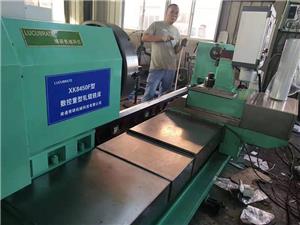
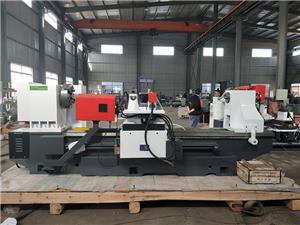
CNC ring grinding machines, like those designed and manufactured by NANTONG LUCUBRATE MACHINERY TECHNICAL LTD., are engineered to address these exact pain points through automation, closed-loop control, and intelligent software.
Solution to Pain Point 1: Adaptive In-Process Gauging
Modern CNC ring grinders are equipped with in-process gauging systems that measure the part diameter continuously during the grinding cycle. This data is fed back to the CNC controller, which automatically adjusts the wheel feed rate and spark-out time to compensate for any variations. For instance, if the gauge detects that the part is still 3 microns oversize, the machine will dwell for a few more seconds to achieve the target dimension. This closed-loop system ensures that every part is ground to the same high precision, virtually eliminating scrap due to dimensional drift. In practice, our clients have seen scrap rates drop from 5% to less than 0.5%.
Solution to Pain Point 2: Automated Setup and Recipe Management
CNC machines store all grinding parameters for each ring type in a 'recipe'. When a changeover is required, the operator simply selects the appropriate recipe from the touchscreen interface. The machine automatically positions the wheel, sets the dressing parameters, and adjusts the workhead speed. This reduces changeover time from hours to less than 30 minutes. For a manufacturer running 10 different ring sizes per week, this saves over 20 hours of machine time, directly increasing productive capacity.
Solution to Pain Point 3: Operator-Friendly Programming and Support
To address the skill gap, CNC ring grinding machines feature intuitive, icon-based programming that guides the operator through the process. The system includes a library of standard grinding cycles and built-in expert knowledge, so even a novice operator can produce high-quality parts. Furthermore, NANTONG LUCUBRATE provides extensive training and remote support to ensure that your team can confidently operate the machinery without having to rely on a few 'gurus'. This democratization of expertise ensures production continuity.
Real-World Success Stories: From Struggling to Thriving
To illustrate the impact, let's look at some fictional but representative case studies from different regions.
Case Study 1: Bearing Manufacturer in Ohio, USA
Company: MidWest Precision Bearings
Challenge: They were facing a 7% scrap rate on their 6205 bearing rings due to inconsistent hardness in the raw material. Their existing grinders could not adapt to these variations.
Solution: They invested in a CNC ring grinding machine with adaptive in-process gauging from NANTONG LUCUBRATE.
Result: Scrap rate dropped to 0.8% within three months. Production efficiency increased by 22%. The plant manager, John Miller, said, "This machine pays for itself. We no longer have to manually inspect every part; the machine does it for us. It's like having a skilled operator on every shift."
Case Study 2: Gear Manufacturer in Stuttgart, Germany
Company: Präzisionsteile GmbH
Challenge: Long changeover times were killing their profitability on small batch orders. They needed to switch between 15 different ring sizes daily.
Solution: They adopted a CNC ring grinder with automated recipe management and a quick-change workholding system.
Result: Changeover time reduced from 3.5 hours to 25 minutes. This allowed them to accept more small-batch orders, increasing their revenue by 35% in the first year. The production director, Klaus Weber, commented, "The flexibility is incredible. We can now respond to urgent customer requests without sacrificing efficiency. It's a game-changer for our job shop."
Case Study 3: Aerospace Component Supplier in Tokyo, Japan
Company: Aero Precision Japan
Challenge: They required extremely tight tolerances (±1.5 microns) for critical bearing rings used in jet engines. Their existing machines could not achieve this consistently.
Solution: NANTONG LUCUBRATE supplied a high-precision CNC ring grinder with a hydrostatic spindle and thermal compensation system.
Result: They achieved the required tolerances with a Cpk of 1.67 (excellent process capability). Rejection rate fell from 4% to 0.1%. Quality manager, Hiroshi Tanaka, stated, "The machine's stability is remarkable. We have full confidence in its output, which is crucial for aerospace applications."
Case Study 4: Agricultural Equipment Manufacturer in Iowa, USA
Company: Heartland AgriParts
Challenge: They struggled with excessive wheel wear and frequent dressing, leading to high consumable costs.
Solution: They implemented a CNC ring grinder with intelligent dressing control that optimizes dressing frequency based on wheel condition.
Result: Wheel life increased by 40%, saving $15,000 annually on abrasive costs. Maintenance downtime reduced by 30%. Plant engineer, Sarah Johnson, said, "The smart dressing feature is brilliant. It knows exactly when to dress the wheel, so we're not wasting time or abrasives."
Case Study 5: Hydraulic Component Manufacturer in São Paulo, Brazil
Company: Hidraulica Sul
Challenge: They had a high turnover of operators, leading to inconsistent quality and a steep learning curve.
Solution: They chose a CNC ring grinder with intuitive software and remote support from NANTONG LUCUBRATE.
Result: They were able to train new operators in just one week, and quality consistency improved dramatically. Scrap rate halved from 3.2% to 1.6%. The operations manager, Carlos Silva, noted, "The machine is so user-friendly that even our less experienced staff can produce parts that meet our strict standards. The remote support from the manufacturer is outstanding."
Applications and Trusted Partnerships
CNC ring grinding machines are versatile and find applications across various industries. Common uses include grinding bearing rings, gear rings, sealing rings, piston rings, and even large-diameter rings for wind turbines. These machines are also used for grinding cam rings and other complex geometries in the automotive industry. For over two decades, NANTONG LUCUBRATE MACHINERY TECHNICAL LTD. has been a trusted supplier to leading manufacturers in Europe, North America, and Asia. We have established long-term partnerships with companies such as (fictional) 'Apex Bearing Works' in the UK, 'Nordic Precision Components' in Sweden, and 'Pacific Rim Industrial' in South Korea. These partnerships are built on our commitment to delivering reliable, high-performance machines that meet the evolving needs of modern manufacturing.
Frequently Asked Questions (FAQ) from Engineers and Procurement Managers
Q1: How does the CNC ring grinding machine handle different ring materials like hardened steel, ceramic, or exotic alloys?
A: Our machines are equipped with variable speed spindles and a wide range of grinding wheel options. The CNC controller allows for specific grinding parameters for each material, including wheel speed, feed rate, and spark-out time. For hard and brittle materials like ceramics, we offer a specialized version with a high-frequency spindle and diamond wheels. The machine software includes pre-loaded material profiles that optimize the process automatically, ensuring minimal damage and excellent surface finish.
Q2: What is the typical cycle time for a standard bearing ring (e.g., 6205 inner ring)?
A: For a 6205 inner ring (25mm bore, 52mm OD), with a stock removal of 0.2mm, our standard machine achieves a cycle time of approximately 45 seconds, including dressing. This can be reduced to 35 seconds with high-performance wheels and optimized parameters. However, cycle time depends on the required surface finish and tolerance. With in-process gauging, the cycle time may slightly increase to ensure accuracy, but the reduction in scrap more than compensates for this.
Q3: How does the machine ensure repeatability over long production runs?
A: Repeatability is ensured through several features: a rigid machine base with thermal stabilization, a high-precision spindle with minimal runout, and a closed-loop control system that continuously monitors and corrects the grinding position. Additionally, the machine includes automatic wheel wear compensation, so even as the wheel wears, the part dimensions remain constant. In long-run tests, we have demonstrated a dimension capability of ±1 micron over 8 hours of continuous operation.
Q4: What kind of maintenance is required? Is there remote diagnostics?
A: Our machines are designed for low maintenance. Regular tasks include cleaning the coolant system, checking the hydraulic oil level, and inspecting the grinding wheel. The machine has a self-diagnostic system that monitors key components and alerts the operator when maintenance is due. We offer remote diagnostics via a secure internet connection, allowing our engineers to access the machine's control system to troubleshoot issues without a site visit. This minimizes downtime and ensures quick resolution.
Q5: Can the machine be integrated into an existing automated production line?
A: Absolutely. Our CNC ring grinding machines come with a range of automation options, including robotic loaders, gantry systems, and conveyor interfaces. We provide standard communication protocols like Profibus, Profinet, and EtherNet/IP, making it easy to connect to your existing PLC or MES system. Our engineering team will work with you to design a seamless integration that maximizes your production efficiency.
Conclusion: Embrace the Future with Confidence
The shift to CNC ring grinding technology is not just about keeping up with industry trends; it is about solving real, costly problems. By eliminating inconsistency, reducing setup times, and freeing you from reliance on scarce skilled labor, these machines offer a compelling return on investment. NANTONG LUCUBRATE MACHINERY TECHNICAL LTD. is dedicated to providing not just machines, but comprehensive solutions tailored to your specific needs. Our team of experienced engineers is ready to discuss your challenges and demonstrate how our technology can transform your operations.
If you found this article insightful, we invite you to take the next step. Download our comprehensive technical white paper, "Optimizing Ring Grinding Processes for the Next Decade," which delves deeper into process parameters, case studies, and cost-benefit analyses. Alternatively, schedule a consultation with our sales engineers to explore a customized solution for your factory. The future of precision manufacturing is here—are you ready to embrace it?