Why CNC Roll Notching & Branding Machines?
Imagine this: It's 2 a.m. on a Tuesday, and your production line has been down for three hours. The culprit? A worn-out notching die that's causing inconsistent cuts on a batch of transformer core laminations. Your team is scrambling, the scrap bin is filling up, and the customer waiting for that shipment is already threatening penalties. You're not alone. This scenario plays out in manufacturing plants worldwide, and it's exactly why the right CNC roll notching and branding machine can be a game-changer. In this blog, we'll dive deep into how these machines address critical pain points, boost efficiency, and deliver measurable ROI. We'll also share real-world examples and technical insights to help you make informed decisions.
Pain Points: The Hidden Costs of Inefficient Notching and Branding
Pain Point 1: Inconsistent Notch Quality Leading to Scrap and Rework
In industries like transformer manufacturing, the precision of notches on core laminations directly affects magnetic properties and assembly fit. Manual or semi-automatic notching often suffers from tool wear, misalignment, and operator variability. The result: notches that are too deep, too shallow, or improperly angled. This leads to scrap rates as high as 5-8% in some operations. For a mid-sized plant producing 100,000 laminations per month, that's 5,000-8,000 wasted pieces. At a material cost of $2 per lamination, that's $10,000-$16,000 in direct material loss alone, not to mention the labor and energy consumed. Additionally, rework adds 15-20% to production time, delaying shipments and increasing overtime costs.

Pain Point 2: Slow Branding Processes Causing Bottlenecks
Branding—whether for traceability, branding, or regulatory compliance—is often an afterthought. Manual stamping or separate branding stations create bottlenecks. For example, a European manufacturer of electrical steel components used a manual press for branding, which required an extra operator and added 30 seconds per piece. With a production rate of 120 pieces per hour, that's an extra hour of labor per 120 pieces. Over a year, this adds up to thousands of dollars in labor costs and limits throughput. Moreover, inconsistent branding depth can lead to illegible marks, causing traceability issues and potential recalls.
Pain Point 3: Frequent Tool Changes and Maintenance Downtime
Notching tools wear out, and changing them requires skilled technicians and downtime. In a typical setup, a tool change might take 30-60 minutes. If you're running multiple profiles, changeovers can happen 2-3 times per shift. That's 1-3 hours of lost production per day. For a plant running 24/5, that's 5-15 hours per week, equivalent to 2-6% of total production time. The cost of downtime varies, but at $100 per hour in overhead, it's $500-$1,500 per week. Additionally, improper tool maintenance can lead to premature failure, increasing tooling costs by 20-30%.
Solutions: How CNC Roll Notching and Branding Machines Address These Challenges
Solution 1: Precision CNC Control for Consistent Notch Quality
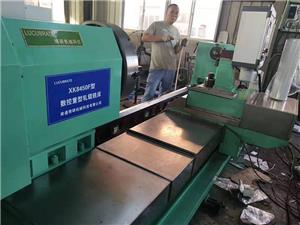
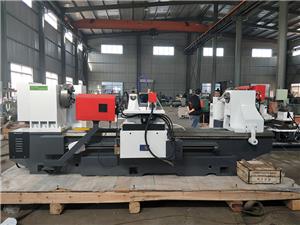
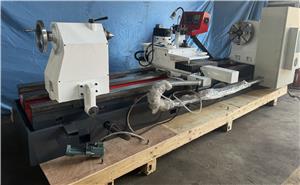
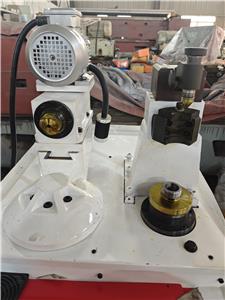
A CNC roll notching and branding machine, like those engineered by NANTONG LUCUBRATE MACHINERY TECHNICAL LTD., uses servo-driven axes and advanced control algorithms to ensure repeatable notch geometry. The machine's roller-based notching system applies uniform pressure, minimizing tool wear and maintaining consistency over long runs. With real-time monitoring and automatic compensation for tool wear, scrap rates can be reduced to below 1%. For the transformer manufacturer mentioned earlier, this translates to savings of $8,000-$13,000 per month in material costs alone, plus reduced rework and faster cycle times.
Solution 2: Integrated Branding for Streamlined Production
By integrating branding into the notching process, these machines eliminate separate branding stations. The branding unit can be synchronized with the notching cycle, adding marks without additional time. For the European manufacturer, this meant eliminating one operator per shift and increasing throughput by 15%. The branding depth is precisely controlled via CNC, ensuring legibility and compliance. Over a year, labor savings alone can exceed $50,000, not to mention the reduction in floor space and work-in-progress.
Solution 3: Quick-Change Tooling and Predictive Maintenance
Modern CNC roll notching machines feature quick-change tooling systems that reduce changeover time to under 10 minutes. With standardized tool holders and preset adjustments, operators can switch profiles with minimal downtime. Additionally, predictive maintenance algorithms analyze tool wear and alert operators before failure, preventing unplanned downtime. For a plant with three changeovers per day, this saves 1-2 hours daily, boosting overall equipment effectiveness (OEE) by 5-10%. Tool life is also extended by 20% through optimized notching parameters.
Customer Cases: Real Results from Real Manufacturers
Case 1: Müller Elektrotechnik GmbH, Germany
Müller Elektrotechnik, a producer of transformer cores, struggled with a 6% scrap rate due to inconsistent notches. After installing a CNC roll notching and branding machine from NANTONG LUCUBRATE MACHINERY TECHNICAL LTD., scrap dropped to 0.8% within three months. Production speed increased by 20%, and branding integration saved two hours of labor per day. "The precision and reliability of the Lucubrate machine have transformed our quality control," said Production Manager Klaus Richter. "We've seen a 25% increase in overall throughput and a significant reduction in customer complaints."
Case 2: PowerCore Industries, USA
Based in Ohio, PowerCore Industries manufactures electrical steel laminations for the automotive sector. They faced frequent tool changes and high maintenance costs. The Lucubrate machine's quick-change tooling and predictive maintenance features reduced changeover time by 70% and maintenance costs by 30%. "We used to spend hours changing tools; now it's a matter of minutes," noted Plant Engineer Sarah Thompson. "The machine's self-diagnostic capabilities have virtually eliminated unplanned downtime." Within six months, OEE improved from 65% to 78%.
Case 3: ElectroStampi S.r.l., Italy
ElectroStampi, a manufacturer of stamped components, needed to improve branding traceability. The integrated branding unit on the Lucubrate machine allowed them to mark each part with a unique code at full production speed. Labor costs dropped by $40,000 annually, and traceability compliance improved. "The integration of branding with notching is a game-changer," said Operations Manager Marco Bianchi. "We've eliminated a bottleneck and improved our product traceability, which our customers appreciate."
Applications and Partnerships: Where These Machines Shine
CNC roll notching and branding machines are indispensable in several industries:
- Transformer Manufacturing: Notching and branding of core laminations for power and distribution transformers.
- Electrical Steel Processing: Precise notching for motors, generators, and reactors.
- Automotive Components: Branding and notching of stator and rotor laminations.
- HVAC Equipment: Notching of fan blades and housing components.
NANTONG LUCUBRATE MACHINERY TECHNICAL LTD. has established partnerships with leading distributors and OEMs across Europe and North America. For instance, a major European distributor of electrical steel processing equipment exclusively sources Lucubrate machines for their clients, citing their robustness and after-sales support. These partnerships ensure that customers receive not only top-tier machines but also local service and spare parts availability.
FAQ: Technical Insights for Engineers and Procurement Managers
1. What is the typical cycle time for notching and branding a transformer lamination?
Cycle time depends on material thickness and notch complexity, but for a standard 0.5mm thick lamination with a single notch and branding mark, a CNC roll notching machine can achieve cycle times of 1-2 seconds per piece. High-speed models can reach up to 60 strokes per minute, ensuring high throughput.
2. How does the machine handle different material grades, such as grain-oriented and non-oriented electrical steel?
The machine's CNC system allows for easy adjustment of notching parameters (speed, pressure, depth) to accommodate various material grades. The roller notching mechanism is designed to minimize stress on grain-oriented steels, preserving magnetic properties. Tooling is also optimized for different hardness levels.
3. What are the maintenance requirements and typical tool life?
Regular maintenance includes lubrication, cleaning, and periodic calibration. Tool life varies with material and usage but typically ranges from 100,000 to 500,000 notches before resharpening. With predictive maintenance features, tool life can be maximized, and unexpected failures avoided.
4. Can the branding unit be customized for different mark sizes and depths?
Yes, the branding unit is highly customizable. Mark size, depth, and content (e.g., alphanumeric codes, logos) can be programmed via the CNC interface. Depth control is precise to within ±0.02mm, ensuring legibility without compromising material integrity.
5. What safety standards does the machine comply with?
Our machines are designed to meet CE and ISO safety standards, including emergency stop systems, guard interlock, and safety light curtains. We also provide documentation for compliance with local regulations.
Conclusion: Invest in Precision, Efficiency, and Reliability
In today's competitive manufacturing landscape, the cost of inefficient notching and branding is too high to ignore. A CNC roll notching and branding machine from NANTONG LUCUBRATE MACHINERY TECHNICAL LTD. offers a proven solution to reduce scrap, eliminate bottlenecks, and minimize downtime. With real-world results showing scrap reduction from 6% to under 1%, throughput increases of 20%, and labor savings of $40,000 annually, the ROI is compelling. Don't let outdated processes hold you back. For a detailed technical whitepaper or to speak with our sales engineers about your specific application, contact us today. Let's engineer a more efficient future together.