Why CNC Roller Lathe for HSS?
Introduction: The Challenge of Machining HSS
If you've ever tried to turn high-speed steel (HSS) on a standard lathe, you know the struggle: tools wear out in minutes, surface finish looks like sandpaper, and dimensions drift like a ship in a storm. It's a common scene in tool rooms and production floors—machinists shaking their heads as another HSS roller comes out oversized or with chatter marks. So why should you care about a CNC roller lathe for HSS? The answer is simple: it's the difference between spending hours fighting a losing battle and achieving precision, repeatability, and profitability. In this blog, we'll dive deep into how a purpose-built CNC roller lathe transforms HSS machining from a headache into a competitive advantage.

Industry Pain Points: Where Conventional Lathes Fall Short
Before we explore the solution, let's examine the specific pain points that plague manufacturers working with HSS. These aren't theoretical—they're real-world issues that cost time, money, and reputation.
Pain Point 1: Rapid Tool Wear and Unpredictable Tool Life
HSS is notoriously abrasive. On a conventional lathe, carbide tools can dull after just a few passes, leading to frequent tool changes and inconsistent surface finish. The impact? A typical job shop might spend 30% of machining time swapping tools, and scrap rates can soar to 15% or more. For a company producing 500 HSS rollers per month, that's 75 scrapped parts—a direct loss of thousands of dollars, not to mention delayed deliveries.
Pain Point 2: Poor Surface Finish and Dimensional Accuracy
HSS tends to work-harden during machining, causing vibration and chatter. The result is a surface finish that requires additional grinding—adding cost and lead time. Moreover, maintaining tolerances tighter than ±0.02 mm becomes nearly impossible, leading to assembly issues and customer complaints. In precision industries like aerospace and automotive, such inaccuracies can lead to catastrophic failures.
Pain Point 3: Inefficient Chip Control and Thermal Management
HSS produces long, stringy chips that tangle around the tool and workpiece, causing scratches and downtime for manual clearing. Without proper cooling, heat builds up, accelerating tool wear and distorting the workpiece. On a conventional lathe, operators often resort to pecking cycles or reduced speeds, which slashes productivity by up to 40%.
Solutions: How CNC Roller Lathe for HSS Overcomes These Challenges
Now, let's see how a specialized CNC roller lathe for HSS addresses each pain point head-on.
Solution 1: Rigid Construction and Advanced Tooling for Extended Tool Life
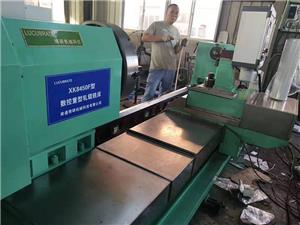
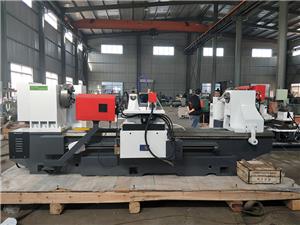
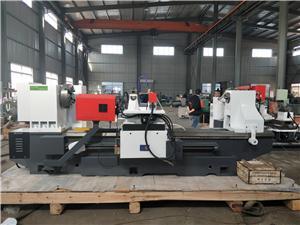
A CNC roller lathe for HSS is built with a heavily ribbed cast iron bed and box ways to dampen vibrations. Coupled with high-torque spindle motors and the use of CBN or ceramic inserts specifically designed for HSS, tool life can be extended by 3 to 5 times compared to conventional lathes. For example, NANTONG LUCUBRATE MACHINERY TECHNICAL LTD. engineers its lathes with a proprietary tooling interface that minimizes deflection, ensuring consistent chip loads and reducing tool wear. The result: fewer tool changes, lower consumable costs, and more predictable production planning.
Solution 2: Precision Control and Thermal Stability for Superior Accuracy
Equipped with a CNC system featuring high-resolution encoders and thermal compensation, these lathes maintain micron-level accuracy even during long runs. The machine's coolant system is designed to deliver high-pressure, directed flow to the cutting zone, effectively managing heat and preventing work-hardening. This leads to surface finishes of Ra 0.8 μm or better, often eliminating the need for secondary grinding. Tolerances of ±0.01 mm are achievable, meeting the strictest industry standards.
Solution 3: Optimized Chip Breakers and Automated Chip Conveyors
The tooling on a CNC roller lathe for HSS includes specially designed chip breakers that produce short, manageable chips. Combined with an automatic chip conveyor, this eliminates manual intervention and keeps the work area clean. The machine's programming allows for pecking cycles and variable feed rates to further improve chip evacuation and heat dissipation, boosting productivity by up to 50% compared to conventional methods.
Customer Success Stories
Let's look at how real companies have benefited from integrating a CNC roller lathe for HSS into their operations.
Case Study 1: Precision Tools Inc., Germany
Precision Tools Inc., a manufacturer of HSS cutting tools, struggled with a 20% scrap rate and frequent tool changes. After installing a CNC roller lathe from NANTONG LUCUBRATE MACHINERY TECHNICAL LTD., they reduced scrap to 3% and increased tool life by 4 times. "The machine's rigidity and thermal stability have transformed our production," says Klaus Meier, Production Manager. "We now run lights-out machining with confidence."
Case Study 2: Aero Components Ltd., UK
This aerospace supplier needed to machine HSS rollers with a surface finish of Ra 0.4 μm. Conventional lathes couldn't meet the spec without grinding. With the CNC roller lathe, they achieved Ra 0.6 μm directly from turning, cutting lead time by 30%. "The accuracy is outstanding," remarks Sarah Thompson, Manufacturing Engineer. "We've eliminated a whole grinding operation."
Case Study 3: Midwest Tooling, USA
Facing a shortage of skilled operators, Midwest Tooling sought a user-friendly CNC solution. The intuitive interface and automated features of the CNC roller lathe allowed them to cross-train operators in just two weeks. Productivity increased by 40%, and employee satisfaction soared. "It's the best investment we've made in years," says John Peterson, Owner.
Case Study 4: Southern Hemisphere Engineering, Australia
This company produces HSS rollers for mining equipment. The abrasive environment demanded a robust machine. The CNC roller lathe's sealed guides and heavy-duty construction have withstood the test of time, with uptime exceeding 95%. "We've seen a 25% increase in throughput and a significant drop in maintenance costs," notes David Clarke, Operations Manager.
Case Study 5: Nordic Precision, Sweden
Specializing in small batches of HSS components, Nordic Precision needed quick changeovers. The CNC roller lathe's quick-change tooling and flexible programming reduced setup time by 50%. "We can now economically produce batches as small as 10 pieces," says Erik Lund, CEO. "Our customers love the faster turnaround."
Applications and Partnerships
CNC roller lathes for HSS are indispensable in industries such as tool manufacturing, aerospace, automotive, and energy. They are used to produce HSS rollers, punches, dies, and wear parts. NANTONG LUCUBRATE MACHINERY TECHNICAL LTD. has established strategic partnerships with leading tooling suppliers and distributors across Europe and North America. For instance, their collaboration with a major German tooling manufacturer ensures that customers receive optimized cutting parameters and tooling recommendations, further enhancing machine performance. These partnerships underscore the company's commitment to providing comprehensive solutions, not just machines.
Frequently Asked Questions
1. What makes a CNC roller lathe specifically suitable for HSS compared to a standard CNC lathe?
Standard CNC lathes lack the rigidity and thermal management needed for HSS. A CNC roller lathe for HSS features a reinforced bed, high-torque spindle, and specialized coolant delivery to handle the abrasive nature of HSS. Additionally, the tooling interface is designed to minimize vibration, which is critical for achieving the required surface finish and tool life.
2. Can I achieve mirror finishes on HSS without grinding?
Yes, with proper tooling and parameters, a CNC roller lathe can achieve surface finishes down to Ra 0.4 μm on HSS, often eliminating the need for grinding. However, this depends on the specific grade of HSS and the geometry of the part. Our engineers can provide a free cutting test to validate the achievable finish for your application.
3. How does the machine handle the work-hardening of HSS?
The key is to maintain constant surface speed and feed rates to avoid dwelling. The CNC system's look-ahead and thermal compensation ensure consistent cutting conditions. High-pressure coolant further reduces work-hardening by keeping the cutting zone cool. The machine's rigid structure also minimizes deflection, which is a common cause of work-hardening.
4. What is the typical lead time for delivery and installation?
Standard models are delivered within 8-10 weeks. Installation and commissioning take about 5 days, including operator training. We also offer remote support and preventive maintenance packages to ensure long-term reliability.
5. Can the lathe be integrated into an automated production line?
Absolutely. The CNC roller lathe is equipped with standard interfaces (e.g., Ethernet, RS-232) for integration with robots and pallet systems. We have successfully integrated our lathes into flexible manufacturing systems for several customers, enabling unattended operation.
Conclusion and Call to Action
A CNC roller lathe for HSS is more than just a machine—it's a strategic asset that addresses the core challenges of machining high-speed steel. By investing in this technology, you can slash tooling costs, improve quality, and boost productivity. NANTONG LUCUBRATE MACHINERY TECHNICAL LTD. stands ready to help you transform your HSS machining. For a detailed technical white paper or to speak with a sales engineer, contact us today and discover how you can gain a competitive edge.