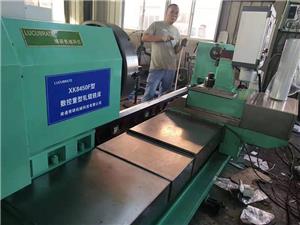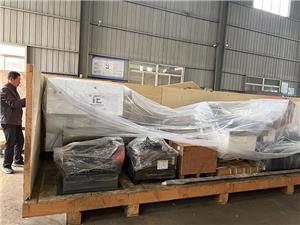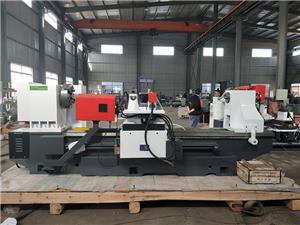
Why CNC Turning Lathe Still Rules Precision Manufacturing?
In the high-stakes world of precision manufacturing, one question keeps engineers up at night: Why does the CNC turning lathe remain the undisputed king of metal cutting? The answer isn't just about spinning metal—it's about reliability, versatility, and the relentless pursuit of micro-level accuracy that modern industries demand. Let me paint a familiar scene: You're on the shop floor, a critical batch of aerospace bushings is due tomorrow, and your turning center suddenly alarms out due to excessive tool wear. The clock is ticking, costs are mounting, and you wonder if there's a better way. The answer is a resounding yes—when you master the art and science of CNC turning.
In this deep dive, we'll explore the technical intricacies that make CNC turning lathes indispensable, dissect the pain points that plague even seasoned machinists, and unveil solutions that transform challenges into competitive advantages. Whether you're an engineer seeking to optimize parameters or a procurement manager evaluating suppliers, this guide will equip you with actionable insights. Let's turn up the precision.
Pain Point 1: Tool Wear and Unpredictable Tool Life – The Silent Budget Killer
Imagine running a high-volume job on a Swiss-type lathe, machining 17-4 PH stainless steel. You've calculated tool life based on manufacturer recommendations, but halfway through the batch, surface finish deteriorates, dimensions drift, and scrap rates spike. Each tool change costs you 15 minutes of downtime, and a single broken insert can destroy a $500 workpiece. Over a month, this unpredictability can erode 20% of your profit margin.
The root causes are multifaceted: inconsistent workpiece hardness, inadequate coolant delivery, or simply using the wrong grade for the application. The consequences are not just financial—they undermine your reputation for quality and on-time delivery. In industries like medical implants or fuel injection, a worn tool can mean a scrapped lot worth tens of thousands of dollars.
Pain Point 2: Chip Control Nightmares – When Swarf Strikes Back
Stringy chips are the bane of any turning operation. They wrap around the tool, scratch finished surfaces, and can even cause catastrophic tool failure. In a job shop machining aluminum components for electric vehicles, poor chip evacuation led to a 30% increase in cycle time due to manual chip clearing. Worse, tangled chips interrupted the coolant flow, causing thermal cracking on carbide inserts and a $2,000 tooling bill in a single week.
The impact extends beyond the machine: operators face safety risks from flying chips, and the scrap rate climbs as surface defects go undetected. For high-mix, low-volume production, the time lost in cleaning and rework can delay entire projects.
Pain Point 3: Setup Time – The Hidden Productivity Thief
In an era of mass customization, quick changeovers are non-negotiable. Yet many shops still spend 2-3 hours setting up a CNC turning lathe for a new job. Clamping jaws, touch-off tools, and proving out programs consume valuable spindle time. A European manufacturer of hydraulic fittings reported that setup accounted for 25% of their total production time, directly limiting their ability to take on smaller, high-margin orders.
The cost? Lost opportunities. When a customer needs 50 custom parts in 48 hours, a slow setup means you either decline or rush and risk quality. Over a year, this inefficiency can translate to six figures in lost revenue.
Solution 1: Smart Tooling and Predictive Maintenance
To combat tool wear, embrace advanced tooling technologies such as PVD-coated carbide grades with multilayer structures, specifically designed for your workpiece material. For example, when machining Inconel 718, a TiAlN-coated insert with a micro-geometry optimized for low cutting forces can extend tool life by 40%. Pair this with a tool monitoring system that uses spindle load or acoustic emission sensors to detect wear in real time. NANTONG LUCUBRATE MACHINERY TECHNICAL LTD. integrates such systems into their turning centers, allowing operators to schedule tool changes just-in-time, reducing downtime by up to 30%.
Additionally, implement a tool management strategy: standardize on a few high-performance grades, track usage per tool, and analyze failure modes. This data-driven approach turns tool life from a guess into a science.
Solution 2: Chip Control Through Geometry and Coolant Strategy
Effective chip control starts with tool geometry. Choose inserts with positive rake angles and chipbreakers designed for your feed and depth of cut. For aluminum, a polished, sharp edge with a high positive rake ensures chips flow away smoothly. High-pressure coolant (70+ bar) directed precisely at the cutting zone can break chips into manageable sizes and improve surface finish. In one case, a shop machining 6061-T6 aluminum switched to a through-tool coolant holder and reduced chip-related downtime by 85%.
Programming also plays a role: use pecking cycles or oscillating feed rates to break chips in difficult materials. NANTONG LUCUBRATE MACHINERY TECHNICAL LTD. offers application engineering support to tailor these parameters for your specific parts, ensuring chips become a non-issue.
Solution 3: Quick-Change Tooling and Offline Setup
Reduce setup time with modular quick-change tooling systems like Capto or HSK-T, which allow tool changes in seconds with repeatable accuracy. Preset tools offline using a tool presetter, so the machine simply loads and goes. For workholding, use quick-change jaws or collet systems that can be swapped in under a minute. A US-based job shop implemented these changes and cut setup time from 2 hours to 20 minutes, boosting machine utilization by 35%.
Furthermore, invest in simulation software to validate programs offline, eliminating dry runs on the machine. NANTONG LUCUBRATE MACHINERY TECHNICAL LTD. provides training and integration for such workflows, helping customers achieve lights-out manufacturing.
Customer Success Stories: Real Results from Real Shops
Case 1: Müller Precision GmbH, Germany
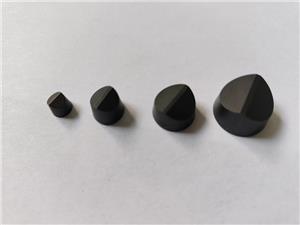
This automotive supplier struggled with tool wear when turning hardened steel shafts (58 HRC). After switching to NANTONG LUCUBRATE MACHINERY TECHNICAL LTD.'s recommended PCBN inserts and optimizing cutting speed, tool life increased by 50%, and cycle time dropped by 15%. "The technical support we received was unparalleled—they didn't just sell us tools, they engineered a solution," said Hans Müller, Production Manager.
Case 2: Advanced Aero Components, USA
Facing chip control issues in titanium Ti-6Al-4V, this aerospace manufacturer adopted high-pressure coolant and a specialized chipbreaker. Scrap rate fell from 8% to 1.5%, and throughput increased by 22%. "We now run lights-out on weekends, thanks to the reliable chip evacuation," remarked Sarah Johnson, Lead Machinist.
Case 3: Kyoto Seimitsu, Japan
A precision instrument maker reduced setup time from 90 minutes to 12 minutes using quick-change tooling and offline presetting. Machine utilization jumped from 65% to 88%, allowing them to take on more prototype work. "The flexibility has transformed our business model," said Kenji Tanaka, CEO.
Case 4: Metalúrgica Brasil, Brazil
This oil and gas parts producer was plagued by inconsistent surface finish on duplex stainless steel. By implementing NANTONG LUCUBRATE MACHINERY TECHNICAL LTD.'s turning solution with optimized coolant and tool path, they achieved Ra 0.4 µm consistently and reduced rework by 40%. "Our customers noticed the difference immediately," said Carlos Silva, Quality Manager.
Applications and Partnerships: Where CNC Turning Lathes Excel
CNC turning lathes are the backbone of industries requiring high precision and repeatability: aerospace (turbine discs, landing gear components), medical (bone screws, implants), automotive (fuel injectors, transmission shafts), and energy (valve bodies, drill collars). NANTONG LUCUBRATE MACHINERY TECHNICAL LTD. has partnered with leading manufacturers in these sectors, providing not just machines but complete process solutions. For instance, they collaborate with a tier-1 automotive supplier to produce EV motor shafts with sub-micron roundness, and with a medical device company to machine titanium spinal implants with mirror finishes.
Their partnerships extend to tooling providers and research institutions, ensuring they stay at the forefront of turning technology. When you choose NANTONG LUCUBRATE MACHINERY TECHNICAL LTD., you gain a partner dedicated to your productivity.
FAQ: Answers to Your Toughest Questions
Q1: What's the best way to determine optimal cutting parameters for a new material?
A: Start with the tool manufacturer's recommendations, then conduct a designed experiment (DOE) varying speed, feed, and depth of cut. Use response surface methodology to find the sweet spot. NANTONG LUCUBRATE MACHINERY TECHNICAL LTD. offers a parameter optimization service that can cut your trial time by half.
Q2: How can I achieve mirror surface finishes on a CNC lathe?
A: Use a wiper insert with a large nose radius, high cutting speed, and a rigid setup. Ensure minimal tool overhang and balanced cutting forces. For Ra < 0.2 µm, consider diamond tooling for non-ferrous materials. Coolant type and filtration also matter—fine filtration prevents scratches.
Q3: What are the signs that my spindle bearings are failing?
A: Increased vibration, poor surface finish, and thermal growth leading to dimensional drift. Use vibration analysis or simply monitor spindle load. Regular maintenance and using the correct bearing preload can extend life. NANTONG LUCUBRATE MACHINERY TECHNICAL LTD. uses high-precision ceramic bearings in their lathes for thermal stability.
Q4: How do I justify the cost of a high-end CNC turning lathe to management?
A: Calculate total cost of ownership: higher upfront cost is offset by reduced setup time, lower scrap, and less maintenance. For example, a lathe with quick-change tooling can save 200 hours per year, translating to $20,000 in labor. Present a payback analysis focusing on increased capacity and quality.
Q5: Can I turn hard materials (HRC 60+) on a standard CNC lathe?
A: Yes, with the right tooling (PCBN or ceramic) and a rigid machine. You'll need high spindle speeds, low feeds, and often a specialized chipbreaker. However, for production volumes, a dedicated hard turning lathe with linear guides and thermal compensation is recommended. NANTONG LUCUBRATE MACHINERY TECHNICAL LTD. offers models specifically designed for hard turning.
Conclusion: Turn Precision into Profit
The CNC turning lathe is more than a machine—it's a strategic asset that, when optimized, delivers unmatched precision, efficiency, and profitability. By addressing tool wear, chip control, and setup time with proven solutions, you can transform your shop floor into a competitive powerhouse. The success stories from Germany, USA, Japan, and Brazil prove that with the right partner, these challenges are surmountable.
Ready to elevate your turning operations? Contact NANTONG LUCUBRATE MACHINERY TECHNICAL LTD. to request our comprehensive technical whitepaper on advanced turning solutions or to speak with a sales engineer. Let's turn your toughest parts into your greatest triumphs.