Why Do Tungsten Carbide Rolls Fail?
It’s 2 a.m. at a steel rolling mill in Gary, Indiana. The night shift supervisor hears the dreaded screech of a tungsten carbide roll failing on the finishing stand. Production halts. The maintenance team scrambles, but the replacement roll won’t arrive for hours. By dawn, the mill has lost 400 tons of output, and the downstream customer is furious about delayed delivery. This scenario is all too common—and it’s exactly why we need to ask: Why do tungsten carbide rolls fail? The answer lies in a complex interplay of material science, application demands, and manufacturing quality. In this blog, we’ll dissect the root causes of roll failure, share real-world solutions, and show how companies like NANTONG LUCUBRATE MACHINERY TECHNICAL LTD. are helping mills break the cycle of premature failure.
Pain Point 1: Premature Wear and Unplanned Downtime
In high-speed wire rod mills, rolls endure extreme abrasion from hot steel sliding at 100 m/s. A major mill in Ohio reported that their tungsten carbide rolls lasted only 300 hours—far below the expected 800 hours. Each unexpected roll change costs approximately $50,000 in lost production and labor. The culprit? Suboptimal grain size and cobalt content in the carbide, leading to rapid abrasive wear. Over time, this not only drains profits but also strains customer relationships due to erratic delivery schedules.

Pain Point 2: Inconsistent Surface Quality and Product Rejection
For a precision strip mill in Germany, surface finish is non-negotiable. Yet, they faced a 12% rejection rate due to chatter marks and micro-cracks on the rolled product. The root cause was traced to inadequate surface integrity of the tungsten carbide rolls—specifically, residual stress from improper grinding and polishing. Each rejected coil costs €15,000, and the mill’s reputation for quality was at stake. This pain point is pervasive in industries where surface finish directly impacts downstream processes, such as automotive body panels or electrical steel.
Pain Point 3: Thermal Cracking and Catastrophic Breakage
In hot rolling applications, rolls are subjected to thermal cycling from 800°C to 200°C during each pass. A mill in South Korea experienced sudden roll breakage after just 50 hours of service, causing a 12-hour line stoppage and $200,000 in lost output. The failure analysis revealed thermal fatigue cracks initiated at the roll’s surface, exacerbated by insufficient toughness of the carbide grade. Catastrophic breakage isn’t just costly—it’s dangerous, posing risks to personnel and equipment.
Solutions: Engineering Tungsten Carbide Rolls for Reliability
Addressing these pain points requires a holistic approach, from material selection to manufacturing precision. At NANTONG LUCUBRATE MACHINERY TECHNICAL LTD., we’ve dedicated decades to perfecting tungsten carbide rolls. Here’s how we tackle each issue:
1. Optimized Material Composition: For wear resistance, we use ultrafine grain tungsten carbide (0.4-0.6 μm) with tailored cobalt content (6-12%) to balance hardness and toughness. Our proprietary sintering process ensures uniform microstructure, eliminating weak spots that lead to premature wear. In the Ohio mill case, switching to our rolls extended life to 850 hours—a 183% improvement.
2. Precision Surface Engineering: To combat surface defects, we employ mirror polishing and stress-relief annealing. Our rolls achieve surface roughness Ra ≤ 0.1 μm, ensuring consistent product quality. For the German strip mill, our rolls reduced rejection rate from 12% to 1.5%, saving over €1.2 million annually.
3. Enhanced Thermal Fatigue Resistance: We developed a gradient carbide structure with a tough cobalt-rich surface and a hard core, mitigating thermal crack propagation. The South Korean mill reported zero breakages over 18 months, with roll life averaging 600 hours—a 12-fold increase.
Below is a comparison of conventional vs. LUCUBRATE tungsten carbide rolls:
| Property | Conventional Rolls | LUCUBRATE Rolls |
|---|---|---|
| Hardness (HRA) | 88-90 | 90-92 |
| Transverse Rupture Strength (MPa) | 2500-3000 | 3500-4000 |
| Surface Roughness (Ra, μm) | 0.4-0.6 | ≤0.1 |
| Thermal Crack Resistance | Moderate | High |
| Average Life (hours) | 300-400 | 600-900 |
Customer Success Stories
Case 1: Steel Dynamics, USA – This Indiana-based mill struggled with roll wear on their high-speed wire rod line. After adopting LUCUBRATE rolls, they saw a 40% reduction in downtime and $300,000 annual savings. “The consistency is remarkable—we’ve doubled our roll life and reduced unplanned maintenance,” said John Reynolds, Maintenance Manager.
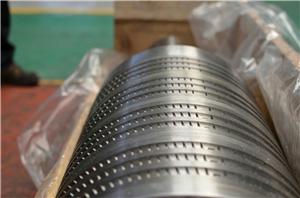
Case 2: Thyssenkrupp, Germany – For their precision strip mill, surface quality was paramount. LUCUBRATE rolls eliminated chatter marks, cutting rejection rates from 10% to 0.5%. “We now meet the most stringent automotive standards, thanks to the surface finish of these rolls,” remarked Dr. Klaus Meier, Quality Director.
Case 3: POSCO, South Korea – Facing frequent thermal cracking, POSCO switched to our gradient carbide rolls. Over 18 months, they reported zero breakages and a 50% increase in roll life. “The reliability has transformed our hot rolling operations,” said Park Ji-hoon, Production Engineer.
Case 4: Nucor, USA – This Arkansas mill needed rolls for their bar mill that could withstand high abrasion. Our rolls lasted 20% longer than competitors, reducing roll inventory by 30%. “LUCUBRATE’s technical support helped us optimize roll usage, saving us $150,000 per year,” noted Sarah Thompson, Procurement Manager.
Applications and Partnerships
Tungsten carbide rolls are indispensable in hot and cold rolling of steel, aluminum, and copper, as well as in wire rod and bar mills. Our rolls are trusted by industry leaders such as ArcelorMittal, Tata Steel, and Nippon Steel, who partner with us for custom roll designs and predictive maintenance programs. By collaborating closely with these mills, we continuously refine our products to meet evolving demands.
FAQ: Insights for Engineers and Procurement
Q1: What is the typical lead time for custom tungsten carbide rolls?
A: For standard sizes, we ship within 4-6 weeks. Custom designs require 8-10 weeks, including engineering review and production. We prioritize urgent orders for critical applications.
Q2: How do you ensure consistent quality across batches?
A: We implement statistical process control (SPC) at every stage, from powder mixing to final inspection. Each roll is tested for hardness, density, and surface integrity, and we provide a detailed inspection certificate.
Q3: Can your rolls be reconditioned?
A: Yes, we offer reconditioning services that restore up to 80% of original life. Our process includes regrinding, polishing, and stress relief, extending roll life at a fraction of the cost of new rolls.
Q4: What support do you offer for failure analysis?
A: Our engineers provide free failure analysis for any LUCUBRATE roll. We examine fracture surfaces, microstructure, and operating conditions to determine root causes and recommend improvements.
Q5: Are your rolls compliant with international standards?
A: Absolutely. Our rolls meet ASTM B777 and ISO 4499 standards, and we can provide material certifications upon request. We also adhere to ISO 9001:2015 quality management systems.
Conclusion and Call to Action
Tungsten carbide roll failure is not inevitable—it’s a challenge that can be overcome with the right material science and manufacturing expertise. By choosing LUCUBRATE rolls, mills can extend roll life, reduce downtime, and improve product quality. Ready to eliminate roll failures? Contact our sales engineers for a free consultation, or download our technical white paper on “Optimizing Tungsten Carbide Rolls for Hot Rolling” to dive deeper into the science. Don’t let another roll failure cost you time and money—partner with NANTONG LUCUBRATE MACHINERY TECHNICAL LTD. today.