Why Do Turning Tools Fail? Unlocking the Secrets to Longevity
Why do turning tools fail? It's a question that echoes through machine shops worldwide, often followed by the sharp crack of a broken insert or the dull thud of a scrapped workpiece. Picture this: it's 2 a.m., and a critical batch of aerospace components is due in six hours. The CNC lathe suddenly alarms out—tool wear limit reached. Production halts, and the scramble begins. This scenario is all too familiar, but the answer to why turning tools fail isn't just about wear; it's about understanding the intricate dance between tool material, coating, geometry, and application. At NANTONG LUCUBRATE MACHINERY TECHNICAL LTD., we've spent decades unraveling these mysteries to help manufacturers achieve unprecedented tool life and process reliability. In this blog, we'll dive deep into the root causes of turning tool failure and provide actionable solutions to keep your operations running smoothly.
Pain Point 1: Excessive Tool Wear – The Silent Profit Killer
Tool wear is inevitable, but excessive wear is a symptom of underlying issues. In high-volume turning operations, particularly with materials like stainless steel or Inconel, tools can degrade rapidly, leading to frequent index changes and downtime. Consider a job shop turning 500 parts per day; if each insert lasts only 30 minutes instead of the expected 60, that's an extra 8 hours of downtime per week—costing thousands in lost productivity. Moreover, worn tools can cause dimensional drift, resulting in scrapped parts. The cost isn't just the price of inserts; it's the machine hour rate, labor, and missed delivery deadlines.
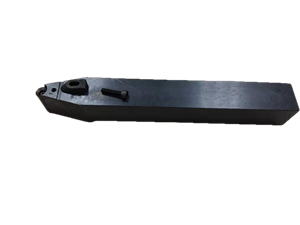
Solution: Advanced Substrate and Coating Technologies
At NANTONG LUCUBRATE MACHINERY TECHNICAL LTD., we address excessive wear through a combination of high-performance substrates and engineered coatings. Our turning tools feature ultrafine-grain carbide substrates that provide an optimal balance of hardness and toughness, resisting both abrasive and adhesive wear. For example, our LUCUBRATE-X series utilizes a gradient sintering process that creates a hard surface layer while maintaining a tough core, extending tool life by up to 40% in demanding applications. Additionally, we apply advanced PVD coatings such as TiAlN and AlCrN, which offer high oxidation resistance and low friction coefficients. These coatings are meticulously deposited using arc ion plating, ensuring uniform thickness and excellent adhesion. The result is a tool that stays sharper longer, reducing the frequency of tool changes and minimizing downtime.
Pain Point 2: Unpredictable Chip Control – The Hidden Cause of Scrap and Damage
Chip control is often overlooked until it causes a problem. In turning operations, especially with ductile materials like low-carbon steel, long stringy chips can wrap around the tool and workpiece, leading to poor surface finish, tool breakage, and even machine damage. Imagine a scenario where a chip birdnests around the chuck, causing a crash that costs $10,000 in repairs and weeks of downtime. Even minor chip issues can result in scrapped parts due to poor surface finish or dimensional inaccuracy. The unpredictability of chip formation is a major headache for operators and engineers alike.
Solution: Precision Chipbreaker Designs and Optimized Geometries
NANTONG LUCUBRATE MACHINERY TECHNICAL LTD. tackles chip control through innovative chipbreaker designs and application-specific geometries. Our turning inserts feature a range of chipbreakers, from sharp positive geometries for finishing to robust negative geometries for roughing. For instance, the LUCUBRATE-CB series incorporates a unique double-sided chipbreaker that effectively breaks chips across a wide range of feeds and speeds. We use finite element analysis (FEA) to simulate chip flow and optimize the rake face and land width, ensuring that chips are directed away from the workpiece and broken into manageable sizes. This not only improves surface finish but also reduces the risk of chip-related damage. Moreover, our tools are available with internal coolant channels that precisely direct coolant to the cutting zone, further enhancing chip evacuation and cooling.
Pain Point 3: Inconsistent Tool Quality – The Reliability Roulette
Inconsistent tool quality can wreak havoc on production planning. One batch of inserts might perform flawlessly, while the next fails prematurely, leading to unpredictable tool life and process instability. This is particularly problematic for automated cells where unattended operation is critical. A single tool failure can halt an entire production line, and the root cause is often traced back to variations in carbide quality or coating thickness. The cost of inconsistency includes not only scrap and downtime but also the engineering time spent troubleshooting and the loss of customer confidence.
Solution: Rigorous Quality Control and Material Traceability
At NANTONG LUCUBRATE MACHINERY TECHNICAL LTD., we ensure consistent tool quality through a comprehensive quality management system. From raw material sourcing to final inspection, every step is controlled and documented. We source only premium carbide powders from certified suppliers and use advanced sintering processes with tight tolerances. Each production batch is tested for hardness, transverse rupture strength, and microstructure. Coatings are applied using state-of-the-art equipment with in-situ monitoring to ensure thickness uniformity. Furthermore, we implement full traceability: each insert carries a unique identifier that links back to its production data, allowing us to quickly identify and address any deviations. Our commitment to quality is reflected in our ISO 9001 certification and our zero-defect policy for critical applications.
Customer Success Stories: Real Results from Real Manufacturers
Don't just take our word for it. Here are a few examples of how NANTONG LUCUBRATE MACHINERY TECHNICAL LTD. has helped customers overcome turning challenges.
Case 1: Precision Machining in Stuttgart, Germany
Mr. Klaus Meier, production manager at a leading automotive supplier in Stuttgart, was struggling with excessive tool wear when turning hardened steel (HRC 55). Using conventional inserts, tool life was only 20 minutes, leading to frequent interruptions. After switching to our LUCUBRATE-HS series with a TiAlN coating and a robust edge hone, tool life increased to 45 minutes—a 125% improvement. "The consistency is remarkable," says Meier. "We've reduced downtime by 30% and cut insert costs by 20%."
Case 2: Aerospace Components in Toulouse, France
At an aerospace manufacturer in Toulouse, chip control was a major issue when turning Inconel 718. Long stringy chips caused frequent tool breakage and scrapped parts. Our application engineers recommended the LUCUBRATE-AERO insert with a specialized chipbreaker and internal coolant. The result: chip-related downtime dropped by 70%, and surface finish improved to Ra 0.8 μm. "The technical support was exceptional," says Ms. Sophie Laurent, manufacturing engineer. "They didn't just sell us tools; they solved our problem."
Case 3: Job Shop in Cleveland, USA
Mr. Mike Johnson, owner of a job shop in Cleveland, Ohio, faced inconsistent tool life from his previous supplier, causing unpredictable delivery schedules. After adopting NANTONG LUCUBRATE's turning tools, he saw a 40% reduction in tool-related downtime and a 15% increase in throughput. "The reliability is a game-changer," Johnson remarks. "I can now quote tighter lead times and keep my customers happy."
Case 4: Heavy Equipment Manufacturer in São Paulo, Brazil
In São Paulo, a manufacturer of heavy equipment was turning large shafts in 4140 steel. Tool wear was severe, and inserts lasted only 15 minutes. Our LUCUBRATE-HEAVY duty inserts with a thick CVD coating and strong edge preparation extended tool life to 40 minutes, reducing tool changes by 60%. "We've saved over $50,000 annually in insert costs alone," says Mr. Carlos Silva, plant manager.
Applications and Partnerships: Trusted Across Industries
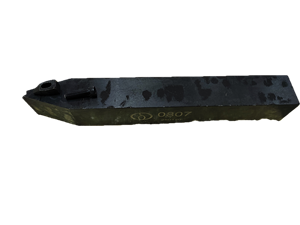
NANTONG LUCUBRATE MACHINERY TECHNICAL LTD. serves a diverse range of industries, including automotive, aerospace, medical, and general engineering. Our turning tools are used in applications such as:
- Automotive: Crankshafts, camshafts, transmission gears, brake discs.
- Aerospace: Engine components, landing gear parts, structural fittings.
- Medical: Orthopedic implants, surgical instruments.
- Energy: Oil and gas fittings, turbine components.
We are proud to partner with leading distributors and OEMs worldwide. For example, we have a strategic supply agreement with a major European machine tool builder, who specifies our turning tools for their turnkey solutions. In North America, we collaborate with several top-tier distributors to ensure local stock and technical support. These partnerships are built on mutual trust and a shared commitment to innovation and quality.
FAQ: Technical Insights for Engineers and Procurement Managers
Q1: How do I choose the right coating for turning stainless steel?
A1: For stainless steel, adhesive wear and built-up edge are common issues. We recommend PVD coatings like AlCrN or TiAlN with a high aluminum content, which offer excellent oxidation resistance and low friction. Additionally, a polished rake face can reduce built-up edge. Our LUCUBRATE-SST series is specifically designed for stainless steel, featuring a multilayer AlCrN coating and a sharp edge for clean cuts.
Q2: What causes chipbreaker failure and how can I prevent it?
A2: Chipbreaker failure often results from excessive cutting forces or improper application. Ensure that the chipbreaker geometry matches the feed rate and depth of cut. Using a chipbreaker that is too weak for the application can lead to breakage. Our application engineers can help you select the optimal chipbreaker based on your cutting parameters. Also, avoid interruptions that can cause impact loads.
Q3: How does coolant affect tool life in turning?
A3: Coolant plays a crucial role in managing heat and chip evacuation. High-pressure coolant (HPC) can significantly extend tool life by reducing thermal shock and improving chip breakage. However, for some materials like cast iron, dry machining may be preferred. Our tools are designed to work with various coolant strategies, and we offer internal coolant channels for precise delivery.
Q4: Can I use the same turning tool for roughing and finishing?
A4: While some tools are versatile, using a dedicated tool for each operation is generally more efficient. Roughing tools have strong edges and chipbreakers designed for high feeds, while finishing tools have sharp edges and positive geometries for light cuts and good surface finish. Using a roughing tool for finishing may result in poor surface quality and reduced tool life. We offer a range of tools optimized for specific operations.
Q5: What is the typical lead time for custom turning tools?
A5: For custom designs, lead time depends on complexity and quantity. Typically, we can deliver custom turning tools within 4-6 weeks after design approval. Our rapid prototyping service can produce sample tools in as little as 2 weeks for testing. We work closely with customers to meet their project timelines.
Conclusion: Unlock the Full Potential of Your Turning Operations
Turning tool failure doesn't have to be a recurring nightmare. By understanding the root causes and leveraging advanced tooling solutions from NANTONG LUCUBRATE MACHINERY TECHNICAL LTD., you can achieve longer tool life, consistent chip control, and reliable performance. Our commitment to quality and innovation has helped manufacturers worldwide reduce costs and improve productivity. Ready to take your turning operations to the next level? Contact our sales engineers to request a copy of our technical white paper, "Advanced Turning Tool Technologies for Demanding Applications," or to schedule a consultation. Let us help you turn challenges into success.