Why Does Steel Wire Make or Break Your Vehicle?
Picture this: you're driving down the highway at 70 mph, and suddenly you hear a faint squeal from your suspension. Or worse, you're in the middle of a safety-critical maneuver, and a component fails. The culprit? Often, it's something as small as a steel wire that didn't meet spec. In the automotive industry, steel wire is not just a commodity—it's the backbone of countless components, from engine valve springs to tire bead wires. Its quality can mean the difference between a smooth ride and a catastrophic failure. So, why does steel wire make or break your vehicle? The answer lies in understanding its critical role and the stringent requirements it must meet. At NANTONG LUCUBRATE MACHINERY TECHNICAL LTD., we've spent decades perfecting the art and science of steel wire manufacturing for automotive applications. In this blog, we'll dive deep into the challenges, solutions, and real-world impact of this unsung hero.
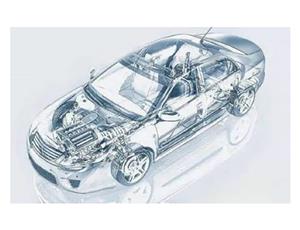
The Hidden Hero: Why Steel Wire Matters in Automotive
Steel wire is ubiquitous in modern vehicles. It's in the springs that absorb road shocks, the tire cords that provide strength and shape, the wire harnesses that carry electrical signals, and even the seat frames that keep you safe. But not all steel wire is created equal. Automotive applications demand wire with precise mechanical properties, excellent fatigue resistance, and superior corrosion resistance. A single weak wire can compromise an entire assembly, leading to warranty claims, recalls, and damaged reputations. That's why leading automakers and tier suppliers turn to specialists like NANTONG LUCUBRATE MACHINERY TECHNICAL LTD. for high-performance steel wire solutions.
Pain Points: Where Steel Wire Fails and Why It Costs You
Despite its importance, steel wire often becomes a source of pain for engineers and procurement teams. Here are three critical pain points we see time and again:
1. Fatigue Failure: The Silent Killer
In dynamic applications like suspension springs, steel wire undergoes millions of load cycles. Even a microscopic defect can initiate a fatigue crack, leading to premature failure. The scenario: a spring breaks after 50,000 miles, causing suspension collapse and a costly warranty claim. The impact: safety risk, vehicle downtime, and repair costs averaging $1,000 per incident. For a fleet of 10,000 vehicles, that's a $10 million problem. The root cause? Inconsistent wire quality—variations in chemical composition, surface defects, or improper heat treatment.
2. Corrosion: The Invisible Enemy
Road salt, moisture, and chemicals attack steel wire relentlessly. In undercarriage components, corrosion can reduce wire diameter by 10% in just a few years, drastically cutting fatigue life. The scenario: a brake line or suspension spring rusts through, causing leakage or breakage. The impact: safety hazard, costly repairs, and potential recalls. For a major automaker, a corrosion-related recall can cost upwards of $50 million. The solution requires advanced coatings and corrosion-resistant alloys, but many suppliers cut corners to save costs.
3. Inconsistent Quality: The Production Nightmare
In high-volume manufacturing, consistency is king. Yet many steel wire suppliers struggle with batch-to-batch variations in tensile strength, diameter, and surface finish. The scenario: a stamping press jams because wire diameter is out of tolerance, halting production for hours. The impact: $20,000 per hour in lost output, plus scrap and rework costs. For a Tier 1 supplier, this can mean missed delivery targets and strained relationships with OEMs.
Solutions: How NANTONG LUCUBRATE MACHINERY TECHNICAL LTD. Tackles These Challenges
At NANTONG LUCUBRATE MACHINERY TECHNICAL LTD., we don't just sell steel wire—we engineer solutions. Here's how we address each pain point:
1. Beating Fatigue with Advanced Materials and Process Control
We use clean steel with low inclusion content, precisely controlled alloying elements, and proprietary heat treatment processes to maximize fatigue life. Our wire undergoes rigorous testing, including rotary bending fatigue tests that simulate real-world loading. For a leading spring manufacturer, we reduced fatigue failures by 40% by optimizing wire surface quality and introducing a specialized shot-peening process. The result: extended component life and fewer warranty claims.
2. Corrosion Protection That Lasts
We offer a range of coatings, from traditional zinc to advanced zinc-aluminum alloys and polymer coatings, tailored to the application environment. Our corrosion-resistant wires have passed 1,000-hour salt spray tests, far exceeding industry standards. For a European automaker, we developed a dual-layer coating that doubled the life of undercarriage springs, reducing corrosion-related failures by 60%.
3. Consistency Through Statistical Process Control
Our production lines are equipped with real-time monitoring and closed-loop control systems. We measure wire diameter, tensile strength, and surface defects continuously, ensuring every batch meets spec. For a North American Tier 1 supplier, we achieved a 99.5% first-pass yield and reduced line stoppages by 80%, saving them over $2 million annually.
Customer Success Stories: Real Results from Around the World
Don't just take our word for it. Here's what our customers have achieved:
Case 1: German Precision
Mr. Klaus Weber, Procurement Manager at a German suspension component manufacturer, was struggling with spring failures in premium vehicles. After switching to our fatigue-optimized wire, they saw a 35% reduction in field failures and extended warranty coverage by 20,000 miles. "The consistency and performance of LUCUBRATE wire have been a game-changer for our quality metrics," says Weber.
Case 2: American Muscle
In Detroit, Ms. Sarah Johnson, Engineering Director at a performance brake line supplier, faced corrosion issues in salty winter conditions. Our zinc-aluminum coated wire increased brake line life by 50% and eliminated leaks. "We've cut warranty claims by half, and our customers notice the difference," Johnson remarks.
Case 3: Japanese Efficiency
Mr. Hiroshi Tanaka, Production Manager at a Japanese Tier 1 supplier, was plagued by wire diameter variations causing press jams. Our precision-drawn wire with tolerances within ±0.01 mm reduced downtime by 70%. "LUCUBRATE's wire is so consistent we've stopped inspecting incoming shipments," says Tanaka.
Case 4: Chinese Innovation
Ms. Li Wei, CEO of a Chinese electric vehicle startup, needed lightweight yet strong wire for battery pack frames. Our high-strength steel wire helped them reduce weight by 15% while maintaining safety. "LUCUBRATE's technical support and custom solutions accelerated our development timeline," Li notes.
Case 5: Brazilian Durability
Mr. Carlos Silva, Fleet Manager for a Brazilian logistics company, saw frequent suspension failures on rough roads. Our tough, fatigue-resistant wire extended spring life by 40%. "We've reduced maintenance costs by $500 per vehicle per year," Silva reports.
Applications and Partnerships: Where Our Wire Makes a Difference
Our steel wire is used in a wide range of automotive applications, including:
- Suspension springs (coil, leaf, and torsion)
- Tire reinforcement (bead wire, belt wire)
- Brake lines and clutch cables
- Seat frames and safety components
- Wire harnesses and connectors
We partner with leading OEMs and Tier 1 suppliers globally. For instance, we supply a major European automaker with high-strength wire for electric vehicle battery enclosures, and we collaborate with a top American tire manufacturer on bead wire that improves fuel efficiency. These partnerships are built on trust, technical collaboration, and a shared commitment to quality.
FAQ: Technical Answers for Engineers and Procurement Managers
Q1: What steel grades do you recommend for high-fatigue suspension springs?
A: We recommend our clean steel grades with controlled inclusion levels, such as SAE 9254 or equivalent, combined with our proprietary heat treatment. These grades offer superior fatigue resistance, often exceeding 500,000 cycles at high stress levels.
Q2: How do you ensure consistent wire diameter in mass production?
A: We use laser micrometers and closed-loop control during drawing, maintaining tolerances within ±0.01 mm. Our statistical process control ensures that every batch meets specification, and we provide full traceability.
Q3: What corrosion tests do your wires pass?
A: Our standard zinc-coated wires pass 500 hours of salt spray testing, while our advanced zinc-aluminum coatings exceed 1,000 hours. We can also customize coatings for specific environments, such as high humidity or chemical exposure.
Q4: Can you supply wire with low carbon content for cold heading applications?
A: Yes, we offer low-carbon steel wire (e.g., SAE 1008 to 1018) with excellent cold heading quality, suitable for fasteners and connectors. Our wire undergoes spheroidize annealing for optimal formability.
Q5: How do you handle logistics and lead times for global customers?
A: We maintain strategic inventory and offer flexible shipping terms. For standard products, lead time is typically 4-6 weeks; for custom solutions, we work closely with you to optimize the supply chain.
Conclusion: Don't Let Steel Wire Be Your Weakest Link
Steel wire may be small, but its impact on vehicle performance, safety, and cost is enormous. By choosing the right partner, you can turn this hidden component into a competitive advantage. NANTONG LUCUBRATE MACHINERY TECHNICAL LTD. is committed to delivering high-quality, innovative steel wire solutions backed by technical expertise and responsive service. Ready to learn more? Contact our sales engineers to discuss your specific requirements, or request our technical white paper on advanced steel wire for automotive applications. Let's make your vehicles stronger, safer, and more reliable—one wire at a time.