
Why Does Your Notching Tool Holder Keep Failing?
If you’re running a notching line—whether for transformer laminations, motor cores, or HVAC panels—you’ve probably asked yourself this question at least once: Why does my notching tool holder keep failing? It’s a frustration that echoes through the shop floor. One minute you’re hitting production targets, and the next, you’re dealing with a cracked holder, scrapped parts, or an unplanned line stoppage. The answer isn’t always obvious, but it often boils down to a combination of design limitations, material selection, and application mismatches. In this blog, we’ll dive deep into the root causes, share real-world solutions, and show you how the right notching tool holder can transform your operation from a constant headache into a reliable profit center.
At NANTONG LUCUBRATE MACHINERY TECHNICAL LTD., we’ve spent over two decades specializing in precision tooling for the metalworking industry. We’ve seen it all—from small job shops to massive OEMs—and we’ve engineered solutions that address the specific pain points engineers and maintenance managers face daily. So, let’s get to the bottom of why your notching tool holder might be letting you down, and more importantly, how to fix it.

Pain Point 1: Premature Wear and Frequent Replacement
The Scenario: You’ve just installed a new notching tool holder. Within weeks, you notice excessive wear on the locating surfaces, the clamp isn’t holding as tight, and the tool is chattering. Before you know it, you’re ordering a replacement—again. This cycle repeats, eating into your maintenance budget and causing unplanned downtime.
The Impact: Premature wear isn’t just an inconvenience; it’s a significant cost driver. Each replacement notching tool holder can set you back hundreds or even thousands of dollars, depending on the complexity. But the real cost is in the downtime: every hour a line is down, you’re losing production output. For a high-volume stamping operation, that could mean tens of thousands of dollars in lost revenue per shift. Additionally, frequent replacements lead to inconsistent tooling performance, which can affect part quality and lead to downstream issues.
The Root Causes: Premature wear often stems from several factors. First, the material of the tool holder may not be matched to the application. For instance, using a standard tool steel holder in a high-impact, abrasive environment will lead to rapid wear. Second, the design might lack proper reinforcement in high-stress areas, such as the clamping zone or the locating shoulder. Third, inadequate heat treatment or surface coating can accelerate wear. Finally, poor compatibility with the press or die setup can cause misalignment, leading to uneven loading and premature failure.
Pain Point 2: Inconsistent Notch Quality and Scrap Rate
The Scenario: Your quality control team is pulling parts off the line with dimensional variances, burrs, or incomplete notches. The scrap rate is climbing, and rework is piling up. You trace the issue back to the notching tool holder—it’s not holding the tool securely, or it’s deflecting under load, causing the notch to be off-spec.
The Impact: Inconsistent notch quality directly hits your bottom line. Scrapped parts mean wasted material, wasted machine time, and wasted labor. In industries like electrical steel processing, where material costs are high, a 5% scrap rate can translate to six-figure annual losses. Moreover, poor notch quality can lead to functional issues in the final product—like increased core loss in transformers or vibration in motors—which can damage your reputation and lead to customer complaints or returns.
The Root Causes: Inconsistent quality often arises from a lack of rigidity in the tool holder assembly. If the holder deflects during the notching stroke, the tool will not penetrate cleanly, resulting in burrs or incomplete cuts. Additionally, poor clamping force can allow the tool to shift, leading to dimensional errors. Thermal expansion is another culprit: if the tool holder material has a high coefficient of thermal expansion, it can distort as the press heats up, causing variations from the first part to the last. Finally, inadequate chip evacuation can cause chips to be re-cut, affecting surface finish and dimensional accuracy.
Pain Point 3: Unplanned Downtime and Lost Productivity
The Scenario: It’s 2 a.m. on a Saturday, and you get a call: the notching line is down because the tool holder cracked. Your maintenance team rushes in, but without a spare, you’re looking at hours of downtime while you source a replacement. Production schedules are thrown off, and overtime costs skyrocket.
The Impact: Unplanned downtime is the silent killer of profitability. For a typical stamping operation, every hour of downtime can cost anywhere from $5,000 to $50,000, depending on the line speed and product value. Beyond the immediate cost, repeated downtime erodes customer trust and can lead to penalties for missed delivery windows. It also puts immense stress on your maintenance team, leading to burnout and potential safety incidents.
The Root Causes: Downtime often results from catastrophic failure of the tool holder—cracks, fractures, or thread stripping. These failures can be traced back to design weaknesses, such as stress concentrations at sharp corners, or material defects. Overloading the tool holder beyond its rated capacity is another common cause, often due to a mismatch between the holder and the press tonnage. Additionally, inadequate maintenance practices, like failing to torque bolts to specification or ignoring signs of wear, can accelerate failure. Finally, a lack of readily available spare parts or a slow supply chain can turn a minor issue into a major stoppage.
Solution: Engineering the Perfect Notching Tool Holder
At NANTONG LUCUBRATE MACHINERY TECHNICAL LTD., we’ve dedicated ourselves to solving these exact pain points. Our notching tool holders are engineered from the ground up to deliver unmatched durability, precision, and reliability. Here’s how we address each challenge:
1. Advanced Materials and Heat Treatment: We use premium-grade tool steels, such as A2, D2, and M4, selected for their wear resistance and toughness. Each holder undergoes a proprietary heat treatment process—including vacuum hardening and triple tempering—to achieve an optimal balance of hardness (58-62 HRC) and toughness. For extreme applications, we offer surface coatings like TiAlN or diamond-like carbon (DLC) to further reduce friction and wear. This means your notching tool holder lasts significantly longer, even in abrasive environments.
2. Rigid Design and Precision Machining: Our engineers use finite element analysis (FEA) to optimize the geometry of each tool holder, eliminating stress concentrations and ensuring uniform load distribution. We machine critical features on 5-axis CNC grinders to tolerances of ±0.005 mm, ensuring a perfect fit with your press and die. The clamping mechanism is designed for maximum holding force with minimal deflection, so you get consistent notch quality part after part. We also incorporate features like reinforced shoulders and radiused corners to prevent cracking.
3. Application-Specific Customization: We understand that no two notching applications are alike. That’s why we offer tailored solutions—from adjusting the holder’s hardness to modifying the clamp design for quick tool changes. Our team works closely with your engineers to understand your specific challenges and deliver a notching tool holder that integrates seamlessly into your process. Whether you’re notching thin-gauge electrical steel or thick plate, we have the expertise to match the holder to your needs.
4. Quality Assurance and Testing: Every notching tool holder we produce undergoes rigorous inspection, including dimensional verification, hardness testing, and proof load testing. We also offer optional finite element analysis reports and material certifications for critical applications. Our ISO 9001:2015 certified facility ensures consistent quality, and our traceability system allows us to track each holder from raw material to shipment.
5. Fast Delivery and Support: We maintain a robust inventory of standard notching tool holders and offer expedited shipping for urgent needs. Our global network of distributors ensures that you’re never far from a replacement. Plus, our technical support team is available to assist with installation, troubleshooting, and maintenance training.
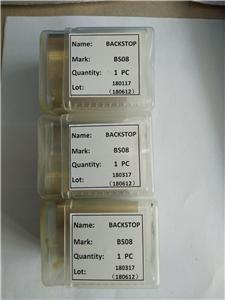
To illustrate the difference, consider the following comparison between a standard notching tool holder and a LUCUBRATE engineered solution:
| Feature | Standard Tool Holder | LUCUBRATE Notching Tool Holder |
|---|---|---|
| Material | Standard tool steel (e.g., 4140) | Premium tool steel (A2, D2, M4) with proprietary heat treatment |
| Hardness | 45-50 HRC | 58-62 HRC, with optional coatings |
| Design | General-purpose, limited FEA | FEA-optimized geometry, reinforced stress areas |
| Tolerance | ±0.02 mm | ±0.005 mm |
| Clamping Force | Moderate, prone to deflection | High rigidity, minimal deflection |
| Customization | Limited | Fully customizable to application |
| Lead Time | 4-6 weeks | 2-4 weeks (standard), expedited available |
| Warranty | 6 months | 12 months |
Customer Success Stories
Don’t just take our word for it. Here are a few examples of how our notching tool holders have helped companies like yours overcome their challenges:
Case 1: Precision Transformers Inc., Ohio, USA
This manufacturer of distribution transformers was struggling with frequent tool holder failures on their notching line for electrical steel. They were replacing holders every 3 months and experiencing a 7% scrap rate due to inconsistent notches. After switching to LUCUBRATE’s D2 steel holders with TiAlN coating, they saw tool life increase to 14 months and scrap rate drop to 1.2%. “The difference is night and day,” said Mike Reynolds, Maintenance Manager. “We’ve cut our tooling costs by 60% and virtually eliminated notch-related defects.”
Case 2: Motores Ibéricos S.A., Barcelona, Spain
This motor core manufacturer was facing unplanned downtime due to cracking in their notching tool holders. The problem was traced to stress concentrations in the original design. LUCUBRATE engineers redesigned the holder with radiused corners and a reinforced clamp, using A2 steel with a special heat treatment. The result: zero failures in 18 months of continuous operation. “We used to keep three spares on the shelf; now we don’t even think about it,” remarked Carlos Mendoza, Production Engineer. “The reliability is outstanding.”
Case 3: HVAC Solutions Ltd., Birmingham, UK
This sheet metal fabricator was experiencing inconsistent notch quality on their HVAC panel line, leading to a 10% rework rate. The issue was traced to tool holder deflection under load. LUCUBRATE provided a custom holder with increased cross-section and a hydraulic clamping mechanism. Notch quality improved immediately, and rework dropped to 0.5%. “Our operators noticed the difference on the first shift,” said Sarah Jenkins, Quality Manager. “The notches are clean and consistent, and we’re saving over £50,000 annually in rework and scrap.”
Case 4: Elektroblech GmbH, Stuttgart, Germany
This electrical steel processor was dealing with excessive wear on their notching tool holders, requiring replacement every 6 weeks. LUCUBRATE recommended M4 steel with a DLC coating and a revised clamping design that reduced micro-movements. Tool life extended to 12 months, and the company reported a 30% increase in line uptime. “The engineering support we received was exceptional,” noted Dr. Klaus Weber, Operations Director. “They didn’t just sell us a tool holder; they solved our problem.”
Case 5: Canadian Stamping Co., Ontario, Canada
This automotive stamping supplier was plagued by unplanned downtime due to tool holder failures. LUCUBRATE conducted a full application review and discovered that the holders were being over-torqued, leading to cracking. We provided a holder with a redesigned clamp and a torque specification, along with on-site training. Downtime due to tool holder issues decreased by 85%, and the company now standardizes on LUCUBRATE holders across all their notching presses. “We finally have peace of mind,” said Dave Thompson, Plant Manager. “The holders are rock solid, and the support is top-notch.”
Applications and Partnerships
Our notching tool holders are trusted in a wide range of applications, including:
- Transformer lamination notching
- Motor and generator core notching
- HVAC panel and duct notching
- Metal framing and stud notching
- Automotive body panel notching
- Appliance panel notching
We are proud to partner with leading press manufacturers and distributors worldwide. Our notching tool holders are specified by OEMs such as Bruderer AG (Switzerland) and Schuler Group (Germany) for their high-speed stamping lines, and we supply directly to tier-one suppliers like Magna International (Canada) and Gestamp (Spain). These partnerships are built on a shared commitment to quality and innovation, and they reflect the trust that industry leaders place in our products.
In addition, we collaborate with academic institutions like the Fraunhofer Institute for Production Technology in Germany to stay at the forefront of tooling research. This allows us to continuously improve our designs and materials, ensuring that our customers always benefit from the latest advancements.
FAQ
Q1: What material is best for notching tool holders in high-volume electrical steel applications?
A1: For high-volume electrical steel notching, we recommend D2 or M4 tool steel with a hardness of 60-62 HRC and a TiAlN or DLC coating. These materials offer an excellent balance of wear resistance and toughness, which is critical for maintaining edge sharpness and dimensional stability over long production runs. The coating reduces friction and prevents built-up edge, further extending tool life. We also consider the specific silicon content in the steel, as higher silicon can be more abrasive.
Q2: How do I know if my notching tool holder is causing my scrap rate?
A2: Start by inspecting the notches for burrs, dimensional deviations, or incomplete cuts. If you see these issues, check the tool holder for wear, cracks, or loose clamps. A quick test is to measure the holder’s critical dimensions with a micrometer and compare to the specification. If the holder is out of tolerance or shows signs of deflection, it’s likely contributing to scrap. Additionally, monitor the scrap rate before and after changing the holder—if it improves significantly, the holder was the culprit. Our team can also perform a free application review to help diagnose the issue.
Q3: Can I use a standard notching tool holder in a high-speed press?
A3: It’s not recommended. High-speed presses (e.g., 500+ strokes per minute) exert higher dynamic loads and generate more heat. Standard holders may lack the rigidity and thermal stability required, leading to premature wear, deflection, and potential failure. For high-speed applications, you need a holder designed with FEA optimization, premium materials, and possibly active cooling. LUCUBRATE offers a range of high-speed holders specifically engineered for these conditions.
Q4: What maintenance practices extend the life of a notching tool holder?
A4: Regular maintenance is key. This includes: (1) cleaning the holder and clamping surfaces daily to remove debris; (2) checking torque on clamping bolts weekly and re-torquing to specification; (3) inspecting for wear or cracks monthly using a magnifying glass or dye penetrant; (4) storing holders in a clean, dry environment to prevent corrosion; and (5) replacing worn clamps or springs promptly. We provide a detailed maintenance guide with every holder and offer training for your team.
Q5: How does LUCUBRATE ensure the quality and consistency of its notching tool holders?
A5: Quality is built into every step. We start with certified raw materials from approved suppliers, and each batch is verified for chemical composition and hardness. During machining, we use in-process gauging on CNC grinders to maintain tolerances. After heat treatment, we check hardness and microstructure. Final inspection includes dimensional verification with CMMs, visual inspection for surface defects, and proof load testing. We are ISO 9001:2015 certified, and we maintain full traceability from material to shipment. For critical applications, we can provide PPAP documentation and FAI reports.
Conclusion and Call to Action
Your notching tool holder shouldn’t be a source of constant frustration. With the right design, materials, and support, it can be a reliable workhorse that keeps your line running smoothly and your quality impeccable. At NANTONG LUCUBRATE MACHINERY TECHNICAL LTD., we’re committed to helping you achieve exactly that. Our engineered notching tool holders are built to outlast and outperform, reducing downtime, scrap, and total cost of ownership.
If you’re ready to say goodbye to premature failures and hello to consistent performance, we invite you to download our comprehensive technical white paper, “The Science of Notching Tool Holder Design.” This in-depth guide covers material selection, FEA optimization, and maintenance best practices—everything you need to make an informed decision. Simply visit our website to request your copy.
Or, if you’d prefer to speak directly with an engineer, our sales team is standing by to discuss your specific application. We’ll work with you to find the perfect notching tool holder for your needs. Contact us today and experience the LUCUBRATE difference.



