Why Is CNC Roller Grinding So Critical?
Imagine a paper mill in Wisconsin running a $2 million production line. The rollers are vibrating slightly, causing inconsistent paper thickness. The operator ignores it, attributing it to normal wear. Three weeks later, the line screeches to a halt—a roller bearing seized, damaging the dryer section. The cost? $350,000 in lost production and repairs. This scenario is all too common. So, why is CNC roller grinding so critical? The answer is simple: it's the foundation of precision, reliability, and profitability in industries that rely on rollers. In this blog, we'll dive deep into the technicalities, pain points, and solutions surrounding CNC roller grinding machines, and show you why investing in the right technology is non-negotiable.
Industry Pain Points: Where Roller Grinding Goes Wrong
Roller grinding isn't just about smoothing a surface; it's about achieving micron-level accuracy that affects the entire production chain. Here are three critical pain points we see across the industry:

1. Vibration and Chatter: The Silent Killer of Surface Finish
Vibration during grinding is a notorious problem. It leads to chatter marks, waviness, and poor surface finish. In high-speed rolling mills, even a 0.001 mm deviation can cause strip thickness variations, leading to customer rejects. The root causes? Machine rigidity, wheel balance, and damping. Many older machines lack the dynamic stiffness to handle modern grinding wheels. The impact is severe: a European steel manufacturer reported a 15% scrap rate due to chatter, costing them €50,000 per month. The cost isn't just scrap—it's rework, delayed deliveries, and reputational damage.
2. Thermal Distortion: When Heat Ruins Precision
Grinding generates heat, and heat causes expansion. Without proper thermal compensation, the roller's geometry drifts during grinding, leading to taper or crown errors. In the paper industry, a 0.01 mm taper can cause uneven paper caliper, resulting in breaks at high speeds. A North American paper mill experienced frequent web breaks, losing 5% of production. They initially blamed the paper furnish, but the real culprit was thermal distortion in their grinder. The cost? $200,000 annually in lost production and wasted material.
3. Unplanned Downtime: The Domino Effect
Roller grinding machines are often the bottleneck in maintenance schedules. When a grinder goes down, entire production lines stop. A Brazilian steel plant had a critical grinder failure due to a worn spindle bearing. The replacement part took two weeks to arrive, halting their cold rolling mill. The cost was staggering: $1.2 million in lost output. This highlights the need for robust, reliable machines with predictive maintenance features.
Solutions: How Modern CNC Roller Grinders Address These Challenges
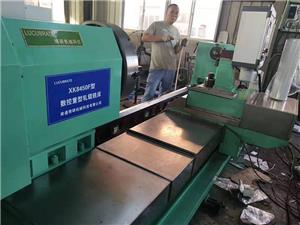
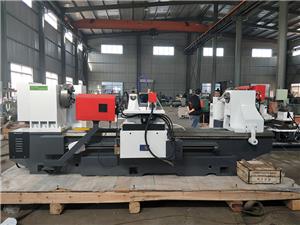
At NANTONG LUCUBRATE MACHINERY TECHNICAL LTD., we've dedicated years to solving these exact problems. Our CNC roller grinding machines are engineered to deliver precision, stability, and uptime. Here's how:
1. Rigid Machine Design and Advanced Damping
To combat vibration, we use a heavily ribbed cast iron bed and a hydrostatic guideway system. This increases dynamic stiffness by up to 40% compared to conventional designs. Additionally, our grinding spindles are dynamically balanced to ISO 1940 G1.0, and we incorporate active damping systems that sense and counteract vibrations in real-time. The result? Surface finish Ra ≤ 0.2 µm consistently, even at high material removal rates.
2. Thermal Compensation and Coolant Management
Our machines feature a comprehensive thermal compensation system. Multiple temperature sensors monitor the bed, spindle, and workpiece. A CNC algorithm predicts thermal growth and adjusts the grinding wheel position accordingly. We also use high-pressure coolant through the wheel to minimize heat generation. This ensures geometric accuracy within ±0.005 mm over a 2-meter roller length, regardless of ambient temperature fluctuations.
3. Predictive Maintenance and Remote Diagnostics
We integrate IoT sensors that monitor vibration, temperature, and spindle load. Data is analyzed by our cloud-based platform, which alerts operators to potential failures weeks in advance. For example, a bearing degradation trend can be detected, allowing scheduled replacement during planned downtime. This reduces unplanned downtime by up to 70%. Our machines also support remote diagnostics, enabling our engineers to troubleshoot issues without travel delays.
Customer Cases: Real Results from Around the World
Don't just take our word for it. Here are five examples of how our CNC roller grinding machines have transformed operations:
Case 1: Schmidt Steelworks, Germany
Schmidt Steelworks, a specialty steel producer in Ruhr, struggled with chatter marks on their work rolls. After installing our LUCUBRATE CG-800 model, they achieved a 30% reduction in surface defects and a 20% increase in roll grinding throughput. "The vibration levels dropped dramatically—we now consistently meet Ra 0.15 µm," said Klaus Meier, Maintenance Manager. "Our scrap rate fell from 8% to 2%."
Case 2: Pacific Paper Mills, USA
This Oregon-based paper mill faced frequent web breaks due to roll taper. Our solution included a thermal compensation system and on-machine balancing. Within three months, web breaks decreased by 40%, saving $150,000 annually. "The LUCUBRATE grinder paid for itself in less than a year," remarked Sarah Johnson, Production Director. "The accuracy is remarkable."
Case 3: Osaka Precision Rolls, Japan
Specializing in small-diameter rolls for electronics, Osaka Precision needed sub-micron accuracy. Our CG-500 model with linear motor technology delivered. They reported a 25% improvement in roundness and a 15% reduction in cycle times. "We've never seen such repeatability," said Hiroshi Tanaka, CEO. "The machine's thermal stability is exceptional."
Case 4: Brasil Rolos Industriais, Brazil
This large steel roller manufacturer faced frequent downtime due to spindle failures. Our predictive maintenance system flagged an impending bearing issue, allowing replacement during a scheduled shutdown. Unplanned downtime dropped by 60%. "The IoT alerts are a game-changer," said Carlos Silva, Plant Manager. "We've avoided two major breakdowns already."
Case 5: India Steel & Alloys, India
With rising energy costs, this Indian steel producer sought to reduce grinding power consumption. Our energy-efficient drives and optimized grinding cycles cut power usage by 18%. "The savings are significant—we're talking about $80,000 per year," noted Rajesh Gupta, Operations Head. "And the surface quality improved simultaneously."
Applications and Partnerships: Trusted Across Industries
Our CNC roller grinding machines serve a diverse range of applications:
- Steel and Aluminum Mills: Grinding work rolls, backup rolls, and edger rolls to extend service life and improve strip quality.
- Paper Mills: Precision grinding of calendar rolls, press rolls, and dryer rolls to ensure uniform paper thickness and smoothness.
- Plastics and Rubber: Grinding embossing rolls and calender rolls for consistent surface textures.
- Textile: Grinding of printing rollers and dyeing rollers for precise pattern transfer.
We are proud to partner with leading OEMs and maintenance providers globally. For instance, we supply grinding machines to ArcelorMittal's maintenance facilities in Europe, and our machines are specified by Voith for paper roll servicing. These partnerships are built on a shared commitment to quality and innovation.
FAQ: Expert Answers to Common Questions
Q1: What is the typical lead time for a custom CNC roller grinding machine?
A1: Lead time varies based on specifications, but typically it's 4-6 months from order to delivery. We prioritize transparency and provide a detailed project schedule upfront.
Q2: How do you ensure repeatability across different operators?
A2: Our machines feature CNC controls with recipe management and automatic wheel dressing. Once a program is set, the machine replicates the process precisely, minimizing operator influence.
Q3: Can your machines grind both convex and concave crowns?
A3: Yes, our CNC system supports complex crown profiles, including convex, concave, and CVC profiles, with easy programming via the HMI.
Q4: What safety standards are incorporated?
A4: We comply with CE and ISO 12100 safety standards. Machines include interlocked guards, emergency stops, and safety light curtains.
Q5: How do you handle training and after-sales support?
A5: We provide on-site training and offer remote support via our IoT platform. Our global service network ensures quick response times.
Conclusion: Precision Grinding is Not an Option, It's a Necessity
In today's competitive landscape, the quality of your rollers directly impacts your bottom line. Vibration, thermal distortion, and downtime are costly problems that can be solved with the right technology. At NANTONG LUCUBRATE MACHINERY TECHNICAL LTD., we've helped companies worldwide achieve unprecedented precision and reliability. Don't let outdated grinding equipment hold you back. Contact our sales engineers today to discuss your specific needs, or download our technical white paper on advanced roller grinding techniques to learn more. Your rollers deserve the best—and so does your production line.