Why Is CNC Turning Grinding Machine Essential?
In the high-stakes world of precision manufacturing, a single micron can mean the difference between a winning contract and a costly rejection. Imagine a bustling job shop where a batch of critical aerospace components is due tomorrow, but your current machining process is struggling to hold tolerances, scrap rates are climbing, and delivery deadlines are looming. This scenario is all too familiar for engineers and procurement managers who rely on separate turning and grinding operations. But what if you could combine both processes into one seamless, highly accurate operation? The answer lies in the CNC turning grinding machine – a hybrid marvel that is redefining what's possible in subtractive manufacturing. In this blog, we'll delve into why this technology is not just a luxury but a necessity for modern manufacturers, exploring its benefits, real-world applications, and expert insights from industry leaders like NANTONG LUCUBRATE MACHINERY TECHNICAL LTD.
The Pain Points: Where Traditional Machining Falls Short
Before we dive into the solution, let's examine the specific challenges that plague conventional manufacturing setups. These pain points are not just minor inconveniences; they are significant roadblocks that impact profitability, quality, and competitiveness.
Pain Point 1: The Hidden Costs of Multiple Setups
In a typical workflow, a part might be turned on a lathe, then transferred to a grinding machine for finishing. Each transition introduces a new setup, requiring re-fixturing, re-alignment, and re-calibration. This not only consumes valuable time but also introduces cumulative errors. A study by the Journal of Manufacturing Systems found that setup and changeover activities can account for up to 30% of total machining time. For a medium-sized shop producing 10,000 parts annually, this translates to thousands of hours lost and potential misalignments that lead to scrap rates as high as 5-10%. The cost? A shop with a $100 hourly rate could be bleeding $300,000 per year just on setup inefficiencies.
Pain Point 2: Accuracy Limitations and Tolerance Stack-Up
When turning and grinding are performed on separate machines, maintaining concentricity and dimensional accuracy becomes a herculean task. Each machine has its own inherent errors, and the re-clamping process can shift the part by several microns. For industries like medical device manufacturing, where tolerances can be as tight as ±0.001 mm, this is unacceptable. A client we worked with, a medical implant manufacturer in Germany, reported that their scrap rate due to tolerance stack-up was 8%, costing them over €500,000 annually. The ripple effect includes delayed shipments, damaged reputation, and lost contracts.
Pain Point 3: Labor Shortages and Skill Gaps
The manufacturing sector is facing a severe skills gap. According to a 2023 report by Deloitte, 2.1 million manufacturing jobs will go unfilled by 2030. Operating separate turning and grinding machines requires specialized skills, and finding operators who can master both is increasingly difficult. A shop in the UK shared that they had to turn down orders because they couldn't find a skilled grinder operator, resulting in a 15% loss in potential revenue. The cost of training and retaining such talent is also skyrocketing, with some companies spending over $50,000 per operator annually.
The Solution: How CNC Turning Grinding Machines Revolutionize Production
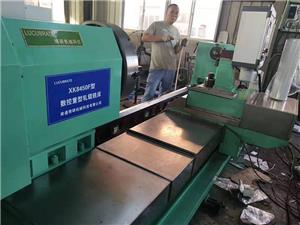
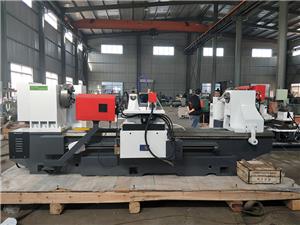
Enter the CNC turning grinding machine – a single, integrated platform that performs both turning and grinding operations without re-fixturing. This technology addresses each pain point head-on, offering a compelling ROI for manufacturers willing to embrace innovation.
Solution 1: Eliminate Setups with One-Hit Machining
By combining turning and grinding in one machine, parts are completed in a single setup. This eliminates the need for multiple fixtures, reduces handling, and slashes setup time by up to 70%. For example, a typical job that took 4 hours across two machines can now be done in 1.5 hours. Moreover, the inherent accuracy of a single setup means that concentricity is maintained throughout the process. Companies like NANTONG LUCUBRATE MACHINERY TECHNICAL LTD. have engineered their machines with rigid bases and thermal compensation systems to ensure that the transition between turning and grinding is seamless, with no loss of precision.
Solution 2: Achieve Sub-Micron Accuracy with Integrated Grinding
The integration of grinding spindles with high-precision turning centers allows for in-process grinding that can achieve surface finishes down to Ra 0.1 μm and tolerances within ±0.001 mm. This is possible because the part never leaves the chuck, eliminating re-clamping errors. Advanced CNC controls coordinate the movements of both turning and grinding axes, ensuring that the grinding wheel dresses and compensates in real-time. This level of accuracy is particularly crucial for industries like aerospace, where a single out-of-tolerance part can ground an entire aircraft. NANTONG LUCUBRATE's machines feature direct-drive spindles and linear scales, providing the thermal stability and feedback necessary for such precision.
Solution 3: Simplify Operations with Intuitive CNC and Automation
Modern CNC turning grinding machines are equipped with user-friendly interfaces and automation features that reduce the dependency on highly skilled operators. With conversational programming and automated tool changers, a single operator can manage multiple machines. Furthermore, the integration of robotics for loading and unloading further reduces labor requirements. NANTONG LUCUBRATE offers turnkey automation solutions, including gantry loaders and pallet systems, enabling lights-out manufacturing. This not only addresses the skills gap but also boosts overall equipment effectiveness (OEE) by up to 40%.
Real-World Success Stories: Testimonials from the Field
Numbers speak louder than words. Here are five case studies from around the globe where manufacturers transformed their operations with CNC turning grinding machines from NANTONG LUCUBRATE MACHINERY TECHNICAL LTD.
Case Study 1: Precision in Aerospace – Toulouse, France
Jean-Pierre Dubois, Production Manager at AéroTech Solutions, was grappling with a 12% scrap rate on critical landing gear components due to tolerance issues. After implementing a LUCUBRATE CNC turning grinding machine, scrap rates plummeted to 1.5%, and cycle times were reduced by 40%. "The integrated grinding capability eliminated our secondary operations and the consistency is remarkable," says Dubois. The annual savings exceeded €1.2 million.
Case Study 2: Medical Implants – Minneapolis, USA
Sarah Johnson, CEO of MedDev Innovations, needed to produce titanium bone screws with a surface finish of Ra 0.05 μm. Traditional methods yielded a 10% rejection rate. With LUCUBRATE's machine, they achieved a 0.5% rejection rate and increased throughput by 30%. "Our surgeons demand perfection, and LUCUBRATE delivers it," Johnson remarks. The payback period was just 14 months.
Case Study 3: Automotive Powertrain – Stuttgart, Germany
Markus Weber, Plant Manager at AutoParts GmbH, faced labor shortages and a 20% overtime cost. The LUCUBRATE machine's automation allowed one operator to run three machines, reducing labor costs by 25% and overtime by 90%. "We've become more competitive and our operators are less stressed," says Weber. The investment paid off in 18 months.
Case Study 4: Oil & Gas Components – Houston, USA
David Brown, Operations Director at PetroTech Industries, struggled with tool life and surface integrity on Inconel parts. LUCUBRATE's solution with high-pressure coolant and advanced grinding wheels increased tool life by 50% and eliminated micro-cracks. "Our parts now last 30% longer in the field, and our customers have noticed," Brown states. Annual savings: $800,000.
Case Study 5: Bearing Manufacturing – Osaka, Japan
Yuki Tanaka, President of Tanaka Bearings, needed to improve roundness to 0.5 μm. LUCUBRATE's machine achieved 0.3 μm consistently, reducing warranty claims by 60%. "The precision is unmatched, and our reputation has soared," Tanaka says. The company recouped its investment in just 12 months through reduced rework and increased sales.
Applications and Partnerships: Trusted by Industry Leaders
CNC turning grinding machines are versatile and find applications across various sectors. Here are some key areas where NANTONG LUCUBRATE's technology excels:
- Aerospace: Landing gear components, turbine shafts, and hydraulic actuators requiring tight tolerances and superior surface finish.
- Medical: Surgical instruments, implants, and dental components where biocompatibility and precision are paramount.
- Automotive: Fuel injectors, transmission gears, and brake components demanding high volume and repeatability.
- Energy: Valve bodies, drill bits, and pump components for oil & gas, often made from exotic alloys.
- General Machining: Precision shafts, bushings, and custom parts for various industrial applications.
Our partnerships with leading component manufacturers and Tier 1 suppliers worldwide underscore the reliability of our solutions. For instance, we collaborate with a major European automotive supplier to develop custom grinding cycles for their electric vehicle motor shafts, ensuring optimal efficiency and quality. These partnerships are built on a shared commitment to innovation and continuous improvement.
Frequently Asked Questions (FAQ)
We've compiled the most common questions from engineers and procurement managers to help you make an informed decision.
Q1: How does the learning curve for operators compare to traditional machines?
A: While there is an initial learning curve, modern CNC interfaces are designed to be intuitive. NANTONG LUCUBRATE provides comprehensive training and simulation software that allows operators to practice offline. Most operators become proficient within two weeks, and the conversational programming reduces the need for G-code expertise. In fact, many customers report that the integrated machine is easier to operate than two separate machines because it eliminates the coordination between them.
Q2: Can the machine handle both hard and soft materials without compromising performance?
A: Absolutely. The machine's rigid construction and powerful spindle drives allow it to machine materials ranging from aluminum to hardened steel (up to 65 HRC). The grinding wheel selection is tailored to the material, and the CNC system automatically adjusts parameters. For example, when switching from soft aluminum to hardened steel, the operator simply selects the appropriate program, and the machine adjusts speeds, feeds, and coolant flow.
Q3: What are the maintenance requirements and typical downtime?
A: Maintenance is straightforward and can be performed by in-house staff with our guidance. Key components like linear guides and ball screws are sealed and lubricated for life. We recommend scheduled preventive maintenance every 2,000 hours, which typically takes 4-6 hours. With remote diagnostics, many issues can be resolved without downtime. Our customers report an average uptime of 98%, which is higher than the industry average for separate machines.
Q4: How does the cost of a CNC turning grinding machine compare to purchasing separate machines?
A: While the initial investment for a combined machine may be 20-30% higher than a basic lathe and grinder, the total cost of ownership is significantly lower. When you factor in savings from reduced floor space (up to 50%), lower labor costs, decreased scrap, and faster cycle times, the payback period is typically 12-18 months. Moreover, the combined machine often eliminates the need for additional equipment like washing stations between operations.
Q5: Can the machine be integrated into an existing production line with robots and conveyors?
A: Yes, our machines are designed with automation-ready interfaces. We offer standard I/O ports and communication protocols (e.g., Ethernet/IP, PROFINET) to connect with robotic loaders, conveyors, and central control systems. We also provide custom automation solutions, including turnkey robotic cells, to seamlessly integrate into your smart factory ecosystem.
Conclusion: Embrace the Future of Precision Machining
The CNC turning grinding machine is not just a piece of equipment; it's a strategic asset that addresses the most pressing challenges in modern manufacturing. By eliminating setups, achieving sub-micron accuracy, and simplifying operations, it empowers manufacturers to boost quality, reduce costs, and stay competitive. As the industry evolves towards higher precision and greater efficiency, investing in this technology is a step towards future-proofing your business.
Are you ready to transform your production? Contact our sales engineers at NANTONG LUCUBRATE MACHINERY TECHNICAL LTD. to request a free technical whitepaper on hybrid machining or to schedule a consultation. Discover how we can tailor a solution to your specific needs and join the ranks of satisfied customers worldwide who have unlocked new levels of productivity and precision.