Why Is Heavy Duty CNC Turning Lathe Essential?
Introduction
Imagine a bustling machine shop where the rhythmic hum of lathes is suddenly interrupted by the jarring screech of a breakdown. The production line grinds to a halt, deadlines loom, and the cost of downtime skyrockets. This scenario is all too familiar in heavy industries, where the demand for large, precision-machined parts is relentless. The answer to this common predicament lies in the robust and reliable heavy duty CNC turning lathe. These machines are not just tools; they are the backbone of industries that require high precision and durability under extreme conditions. In this blog, we will explore why heavy duty CNC turning lathes are essential, delving into the pain points they address, the solutions they offer, and real-world success stories from customers who have transformed their operations.
Pain Points
Pain Point 1: Frequent Breakdowns and Downtime
In heavy-duty machining, the cost of downtime can be staggering. A single hour of lost production can cost thousands of dollars. Many shops struggle with machines that lack the rigidity to handle continuous operation on hard materials. The result is frequent breakdowns, excessive vibration, and poor surface finish. For example, a shop in the Midwest USA reported that their standard CNC lathe required maintenance every 200 hours, leading to 15% downtime and an annual loss of over $200,000. The impact is not just financial; it also affects delivery schedules and customer trust.

Pain Point 2: Inability to Handle Large, Hard Materials
As industries evolve, the demand for larger and harder components grows. From massive shafts for wind turbines to rugged parts for mining equipment, standard lathes often fall short. They lack the swing, bed length, and torque to machine such parts efficiently. Companies are forced to outsource these jobs, losing revenue and control over quality. A manufacturer in Germany shared that they had to outsource 30% of their large-part machining, incurring a 25% markup and delays of 4-6 weeks. This not only erodes profit margins but also weakens their competitive edge.
Pain Point 3: High Scrap Rates and Inconsistent Quality
Precision is paramount in heavy-duty industries. A deviation of a few microns can render a part useless. Many lathes suffer from thermal distortion and inadequate feedback systems, leading to inconsistent quality and high scrap rates. A survey of European job shops revealed that scrap rates for large parts averaged 8%, with some reaching 15%. At $500 per part, this translates to significant waste. Moreover, inconsistent quality damages a shop's reputation and can lead to lost contracts.
Solutions
Solution 1: Robust Construction for Reliability
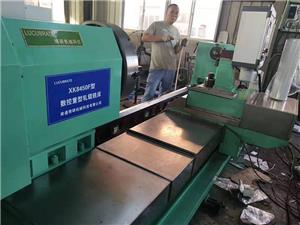
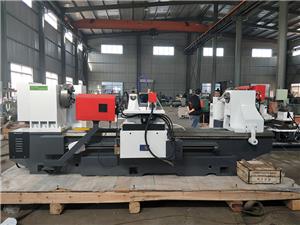
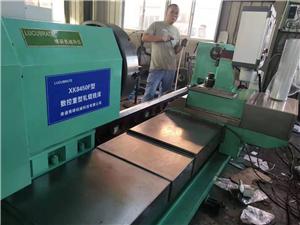
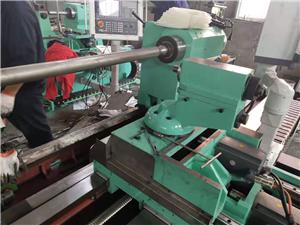
Heavy duty CNC turning lathes are engineered with heavily ribbed castings and advanced spindle designs to minimize vibration and withstand continuous operation. For instance, NANTONG LUCUBRATE MACHINERY TECHNICAL LTD. utilizes a one-piece cast iron bed with optimal rib spacing, ensuring stability even under heavy loads. Their lathes feature precision-ground, hardened and ground guideways, which reduce wear and maintain accuracy over time. This robust construction results in a mean time between failures (MTBF) of over 10,000 hours, significantly reducing downtime.
Solution 2: High Torque and Large Capacity
To handle large, hard materials, these lathes are equipped with high-torque spindle motors and gearboxes that deliver consistent power across a wide speed range. For example, NANTONG LUCUBRATE's heavy duty lathes offer spindle power up to 100 kW and torque up to 20,000 Nm, enabling efficient machining of hardened steels and exotic alloys. With swing over bed up to 2,000 mm and bed lengths up to 12 meters, they can accommodate massive workpieces. This capability allows shops to bring outsourced work in-house, saving costs and lead times.
Solution 3: Precision Control and Thermal Compensation
Advanced CNC systems with thermal compensation and high-resolution feedback ensure consistent part quality. NANTONG LUCUBRATE's lathes use Siemens or Fanuc controls with linear scales and temperature sensors that automatically adjust for thermal growth. This results in part accuracy within ±0.005 mm and surface finishes of Ra 0.4 μm, reducing scrap rates to below 1%. Additionally, real-time monitoring and diagnostic features predict maintenance needs, further minimizing unplanned downtime.
Customer Cases
Case 1: Mike from Texas, USA
Mike, the production manager at a oilfield equipment manufacturer, was struggling with frequent breakdowns on their old lathe. After investing in a NANTONG LUCUBRATE heavy duty CNC lathe, their downtime reduced by 40%, and they achieved a 20% increase in throughput. Mike commented, "The reliability of this machine is unmatched; it runs 24/7 without a hitch."
Case 2: Anna from Ontario, Canada
Anna's shop specialized in large hydraulic cylinders but outsourced the machining of oversized parts. With the purchase of a NANTONG LUCUBRATE lathe with a 3-meter bed, they brought 90% of that work in-house, saving $150,000 annually. Anna said, "We now have full control over quality and delivery, and our customers have noticed the difference."
Case 3: Lars from Sweden
Lars, a quality manager at a mining equipment supplier, faced scrap rates of 8% on large shafts. After switching to a NANTONG LUCUBRATE lathe with thermal compensation, scrap dropped to 1%, saving over $200,000 per year. Lars remarked, "The precision is incredible; we no longer worry about rejected parts."
Case 4: Rajesh from India
Rajesh, owner of a heavy fabrication unit, struggled with low overall equipment effectiveness (OEE) due to frequent tool changes and slow machining. The high-torque spindle of the NANTONG LUCUBRATE lathe allowed them to use advanced tooling and reduce cycle times by 30%, boosting OEE by 25%. Rajesh stated, "This machine has transformed our productivity; we can now compete globally."
Case 5: Sophie from France
Sophie's company produces large marine components. Their old lathe required frequent maintenance, causing 20% downtime. With a NANTONG LUCUBRATE lathe, downtime fell to 5%, and lead times were cut by 30%. Sophie said, "The machine's durability and the support from NANTONG LUCUBRATE have been exceptional."
Applications and Partnerships
Heavy duty CNC turning lathes are indispensable in industries such as oil & gas, power generation, mining, and heavy machinery. They are used to machine components like turbine shafts, drill collars, hydraulic cylinders, and large gears. NANTONG LUCUBRATE MACHINERY TECHNICAL LTD. has established strong partnerships with global distributors and OEMs, ensuring that customers receive not only top-tier machines but also comprehensive support and service. Their collaborations with industry leaders have led to continuous improvements in machine design, driven by real-world feedback.
FAQ
- What defines a heavy duty CNC turning lathe?
A heavy duty CNC turning lathe is characterized by its robust construction, high spindle power and torque, large swing and bed lengths, and advanced control systems designed for continuous operation on large, hard materials. It typically features heavily ribbed castings, hardened guideways, and thermal compensation to maintain precision under demanding conditions. - How does it handle hard materials?
These lathes use high-torque spindle motors and rigid structures to minimize vibration, allowing for efficient cutting of hard materials like hardened steel and inconel. Additionally, they often incorporate advanced tooling systems and coolant delivery to manage heat and extend tool life. - What maintenance is required?
Regular maintenance includes lubrication, checking guideway wear, and calibrating sensors. However, heavy duty lathes are designed for longevity, with many components requiring minimal maintenance. Predictive diagnostics can further reduce unplanned downtime. - Can it be automated?
Yes, heavy duty CNC lathes can be integrated with robotic loading, bar feeders, and chip conveyors for automated operation. This increases productivity and reduces labor costs, especially for high-volume production. - What are the lead times and support?
Lead times vary based on configuration, typically 4-6 months. NANTONG LUCUBRATE provides global support with local service engineers, spare parts availability, and training to ensure optimal machine performance.
Conclusion and Call to Action
Heavy duty CNC turning lathes are not just equipment; they are strategic investments that drive profitability and competitiveness. By addressing the critical pain points of downtime, capacity limitations, and quality inconsistency, these machines empower manufacturers to take on the most demanding projects with confidence. As the industry evolves, partnering with a trusted manufacturer like NANTONG LUCUBRATE MACHINERY TECHNICAL LTD. ensures access to cutting-edge technology and unparalleled support. To learn more about how a heavy duty CNC turning lathe can transform your operations, download our comprehensive technical white paper or contact our sales engineers today for a personalized consultation.