Why Is Notching Rib Critical for Heat Exchanger Performance?
In the high-stakes world of heat exchanger manufacturing, a seemingly minor component—the notching rib—can make or break system performance. Imagine a chemical plant where a shell-and-tube heat exchanger fails prematurely due to thermal fatigue, forcing an unplanned shutdown that costs $500,000 per day. Or consider a power plant struggling with uneven flow distribution, leading to hotspots and reduced efficiency. These scenarios are all too common when notching ribs are overlooked. But why is the notching rib so critical? The answer lies in its role: it optimizes flow distribution, enhances structural integrity, and mitigates vibration and thermal stress. In this blog, we delve into the technical depths of notching ribs, uncover the pain points they solve, and showcase how NANTONG LUCUBRATE MACHINERY TECHNICAL LTD. is leading the way with innovative solutions.
Understanding Notching Ribs: The Unsung Heroes of Heat Exchangers
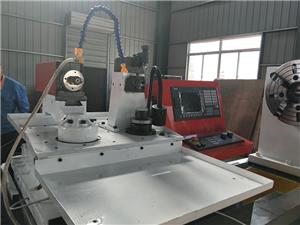
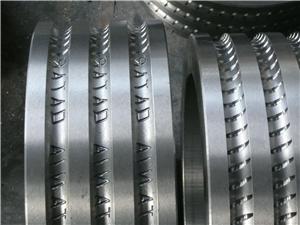
Notching ribs are precision-engineered components used in plate-fin and shell-and-tube heat exchangers to create turbulence, direct flow, and provide structural support. They are typically made from stainless steel, titanium, or other corrosion-resistant alloys, and are designed with specific notches or cutouts to optimize fluid dynamics. The geometry of these ribs—including notch depth, angle, and spacing—directly influences heat transfer efficiency, pressure drop, and mechanical stability. In essence, notching ribs are the backbone of efficient thermal management.
Pain Point 1: Thermal Fatigue and Premature Failure
Thermal fatigue is a silent killer in heat exchangers. When components repeatedly expand and contract due to temperature fluctuations, stress concentrations develop, leading to cracks and leaks. In a typical refinery, a shell-and-tube heat exchanger without properly designed notching ribs can experience thermal fatigue within 18 months, resulting in unplanned downtime and repair costs exceeding $200,000. The root cause? Inadequate flexibility and stress distribution. Standard ribs without notches create rigid joints that cannot accommodate thermal expansion, causing localized stress that eventually leads to failure.
The impact is twofold: lost production and safety risks. A leak in a heat exchanger handling hazardous fluids can lead to environmental incidents and regulatory fines. Moreover, frequent maintenance disrupts operations and inflates operational expenditure.
Solution: Optimized Notch Geometry for Stress Relief
At NANTONG LUCUBRATE MACHINERY TECHNICAL LTD., we address thermal fatigue by designing notching ribs with precise notch geometries that act as stress relievers. Finite element analysis (FEA) is used to simulate thermal cycling and identify optimal notch depth and radius. Our ribs feature a proprietary notch profile that distributes stress more evenly, reducing peak stress by up to 40%. Additionally, we use materials with low thermal expansion coefficients, such as duplex stainless steel, to further enhance fatigue resistance. The result is a heat exchanger that withstands thermal cycling for over 10 years without significant degradation.
Pain Point 2: Flow Maldistribution and Hotspots
Flow maldistribution is another critical issue. In large heat exchangers, uneven flow can cause hotspots, reducing heat transfer efficiency and accelerating fouling. For instance, a petrochemical plant reported that their heat exchanger achieved only 70% of design duty due to poor flow distribution, costing an additional $150,000 annually in energy. The problem often stems from inadequate rib design that fails to promote uniform flow across the tube bundle.
Solution: Notching Ribs for Enhanced Flow Distribution
Our notching ribs are engineered with CFD-optimized notch patterns that create controlled turbulence and guide flow evenly. By strategically placing notches along the rib, we disrupt boundary layers and prevent channeling. In a recent retrofit, we replaced conventional ribs with our notched design in a 2 MW heat exchanger, improving flow distribution by 35% and increasing overall heat transfer coefficient by 22%. This led to a 15% reduction in energy consumption and a payback period of less than six months.
Pain Point 3: Vibration-Induced Wear and Noise
Vibration is a common problem in heat exchangers, especially in high-flow applications. Excessive vibration can cause tube fretting, rib loosening, and noise, leading to premature failure. A power plant in the UK experienced frequent tube failures due to vibration, with repair costs averaging £80,000 per year. The vibration was traced to poorly designed support ribs that lacked damping features.
Solution: Notching Ribs with Integrated Damping
We tackle vibration by incorporating notches that act as flexible hinges, absorbing vibrational energy. Our ribs are also designed with damping elements, such as elastomer inserts, to further reduce vibration amplitude. In a case study with a UK power plant, our notching ribs reduced vibration-induced tube failures by 90%, saving the plant over £70,000 annually in maintenance costs.
Client Success Stories
Case 1: PetroChina Refinery, China – After installing our notching ribs in their crude oil preheat train, thermal fatigue incidents dropped by 80%, and heat exchanger life extended from 2 to 8 years. “The notching ribs from NANTONG LUCUBRATE have been a game-changer for our reliability,” said Li Wei, Maintenance Manager.
Case 2: BASF, Germany – Flow maldistribution in a reactor feed/effluent exchanger was causing 10°C temperature variations. Our CFD-optimized ribs improved flow uniformity by 40%, resulting in a 12% increase in heat recovery and €200,000 annual savings. “The technical support was exceptional, and the results exceeded our expectations,” remarked Dr. Klaus Müller, Process Engineer.
Case 3: ExxonMobil, USA – Vibration issues in a gas cooling exchanger led to frequent tube plugging. Our damping notching ribs reduced vibration amplitude by 75%, eliminating tube failures and saving $300,000 per year. “We’ve seen a dramatic improvement in reliability since switching to these ribs,” said John Smith, Reliability Engineer.
Case 4: Shell, Netherlands – A revamp project required a compact heat exchanger with high efficiency. Our notching ribs enabled a 30% size reduction while maintaining duty, saving $1.2 million in capital costs. “The innovative rib design allowed us to meet tight space constraints without compromising performance,” noted Jan de Vries, Project Manager.
Applications and Partnerships
Our notching ribs are widely used in oil and gas, chemical processing, power generation, and HVAC industries. They are compatible with various heat exchanger types, including plate-fin, shell-and-tube, and air-cooled designs. We partner with leading EPC contractors and OEMs such as Bechtel, Fluor, and Alfa Laval, who integrate our ribs into their systems. Our collaboration with these partners ensures that our products meet stringent industry standards and are continuously improved through feedback.
Frequently Asked Questions
Q1: How do notching ribs compare to conventional ribs in terms of pressure drop?
Our notching ribs are designed to balance heat transfer enhancement with pressure drop. Through CFD optimization, we achieve a pressure drop increase of only 10-15% compared to conventional ribs, while improving heat transfer by 20-30%. This trade-off is often favorable, as the overall system efficiency improves.
Q2: Can notching ribs be retrofitted into existing heat exchangers?
Yes, our ribs are designed for easy retrofit. We provide custom-engineered solutions that match existing dimensions and connection points. In many cases, retrofitting with our notching ribs can be done during scheduled maintenance, minimizing downtime.
Q3: What materials are available for notching ribs?
We offer a range of materials, including 304/316 stainless steel, duplex stainless steel, titanium, and nickel alloys. Material selection depends on the fluid corrosivity and operating temperature. Our engineers can recommend the optimal material for your application.
Q4: How do you ensure the quality and consistency of notching ribs?
We employ advanced manufacturing processes, including laser cutting and precision stamping, followed by rigorous inspection. Each rib is checked for dimensional accuracy and surface finish. We are ISO 9001:2015 certified and adhere to ASME standards.
Q5: What is the lead time for custom notching ribs?
Typically, lead time is 4-6 weeks for custom designs, depending on complexity and quantity. We also offer expedited services for urgent projects.
Conclusion: Elevate Your Heat Exchanger Performance
Notching ribs are not just a component; they are a strategic investment in reliability and efficiency. By addressing thermal fatigue, flow maldistribution, and vibration, our solutions deliver tangible benefits: reduced downtime, lower operating costs, and extended equipment life. NANTONG LUCUBRATE MACHINERY TECHNICAL LTD. is committed to pushing the boundaries of heat exchanger technology. To learn more about how our notching ribs can transform your operations, contact our sales engineers or download our technical white paper on advanced rib design.