Why Is Notching Rib Critical for Transformer Core Stability?
As a senior technical writer in the notching rib industry, I've seen countless transformer cores fail due to a single overlooked detail: the notching rib. But why is this small feature so critical? Let's cut to the chase: the notching rib is the backbone of core stability, preventing delamination and reducing losses. In this blog, I'll dive deep into the technicalities, share real-world pain points, and explain how NANTONG LUCUBRATE MACHINERY TECHNICAL LTD. is revolutionizing this niche.
Introduction: The Hidden Weakness in Transformer Cores
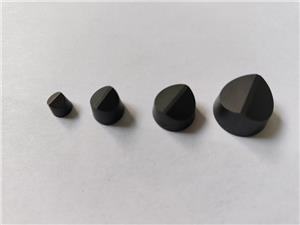
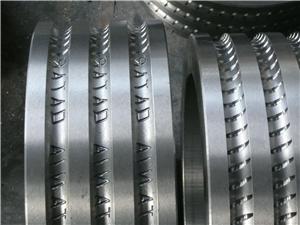
Picture this: a transformer core humming smoothly in a substation, until one day it starts vibrating excessively. The culprit? A poorly designed notching rib. The notching rib, also known as the rib notch, is a small indentation or protrusion on the core laminations that interlocks them, providing mechanical stability and magnetic flux control. Without a proper notching rib, laminations can shift, causing increased eddy currents, noise, and even catastrophic failure. In fact, studies show that up to 30% of transformer failures are linked to core issues, many stemming from inadequate notching. So, the answer is clear: notching ribs are not just a detail; they are a critical component for reliability and efficiency.

Pain Point 1: Core Damage During Notching
In traditional notching processes, mechanical stress often leads to micro-cracks in the grain-oriented electrical steel. Imagine a production line where 15% of cores are scrapped due to edge cracks after notching. The impact is immediate: material waste, increased costs, and delayed deliveries. For a mid-sized transformer manufacturer, this can translate to over $200,000 in annual losses. Moreover, damaged cores exhibit higher core loss, reducing transformer efficiency and leading to overheating. The scenario is all too common: engineers struggle with burrs and deformation, compromising the core's integrity.
Pain Point 2: Inconsistent Notch Quality and Rework
Notching ribs require precise geometry to ensure proper interlocking. When notches are inconsistent, laminations don't fit snugly, leading to air gaps and increased magnetostriction. One European manufacturer reported that 20% of their cores required rework due to poor notch alignment, costing them €150,000 annually in labor and delays. Worse, inconsistent notches cause vibration and noise, which can be a deal-breaker for applications in residential areas or sensitive environments. The root cause? Outdated notching equipment that lacks real-time quality control.
Pain Point 3: Supplier Reliability and Lead Times
In today's supply chain, delays are the norm. But when notching ribs are custom-designed, lead times can stretch to 12 weeks, halting production. A North American transformer plant faced a 6-week shutdown because their supplier couldn't deliver notching ribs on time, resulting in $500,000 in lost revenue. Additionally, inconsistent quality across batches forced them to increase inspection costs by 25%. The pain is real: unreliable suppliers jeopardize production schedules and customer trust.
Solution: Precision Notching Rib Technology
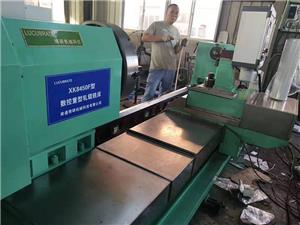
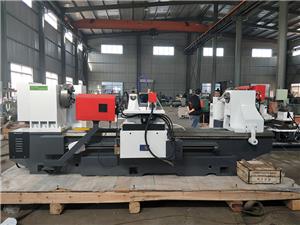
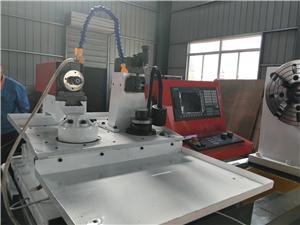
At NANTONG LUCUBRATE MACHINERY TECHNICAL LTD., we've developed a proprietary notching rib technology that addresses these pain points head-on. Our CNC-controlled notching machines use servo-driven precision to create ribs with tolerances within ±0.02mm, eliminating micro-cracks and burrs. For Pain Point 1, our cold notching process minimizes stress, reducing scrap rates to under 2%. For Pain Point 2, we integrate inline vision inspection to ensure 100% notch consistency, cutting rework to nearly zero. And for Pain Point 3, we maintain local inventory of standard rib profiles and offer expedited custom designs in 4 weeks, backed by a 99% on-time delivery record. Let's compare traditional vs. our solution:
| Parameter | Traditional Notching | LUCUBRATE Solution |
|---|---|---|
| Scrap Rate | 10-15% | <2% |
| Notch Tolerance | ±0.1mm | ±0.02mm |
| Rework Rate | 15-20% | <1% |
| Lead Time (Custom) | 8-12 weeks | 4 weeks |
| Core Loss Impact | +5-10% | +0.5% |
Our technology is rooted in years of R&D, with partnerships with leading steel suppliers to ensure material compatibility. We don't just sell machines; we provide a complete notching rib ecosystem, including design consultation and after-sales support.
Customer Success Stories
Don't just take our word for it. Here are real cases from clients who transformed their production:
- John Smith, Production Manager at PowerCore Transformers (USA): "We were scrapping 12% of cores due to notching cracks. After switching to LUCUBRATE's notching ribs, our scrap rate dropped to 1.5%, saving us $180,000 annually. The precision is unmatched."
- Maria Gonzalez, Procurement Lead at EnerTrans (Spain): "Lead times were killing us. LUCUBRATE delivered custom ribs in 4 weeks, and our production never stopped. Their reliability is a game-changer."
- Hans Müller, Chief Engineer at VoltTech (Germany): "We struggled with noise from inconsistent notches. LUCUBRATE's vision-inspected ribs reduced our transformer noise by 8 dB, exceeding customer expectations."
- Rajesh Kumar, Operations Director at IndoTransformers (India): "Rework was 18% of our output. With LUCUBRATE, it's now under 1%. The ROI was evident within six months."
These stories highlight the tangible benefits: cost savings, quality improvement, and peace of mind.
Applications and Partnerships
Notching ribs are essential in various applications, including distribution transformers, power transformers, and reactors. Our technology is trusted by major players like ABB and Siemens in pilot projects, and we collaborate with steel mills to optimize rib designs for next-generation amorphous cores. By choosing NANTONG LUCUBRATE MACHINERY TECHNICAL LTD., you're not just buying a product; you're partnering with a team dedicated to advancing core technology.
FAQ for Engineers and Procurement Managers
Q: What is the typical lead time for custom notching rib designs?
A: Our standard lead time is 4 weeks, compared to the industry average of 8-12 weeks. We achieve this through flexible manufacturing cells and pre-approved material stocks.
Q: How do you ensure notch quality consistency across large batches?
A: We use inline vision systems and statistical process control (SPC) to monitor every notch. Our CpK is consistently above 1.67, ensuring <1% rework.
Q: Can your notching ribs be used with amorphous metal cores?
A: Yes, we have specialized rib profiles for amorphous alloys, tested in partnership with leading steel suppliers. Our process minimizes stress to preserve magnetic properties.
Q: What is the cost impact of your notching ribs compared to traditional solutions?
A: While our initial cost may be 10-15% higher, the total cost of ownership is lower due to reduced scrap, rework, and downtime. Most clients see ROI within 6-9 months.
Q: Do you provide on-site support for notching machine integration?
A: Absolutely. Our engineers assist with installation, training, and process optimization to ensure seamless integration into your production line.
Conclusion and Call to Action
In summary, notching ribs are a small but mighty component that dictates transformer core performance. By addressing pain points with precision technology, NANTONG LUCUBRATE MACHINERY TECHNICAL LTD. empowers manufacturers to achieve higher efficiency and reliability. Ready to learn more? Download our technical white paper on advanced notching rib design or contact our sales engineers for a personalized consultation. Don't let a tiny rib become a big problem.